Dyno Tuning Prices in SA What You Pay for a Real Tune
13 August 2026
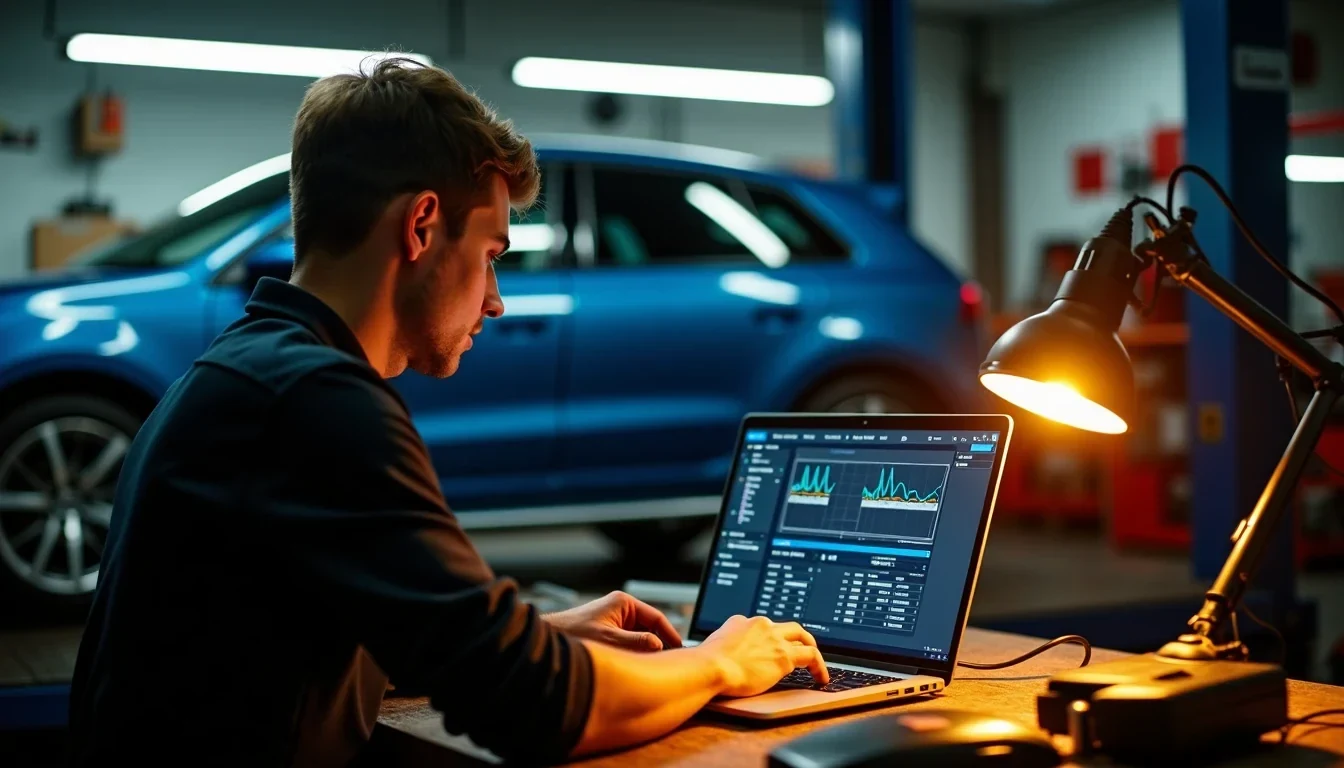
Dyno tuning invoices often cause arguments because the simple number on the sheet leads to a much larger bill, making everyone question the math. A clean peak power figure is the cheapest part of the process. The real cost comes from the time, calibration work, pre- and post-checks, and whether the operator provides a graph you can actually learn from.
If you only receive a big top-line number without context, you bought a trophy. If you leave with power, torque, AFR, boost, correction factor, and a before-and-after overlay, you bought information. This is the difference between a day at a dyno and a session that reveals if your car is strong, safe, and worth the money you spent.
What dyno money buys
A proper dyno session involves more than just a car on rollers and a loud fan. A standalone power run is usually the cheaper job. The shop straps the car down, makes a few pulls, and prints the result. A tuning session is more expensive because it includes additional dyno time, ECU changes, checks, and repeated validation runs.
This split is clear in local published pricing. THANAS lists a dyno power run at R475 for two runs, while RCB Racing lists a power run at R350 excl VAT. Dark Artz lists a dyno session power run at R200 for two runs, but its tuning session is R900 for 60 minutes.
For full tuning, the numbers increase quickly. RCB Racing publishes aftermarket ECU tuning from R2,050 excl VAT, with a booking fee and hourly rate built into the structure. Performancechiptuning.co.za publishes custom ECU remaps on dyno from R4,500, and its site also shows R4,500 specials for dyno-tuned remaps on several vehicles. PlugandPlayChip lists ECU remapping from R4,500 and states the work is done on an AWD dyno with AFR monitoring.
This spread shows the market is not uniform. A power run is entry-level money. A real tune is a labor charge, not a sticker charge.
What shops are asking in Johannesburg and Cape Town
Johannesburg has the clearest published spread because more shops list prices on their sites. THANAS lists a 2WD load/inertia power run at R475 for two runs. RCB Racing, also in the Gauteng market, lists a power run at R350 excl VAT and an aftermarket ECU tune at R2,050 excl VAT. Mbound Mechanical advertises dyno tuning from R1,849 and provides before-and-after graphs.
For full remaps, the numbers are much higher. Performancechiptuning.co.za shows R4,500 for a custom ECU remap on its dyno and specifically states some jobs require the car for about 4 to 8 hours. PlugandPlayChip quotes the same R4,500 starting point for ECU remapping, plug-and-play chips, and UniChip setups.
Cape Town is not meaningfully cheaper. THANAS lists the same R475 power run from its CPT branch, located at Unit 2, 3 Esso Rd, Montague Gardens. This provides a useful floor for the city. On the tuning side, the same national pricing pattern holds. Moving from a check run to a calibrated map costs several thousand rand, not a couple of hundred.
Here is the short version for those two cities:
| City | Standalone run | Full dyno tune |
|---|---|---|
| Johannesburg | R350 excl VAT to R475 for two runs | About R1,849 to R4,500 and up, depending on ECU and session length |
| Cape Town | R475 for two runs at THANAS CPT | About R4,500 and up for custom remaps |
| Durban | Published run pricing is patchier, but the city still sits in the same broad South African band | About R4,500 and up for custom dyno remaps |
What Durban owners should expect
Durban is less clear. The city has significant tuning activity, but fewer workshops publish clear pricing on their sites. This does not mean the work is cheaper, only that the numbers are less visible.
For the dyno side, a Durban dyno day thread on BMWFanatics recorded R300 for two power runs at Xcede Performance in Durban, with a R200 entry price for non-pack buyers at that event. This is event pricing, not a normal workshop rate, but it provides a published Durban reference point.
For tuning, Durban shops often publish the service rather than a public menu. Performance-Tuning.co.za lists a Durban base at Hillcrest, Durban and uses a 4x4 dyno for calibration and testing. Extreme Ridez is based in Durban North and offers mobile dynamometer readings and performance tuning, while Kinetic Garage describes itself as a Durban performance workshop and an Insane Racing Tuning dealer.
The honest answer is this: In Durban, if someone offers a serious dyno tune for pocket change, ask exactly what is included and what is not.
What should be in the printout
A printout worth paying for tells a story. A peak number just tells a punchline.
At minimum, you want power and torque across the rev range, not only the best number at the end of the pull. These curves show where the engine makes usable shove, where it falls flat, and whether the car is actually better to drive or just louder on paper. Schiller Tuning’s graph guide breaks the dyno sheet into the core pieces: power, torque, and AFR curves. These show how the engine behaves under load rather than at one isolated point. Schiller Tuning
AFR shows whether the engine is running rich or lean under load. On boosted cars, tuners usually look for an AFR band around 11.5 to 12.0:1 under boost. On naturally aspirated engines, the target is often closer to 12.5 to 13.0:1. Schiller Tuning explains the AFR graph as a core tuning and safety tool, aligning with what good South African dyno shops publish on their own sites. RBT Performance includes optimised air-fuel ratio in its dyno work, while Insane Racing monitors real-time air/fuel ratios and boost pressure at its facility.
If the car is turbocharged or supercharged, you also want boost on the page. A boost curve shows whether the turbo is building pressure cleanly, holding target pressure, or dropping off when heat and load start working against it. A peak kW figure hides this information.
Better shops also print environmental data. Ambient temperature, pressure, humidity, and correction factor belong on the sheet because a dyno number without conditions is incomplete. RBT Performance includes before-and-after proof for every customer, and ATM Chiptuning focuses its reporting on the same vehicle on the same dyno in the same session because that is the only comparison that stays honest. That is the right attitude.
How to spot a good dyno session
A good dyno session feels boring in the right way. No theatre. No miracles. No salesman explaining away a weak result with weather, tyres, fuel, altitude, and the moon.
Start with the sheet. If the shop cannot show power, torque, and AFR together, walk. If it can only show one heroic peak number, walk faster. Ask whether the run is on a 2WD rolling road, a 4WD dyno, or a hub dyno. Ask whether the machine is calibrated. Ask how many pulls are included. Ask whether the tune includes a before-and-after overlay. If the answer is hand-waving, your wallet will suffer.
Then look at the workshop itself. Clean cables, proper strapping, organized tools, and clear communication are not cosmetic. They indicate the operator cares about repeatability. RBT Performance states the process begins with a diagnostic check, then a baseline run, then tuning, then a final report. That is the sequence you want, not “we’ve got a chip, let’s send it.”
Reputation also matters, but use it properly. MyBroadband, vwclub, and 4x4community all carry years of owner reports and arguments. A shop that gets it wrong tends to collect very specific complaints. Look for the same names coming up with the same praise over time. One glowing post proves nothing. A long trail of consistent feedback does.
What you should pay for your use case
If you want to see what the car makes before and after a change, a power run is enough. That is the honest use case for a R200 to R475 session. If you want to change the map, you are paying for the tuner’s judgment, not the pull count.
For a simple stage 1 style remap on a common turbo diesel or turbo petrol, published South African pricing clusters around R4,500 to R4,500. Some workshops go lower on entry-tier ECU work, and others climb higher once the job gets custom or the ECU gets awkward. RCB Racing’s R2,050 excl VAT entry for aftermarket ECU tuning reminds us that the hardware and the session structure matter as much as the headline number.
For heavily modified cars, the ceiling moves fast. Once you add turbo upgrades, standalone management, extra logging, and more time on the rollers, the bill can sit well above R10,000. The research pack’s example of a heavily built Subaru STI at R10,000 to R20,000 is not a fantasy number. It is what happens when the job stops being a remap and starts being engineering.
The number that actually counts
Peak power is good for pub talk. The graph is what keeps the motor alive.
A dyno sheet with a smooth torque curve, sensible AFR, proper boost control, and before-and-after evidence tells you whether the money bought usable speed or just a louder claim. That is the sheet worth keeping. That is the one worth emailing to yourself. And that is the one that separates a proper tune from a workshop snack and a printout with one nice number on it.