Free Flow Exhausts Real Gains, Real Costs, and the Law in South Africa
16 August 2026
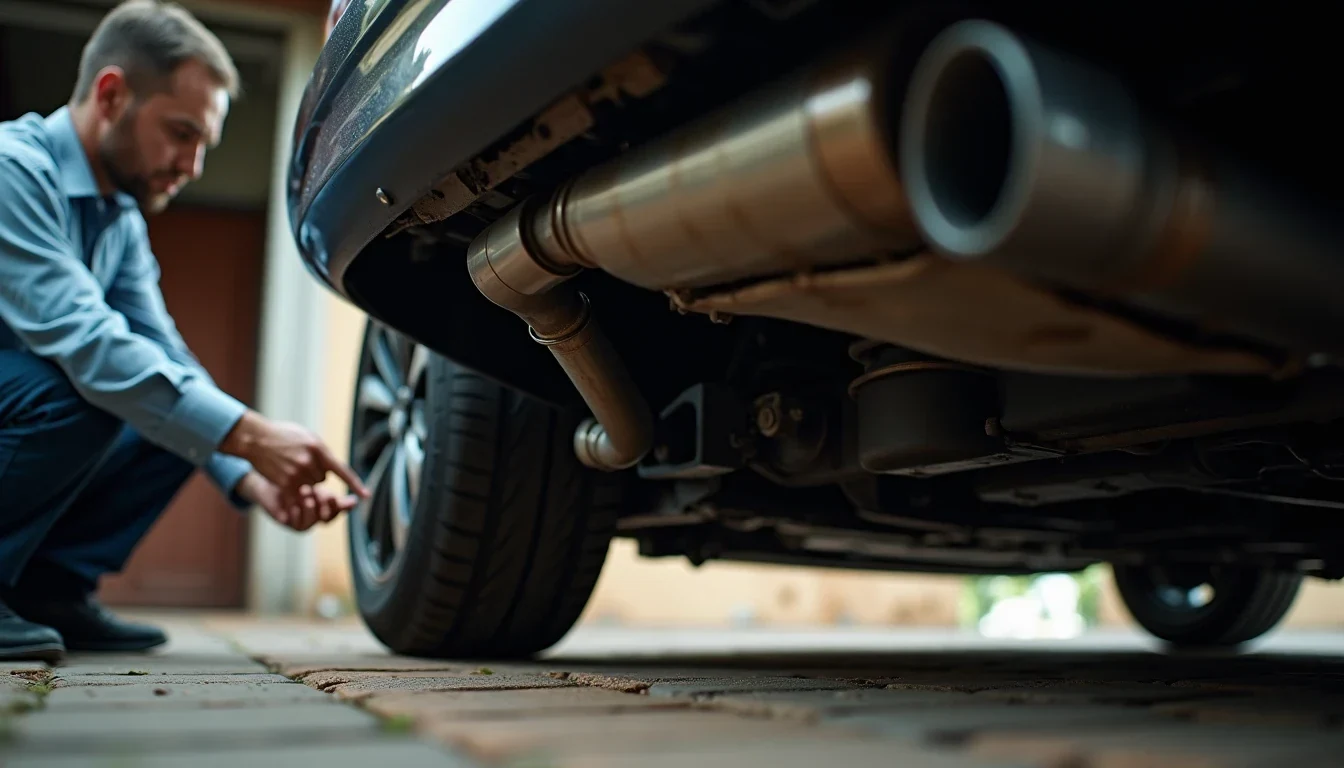
The first lie about free flow exhausts is that they are all about power. On a stock hatchback, most of what you buy is noise, polish, and a nicer tip out back. Power comes later, and only if the engine can actually use the extra flow. On a turbo car, the same money can buy a real change in how the car pulls. On a naturally aspirated one, it can buy a better soundtrack and a lighter wallet.
Sellers gloss over that part. They also gloss over the law. A system can look neat on the ramp and still be a headache the first time a metro officer, a testing station, or your insurer takes an interest. South African road rules do not give exhaust builders a free pass just because the pipe is stainless and the welds are tidy.
What a free flow really costs
The cheapest honest comparison is not between one catalogue pipe and another. It is between a rear section only, a full cat-back, and a turbo-back system that replaces the restrictive parts upstream as well.
A rear section, often called an axle-back or box-and-back job, can start around R4,500 and climb to R12,000 for a custom stainless cat-back build, as listed by 1Exhaust in June 2026 on its South African guide page. The same guide says imported premium systems can run from R10,000 to R60,000+, depending on the badge and the hardware. 1Exhaust, June 2026
That is the clean “customer walk-in” number. Fitment-centre pricing in the wild is messier because vehicle shape matters. A Powerflow Bellville page says each system is quoted individually and built to suit the car. This is exactly how most custom exhaust shops work. Their own marketing claims better flow, but not a fixed retail number, which is the honest part. Powerflow Bellville
For imported off-the-shelf systems, the numbers move up fast. A REMUS cat-back listing in South Africa shows ZAR 19,310.23 incl. VAT for a Fiesta ST application, as listed on the product page crawled in July/August 2026. Their complete-system page also shows a BMW M3/M4 racing downpipe-back system at ZAR 83,323.25 incl. VAT, and a Honda Civic Type R cat-back at ZAR 48,164.30 incl. VAT, both on the same South African storefront. REMUS cat-back, REMUS complete system
If you want a local custom benchmark rather than an imported shelf price, SOS Performance lists a Performance Exhaust System at R6,500 and a Downpipe/Decat/Midpipes/Exhaust bundle at R2,999 on its site, with the prices shown at the time of crawl in August 2026. This gives you a useful real-world spread: rear section work sits in the low thousands, full systems climb quickly, and turbo hardware pushes the bill higher still. SOS Performance
Material changes the bill too. Stainless lasts longer and costs more. Mild steel is cheaper up front, but it starts looking tired after enough rain, road grime, and pothole punishment. This trade-off is not a theory in this market. It is the difference between paying once and paying twice.
Where the money goes on a box and back
A box-and-back setup is the simplest way to change the car without rebuilding the whole exhaust. The rear silencer comes out, a freer-flowing box goes in, and the rest of the system stays stock.
On a budget, this makes sense if you want tone first and are not chasing numbers. On a healthy stock hatch, the gain is usually too small to feel in daily driving. One South African forum post from a tuner on VWClub described a naturally aspirated car as the sort of platform where freer exhaust flow and gas-flow work might only deliver a modest bump, roughly 5 to 10 percent when paired with the right supporting work, not as a standalone miracle. That is forum talk, not a lab sheet, but it matches what the better shops keep saying in softer language. VWClub post
A more cautious shop line comes from Powerflow Bellville, which says its systems improve flow, response, and efficiency, and claims up to 10% better fuel efficiency on some builds. That is a sales claim, not a dyno result, but it is still useful because it shows where the market thinks the customer value sits: sound, response, and small gains, not a dramatic before-and-after. Powerflow Bellville
For a Polo Vivo, Yaris, or similar naturally aspirated commuter, a rear section is usually the part you buy because you want a different note and a cleaner-looking tailpipe. If you are expecting a proper shove in the back, you are paying for the wrong outcome.
Where the spend starts to pay on a turbo car
Turbo engines play by different rules. The exhaust is part of how the turbo spools and how hard it has to work.
The downpipe matters more than the shiny rear section. On turbo cars, the tightest point is usually the section immediately after the turbo. Open that up and the engine breathes easier, the turbo sees less resistance, and the tune has room to do real work. When a shop builds a turbo-back system properly, the gain can be obvious on the dyno and in the seat.
THANAS in Cape Town published a Mk5 Golf GTI case study showing a car that went from 172 kW / 362 Nm to 199 kW / 438 Nm after calibration work with an aftermarket downpipe and exhaust already fitted, with the article posted in 2026 on its site. The turbo car responded to the freer hardware with a meaningful torque jump across the rev range. THANAS GTI case study
Another South African tuner, SR Speedworx, published dyno results for a Golf 6 GTI showing 250 whp and 431 Nm on a Stage 2+ car running 95 fuel and supporting hardware, then 260 whp and 427 Nm with water-meth added. On turbo platforms, exhaust hardware belongs in a package, not as a lonely bolt-on that you hope will do all the heavy lifting. SR Speedworx
If you want a local performance shop to say the same thing in plainer language, Evo Performance’s Focus ST page lists a Stage 2 package with intake, downpipe, cat-back exhaust and tune, and shows a jump from roughly 210 to 220 kW in Stage 1 form to 250 to 270 kW in Stage 2, with torque moving from about 420 to 450 Nm to 500 to 550 Nm. That is not a stock-exhaust-only result, but it shows the exhaust is one part of a system that turbo cars can actually exploit. Evo Performance Focus ST
Where free flow money gets wasted
The waste case is usually a stock naturally aspirated car with no other plan.
If the car is a daily Polo Vivo, Yaris, Avanza or similar, and you are not planning cams, intake work, or ECU calibration, the exhaust is mostly a sound purchase. That is fine if sound is what you want. It is a poor buy if you are measuring every rand against actual pace.
The same goes for drivers who care more about fuel use than noise. A free flow exhaust does not magically improve economy. Some shops market it that way, but the best you can usually say is that a lighter-breathing engine may respond a little better. The driver’s right foot usually undoes the fuel saving.
There is also the warranty question. Once you modify the exhaust, you are no longer in factory-spec territory, and many insurers and warranty administrators want the change declared. Miway’s 2026 guidance on car modifications says modifications can affect premiums and claims, and Pineapple’s policy wording tells customers to disclose any material change that could affect the risk profile or premium. Miway, Pineapple
The insurer will not reject the car outright. Silence is a bad bet.
What the law actually says
The road rule starts with the National Road Traffic Act and its regulations, not with whatever the exhaust shop swears is “fine”.
Section 75 of the Act empowers regulations covering excessive noise from the design, condition, or misuse of a silencer, among other things, and the Act’s consolidated text makes clear that vehicle equipment and road use are regulated nationally. National Road Traffic Act
The practical regulation people actually run into is Regulation 209 of the National Road Traffic Regulations, 2000. It says a vehicle must have an efficient exhaust silencer or muffling device, must not be arranged to send exhaust gas around it, and must not exceed the limits prescribed in the relevant SABS code when tested. Acts Online, Regulation 209
A straight pipe is not some clever loophole. It is the sort of modification that puts you into the zone where the vehicle is plainly loud, and possibly non-compliant.
The wider noise rule is not just about stationary testing either. The Act and regulations also make room for nuisance complaints and for enforcement where the exhaust is obviously excessive. In plain English, if the car is loud enough to make neighbours angry or draws attention at a roadblock, you are already in the wrong conversation. National Road Traffic Act
Western Cape Government roadworthiness guidance also lists the exhaust system as part of vehicle testing. This is a reminder that the issue is not only about noise, but about the condition and integrity of the whole system. Western Cape roadworthiness testing
How to stay on the right side of the meter
Buy the right hardware first. A resonator and a proper rear silencer are not sexy, but they keep a car from sounding like a bin full of spanners.
Keep the catalytic converter in place unless you have a track-only car and enjoy explaining yourself. On a turbo build, a high-flow catalytic converter is a smarter road-going choice than a de-cat pipe. It flows better than stock, cuts the worst of the restriction, and keeps the car closer to legal and insurance-friendly territory.
Ask for a decibel figure in writing before fitment. If the shop cannot tell you what it is aiming for, it is guessing.
Use a testing station or proper sound measurement after the install if you are building a loud car for the street. A phone app is a rough guide, not a defence.
The clean verdict
If you drive a stock naturally aspirated hatchback and want more pace, a free flow exhaust is usually the wrong first spend. Buy tyres, brakes, suspension, or save for a proper tune path instead.
If you drive a turbo car and are already planning a tune, the exhaust can be money well spent, especially once the downpipe is part of the conversation.
If your goal is sound, a box-and-back job is the cheaper mistake. If your goal is real performance, the value starts only when the rest of the package is built to match.