The OBD2 Scanner South African Home Mechanics Truly Need
26 August 2026
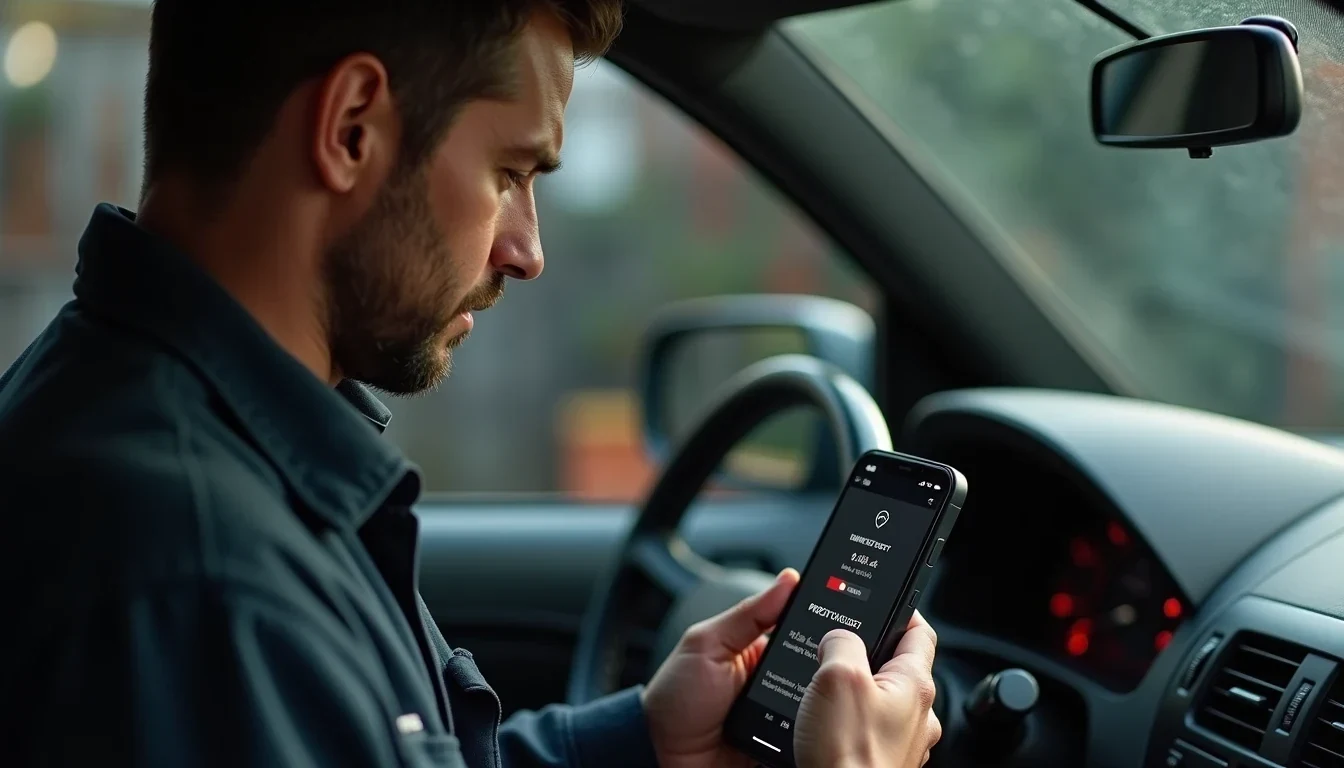
A R200 Bluetooth dongle from Takealot will read your check-engine light. Whether it tells you anything worth knowing before you start throwing parts at a misfire is a different question entirely. South African home mechanics have flooded forums with screenshots of generic P0xxx codes, convinced they’ve diagnosed a blown head gasket when the scanner never reached the manufacturer-specific data that would have pointed to a failing coil pack. These devices promise more than they deliver, especially at lower price points. The local retail landscape (Takealot’s algorithmic bestsellers, Midas’s locked glass cabinets) does almost nothing to close this gap.
What R150 to R500 Actually Buys You
The entry-level Bluetooth dongle market in South Africa is dominated by ELM327 clones and their derivatives, Vgate iCar units among them. These plug into your OBD2 port and broadcast to a smartphone app, typically Torque Pro or Car Scanner ELM OBD2. Hardware cost is minimal because the intelligence lives in software you already own (your phone) and software someone else maintains (the app).
For petrol vehicles from 2008 onward and diesels from 2009, these dongles perform adequately at the baseline tasks mandated by OBD2 regulation. They pull generic powertrain codes (P0xxx series), clear fault memories, display freeze-frame data, and stream a limited set of live parameters. RPM, coolant temperature, vehicle speed, and basic oxygen sensor voltages arrive in roughly real time. The I/M readiness screen, which checks whether emissions monitors have completed self-tests, works well enough for pre-roadworthy checks.
Limitations arrive quickly. Generic codes only tell you what the standard says, not what Volkswagen or Toyota wrote into their ECU logic. A P0301 (cylinder 1 misfire) from a cheap dongle gives you a cylinder and a symptom. The manufacturer-specific P1xxx code that the same ECU stores, detailing ignition coil circuit behaviour or fuel injector balance rates, remains invisible. You are diagnosing with half the conversation muted.
Connectivity itself becomes a diagnostic variable. Bluetooth pairing fails mid-scan. The app crashes during data logging. Your phone’s battery dies because you forgot to charge it before a garage session timed around load-shedding. These are not edge cases. They are the working reality of a tool that outsources its reliability to consumer electronics never designed for workshop voltage spikes and RF interference.
What Dedicated Scan Tools Add, and Where the Price Jumps
Dedicated units start around R400 for basic code readers (Launch CReader series, Autel MaxiScan) and climb past R25,000 for professional multi-system platforms. The physical format alone changes the workflow with a built-in screen, physical buttons, internal processor, and no phone dependency. The hardware wrapper matters less than what the firmware can reach.
Mid-range dedicated tools access manufacturer-specific codes across multiple vehicle systems. The P1xxx powertrain extensions appear, but so do Bxxxx (body), Cxxxx (chassis), and Uxxxx (network) codes. ABS fault tracing, SRS airbag diagnostics, transmission behaviour logging, and body control module interrogation become available. For a home mechanic working on a 2012 Polo Vivo with intermittent airbag warnings or a Ford Ranger with transmission shift quirks, this depth converts guesswork into targeted testing.
Processing speed separates useful live data from decorative graphs. Dedicated processors refresh parameter streams faster, graph multiple PIDs simultaneously, and maintain logging without stutter. Cheap dongles bottleneck at Bluetooth bandwidth and phone CPU scheduling. When you are tracing a lean condition that only manifests above 4,000 RPM under load, dropped data points mean missed diagnosis.
Bi-directional control, the ability to send commands to vehicle components rather than merely reading their status, sits almost exclusively in mid-to-high-end dedicated tools. Fuel pump activation, throttle body relearn procedures, DPF regeneration initiation, injector coding for replacement parts, these actions require a scanner that speaks the manufacturer’s protocol dialect fluently. No R250 Bluetooth clone offers this. The workshop charging you R800 for a “computer reset” after a throttle body clean is using a tool that cost R12,000 and earned its place through capability, not markup.
The Protocol Reality for Older SA Vehicles
South Africa’s OBD2 adoption followed European regulatory timing: compulsory for petrol vehicles from 2008, diesel from 2009. The CAN protocol (ISO 15765-4) dominates this era and every modern scanner handles it without drama. The complication lives in what came before.
Late-1990s to mid-2000s vehicles make up a significant portion of South Africa’s modified car fleet. They used ISO 9141-2 and KWP2000 (ISO 14230-4) extensively. Volkswagen’s Polo 9N and Golf Mk4/Mk5 generations, BMW E46 and early E90 chassis, Mercedes W203 and W211 models pre-facelift, Toyota RunX and first-generation Yaris, Honda’s local offerings of that era, these cars populated school parking lots and now populate budget build threads. Their diagnostic ports respond to protocols that basic dongles claim to support but often implement poorly.
J1850 VPW and J1850 PWM, primarily American-manufacturer protocols, appear less frequently in South African vehicle populations but matter for owners of grey-import Ford Mustangs, certain Jeep derivatives, and specialist builds using US-sourced powertrains. Protocol support on paper does not guarantee reliable communication at the voltage levels and timing tolerances these older implementations demand.
Most scanners list “full protocol support” in marketing materials, but the actual implementation varies. ELM327 clones in particular are notorious for protocol translation failures that manifest as “no communication” errors or partial data retrieval. A genuine ELM327 v1.5 or v2.1 chipset performs protocol negotiation correctly. The R180 “super mini” unit shipping from a Takealot marketplace seller almost certainly does not contain that chipset, regardless of what the listing claims.
What Home Mechanics Actually Need
The honest assessment starts with your fleet and your intent. If you own one 2015+ vehicle, never modify it, and only want to pre-check roadworthiness readiness or verify whether that check-engine light warrants immediate panic, a verified-quality Bluetooth dongle suffices. The emphasis belongs on “verified-quality” rather than “Bluetooth dongle.” Vgate’s iCar Pro, sourced from a reputable local seller with warranty support, runs around R450-R650. It contains actual ELM-compatible hardware rather than the cheapest possible microcontroller flashed with partial firmware. This is the floor for reliable operation.
For anyone crossing into modification, the calculation shifts. Stage 1 software on a turbocharged engine changes boost targets, fueling maps, and torque limiters. The factory ECU now operates outside its original calibration envelope. Monitoring knock retard, actual versus requested boost, fuel trim behaviour under load, and exhaust gas temperature trends becomes essential for catching problems before piston rings do. Basic dongles expose some of these parameters. They do not expose all of them, they do not log reliably at the rates tuning assessment demands, and they cannot command the relearn procedures that modified ECUs often require after significant changes.
Dedicated tools in the R2,000-R6,000 range (Launch CRP123X, Autel MaxiCOM MK808, similar-tier units) represent the practical sweet spot for serious home mechanics. They offer multi-system coverage, bi-directional control on common SA vehicle brands, acceptable update policies (typically 1-2 years included, subscription thereafter), and hardware robust enough for garage environments. The purchase hurts more than a Bluetooth dongle. So does replacing an engine because lean condition data arrived too late.
Marketing Fluff to Ignore
“Full system diagnosis” on a R350 dongle listing means the seller hopes you will not discover the limitation until after delivery. “Professional-grade” applied to hardware costing less than a tank of 95 octane insults the meaning of both words. “Works on all cars 1996+” ignores the protocol reality that pre-2008 SA vehicles present, and the manufacturer-specific depth that “works” implies but cheap hardware cannot deliver.
Bi-directional control marketed without specific actuation lists should trigger scepticism. A tool either names the procedures it supports (throttle body adaptation, EPB retraction for brake service, steering angle sensor calibration) or it does not perform them. Generic promises are empty promises.
Update subscriptions deserve scrutiny. Some professional-tier tools lock functionality behind annual payments that exceed the original hardware cost over a five-year ownership period. For home mechanics, this transforms a capital purchase into a recurring liability. Check whether the tool functions offline with existing coverage after subscription expiry, or whether it bricks partially. South African internet reliability makes cloud-dependent tools a questionable proposition regardless of cost structure.
A Straight Verdict for Named Use Cases
Single modern vehicle, no modification plans, budget constrained to under R500: Vgate iCar Pro or equivalent verified ELM327 hardware, paired with Torque Pro (once-off app purchase, approximately R100). Accept the limitations. Do not pretend to deep diagnosis.
Multiple vehicles including pre-2008 models, light modification (intake, exhaust, basic software), occasional helping of friends’ cars: Launch CReader or equivalent entry dedicated tool at R1,500-R3,000. The protocol support and manufacturer-specific code access repay the premium repeatedly.
Active modification, turbocharged builds, standalone ECU consideration, or regular diagnostic work across varied makes: Mid-range dedicated tool at R4,000-R8,000. The bi-directional capability and logging depth become essential infrastructure, not luxury.
Professional or semi-professional use, multiple customer vehicles, need for latest model coverage: Accept the subscription model and buy accordingly. The economics differ when the tool generates income rather than merely avoiding workshop labour charges.
The R200 dongle in your Takealot cart will illuminate your check-engine light. It will not illuminate why your modified Golf runs lean on cylinder 3 above 5,000 RPM, why your bakkie’s DPF regeneration cycles have shortened from 800km to 200km intervals, or whether that airbag warning justifies driving to Durban or parking immediately. The difference between those answers and their absence is the difference between owning a diagnostic tool and owning a light bulb that plugs into your OBD2 port.