Polo Vivo Lowering Costs Springs Coilovers And SA Potholes
19 August 2026
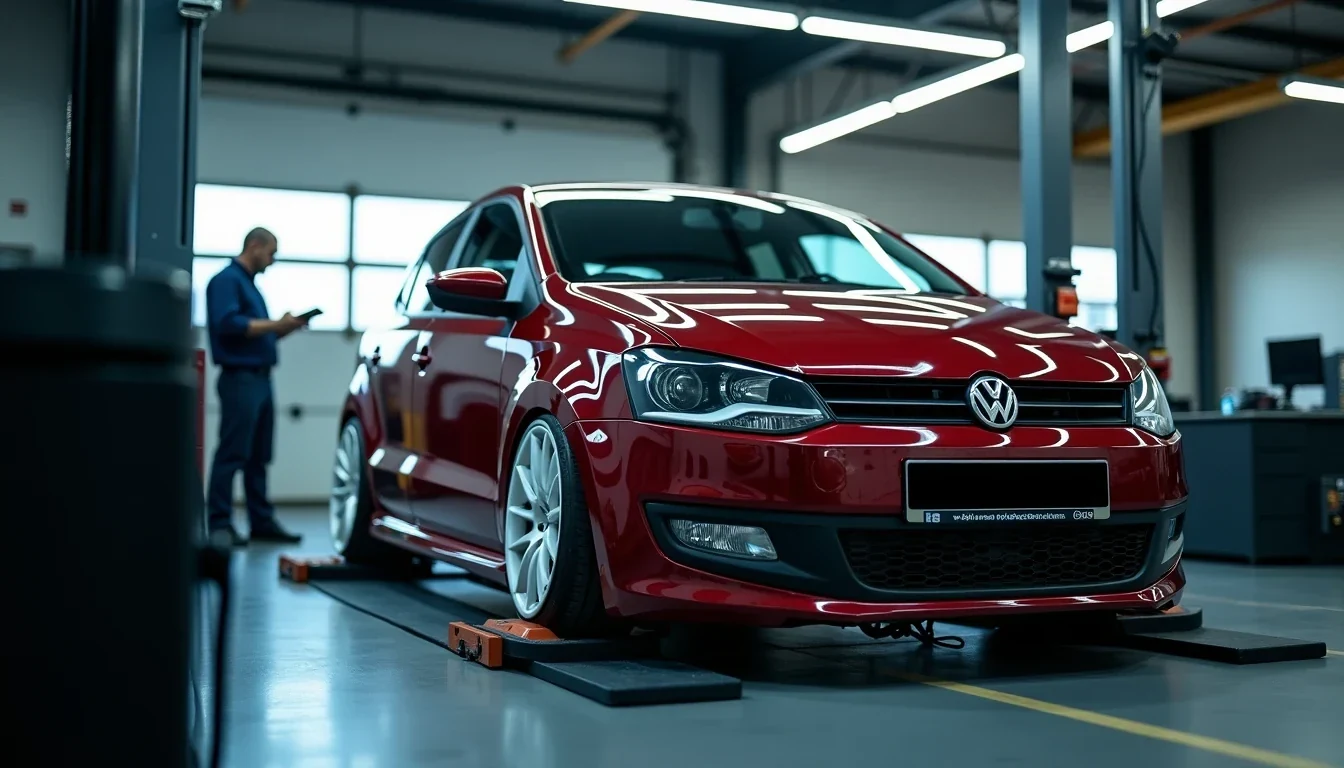
A lowered Polo Vivo looks tidy in the car park but expensive in the wrong lane. The sticker price for springs or coilovers is only the entry fee. The real bill arrives when you add fitment, alignment, and the first time a bad pothole in a bad neighbourhood of a bad road writes off the mood.
Lowering a hatch in this market is cheap only if you stop counting too early. The moment you price the parts properly, pay someone who knows what they are doing, and put the car on a 3D alignment rack afterwards, the numbers stop being playful. They become a decision.
Springs or coilovers
Lowering springs are the blunt instrument. You swap the coils, keep the original damper setup, and drop the car a modest amount. This suits a daily that wants a cleaner stance without turning every speed bump into a negotiation.
Coilovers are the proper tool. They replace spring and damper as a matched set, usually give you ride-height adjustment, and on better kits, damping control too. You pay more for range and correction, not just a lower ride height.
For a Polo Vivo sized hatch, published South African pricing as of August 2026 sits in two very different bands. Autostyle lists an Evo Lowering Kit for VW Polo Vivo 40mm Drop at R2,595, a JOM Blue Line Coilover Suspension for VW Polo Vivo/6R 2010+ at R5,995, and an Eibach Pro Line lowering kit for Polo 9N3/9N at R5,800. This gives a decent picture of the spring end of the market (Autostyle Evo Vivo kit, Autostyle JOM Vivo coilover, Autostyle Eibach Polo kit).
If you want the more serious coilover lane, KW Suspensions South Africa lists a KW V1 coilover kit at R21,088 for one application, while TrackRecon shows ST X coilovers from R26,000 and KONI coilovers from R36,000 as quote-led products. This is the top end of the ladder, not the daily-driver budget shelf (KW Suspensions SA, TrackRecon suspension parts).
What the parts actually cost
A useful budget starts with the lower end that real owners actually buy, not the glossy top shelf.
| Item | Springs path | Coilover path | As of |
|---|---|---|---|
| Parts | R2,595 for an Evo Polo Vivo 40mm drop kit, with Eibach examples at R5,170 to R5,800 | R5,995 for JOM Blue Line Vivo coilovers, with higher-end kits from R21,088 to R36,000+ | Aug 2026 |
| Fitment labour | R1,800 to R3,500 editorial budget band | R2,500 to R4,500 editorial budget band | Aug 2026 |
| 3D wheel alignment | R200 to R500 at Supa Quick, with the FAQ stating alignment can cost from R200 to R500 depending on wheel type | R200 to R500, same reason | Aug 2026 |
| Initial all-in total | R4,595 to R6,595 | R8,695 to R10,995 | Aug 2026 |
The spring path above uses the lowest clearly published Polo Vivo compatible spring kit in the current South African market as the base reference, then adds the workshop and alignment bands from the research brief. The coilover path uses the current JOM Vivo coilover price as the entry point, because that is the cheapest clean public figure I found for the car shape in question. It then adds the same labour and alignment costs.
The math matters because people keep shopping the parts line and pretending the rest is optional. It is not.
The labour bill is not a rounding error
Suspension fitment is not a weekend driveway job unless you have the tools, the space, and the appetite for broken knuckles. The brief’s workshop-rate band of R450 to R750 an hour lines up with the kind of money suspension work already attracts in practice. The flat rates it gives, R1,800 to R3,500 for springs and R2,500 to R4,500 for coilovers, are exactly where a sensible hatchback owner should budget.
That spread exists because springs are simpler to quote, as the car is being lowered without changing the damper assembly. Coilovers take longer because the whole unit goes in, the height has to be set, and the installer usually ends up doing more initial adjustment before the car goes out the door.
For a plain daily, there is no heroism in paying less for the job and then paying twice after something clunks, sits crooked, or eats tyres.
Alignment is the line item people skip and regret
Lowering changes the geometry. Camber shifts, toe shifts, and the tyres stop meeting the road the way the factory intended. Supa Quick’s FAQ is direct enough to use as a benchmark here, saying wheel alignment can cost from R200 to R500 depending on wheel type (Supa Quick FAQ).
The money you save by skipping it disappears fast. A car with toe out of range will chew the edges of a front tyre. A car with excessive negative camber can look planted while quietly scrubbing the inside shoulders bald. This is how a cheap lowering job becomes a tyre budget problem.
The hidden cost is not abstract. The research brief pegs replacement tyres at R1,500 to R3,000 or more per tyre when alignment damage gets bad enough. That is the whole joke about ignoring alignment. You save a few hundred rand and buy a much larger headache.
The other reason to do it immediately is safety. A badly aligned lowered car can pull, feel nervous at speed, and do odd things through braking zones and lane changes. The car does not need to be dramatic to be wrong. Slightly wrong is enough.
The pothole tax
This is where the romance dies. A lowered car on smooth tar is one thing. A lowered car on ordinary city roads, worn provincial patches, unmarked humps, and surprise craters is another.
The lower you go, the less suspension travel you keep in reserve. The tyre, rim, shock, spring, sump, exhaust, and underbody all take a harsher hit when the road turns ugly. The brief is right to treat potholes as the central problem, because they are not a rare event here. They are part of the operating environment.
There are three practical consequences.
First, impact damage becomes much more likely. Bent rims, burst tyres, damaged springs, tired dampers, and bent suspension arms stop being freak events and start becoming the cost of driving normally.
Second, clearance stops being a theory and becomes a daily habit. Speed bumps, driveway aprons, and parking ramps need to be approached at awkward angles, often at crawling pace. That gets old quickly if the car is your commuter, not your toy.
Third, comfort drops. Less travel means more of the road reaches the cabin. A tasteful drop can feel fine on fresh tar. The same drop on rough roads feels like you chose punishment.
The legal and insurance side
Suspension changes do not live only in the workshop. South African roadworthy testing covers suspension, undercarriage, wheels, steering, brakes, and vehicle dimensions. The Western Cape Government’s roadworthiness guidance makes that plain (Western Cape Government roadworthiness). The NRCS also states that vehicle modifications must conform to compulsory safety-critical specifications (NRCS homologation).
The practical reading is simple. If you lower the car so much that it scrapes, handles badly, or looks unsafe, you are making your own life harder at inspection time.
Insurance is the other trap. Miway says suspension upgrades count as modifications that may affect risk and claims. OUTsurance states that non-standard accessories need to be specified if you want them covered (Miway on modifications, OUTsurance non-standard accessories). The sensible move is to declare the change before the first claim conversation, not after.
What a sane hatchback budget looks like
For a typical Polo Vivo owner, the choice is not really between cheap and expensive. It is between moderate and serious.
If the goal is stance, a cleaner wheel gap, and a mild improvement in body control, lowering springs make sense. The all-in spend can be kept around R4,595 to R6,595 if you buy in the lower end of the market and pay normal fitment and alignment costs.
If the goal is adjustability, future ride-height changes, or a platform you may later refine, entry-level coilovers land closer to R8,695 to R10,995 once you include the real-world costs.
The jump is large enough to matter. Springs buy you a look and a modest handling shift. Coilovers buy you control, but control costs money before you ever touch a damping knob.
The blunt verdict
For a daily driven hatch that lives on ordinary roads, lowering springs are the smarter spend if you only want the car to sit lower and feel a bit tighter. Coilovers are only the better buy if you will use the adjustability, or if you are already planning a broader suspension setup.
The mistake is pretending either option ends at the parts invoice. It does not. The fitment labour and alignment are part of the job, not extras. On a road network full of potholes and speed bumps, ride height is not just a styling choice. It is a recurring maintenance decision.