Retreat Mobile Mechanics Keep Your SA Build On Track
4 September 2026
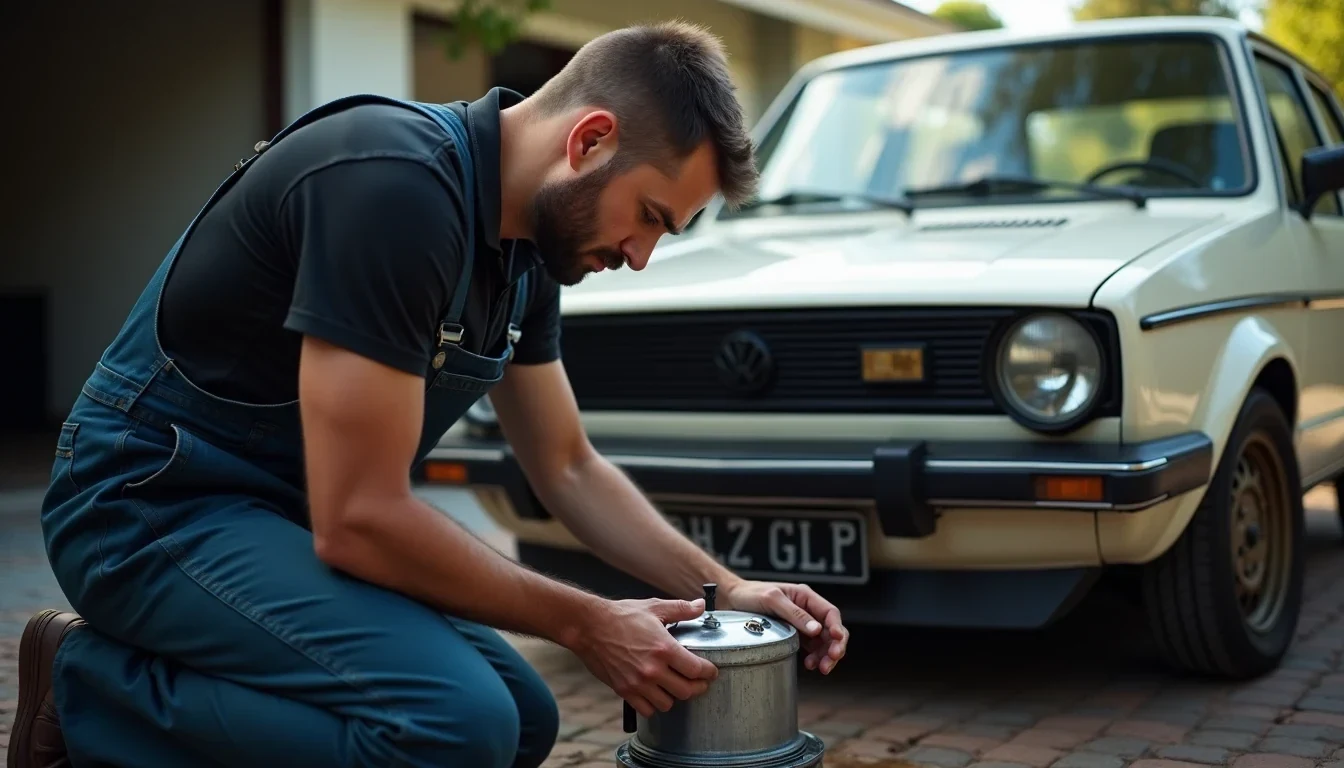
A modified car sitting in a workshop for three weeks waiting on a service bay is a build that isn’t getting finished. Anyone who’s tried to schedule a major service around a full-time job, Cape Town traffic, and Eskom’s latest schedule knows the math: drop the car Monday, hope for Friday, spend half that week borrowing lifts or sitting in MyCiTi queues. The mobile mechanic model flips this entirely. The spanner work comes to your driveway, your office parking spot, or the spot outside your flat where your project Golf lives under a cover. For builders in Retreat and the broader Cape Town basin, this is a logistical solution to a problem that costs more in lost time than most want to admit.
Why Workshop Queues Kill Project Momentum
Every builder has lived the stall. You finally sourced the downpipe, the intercooler piping is mocked up, and the tune appointment is two weeks out. Then the daily throws a code. Or the oil change is 4,000km overdue and you’re not about to load boost on dirty sump juice. So you book the car in for a service, and suddenly your only running vehicle is off the road for days that stretch into a week because the workshop is backed up, parts need ordering, and nobody returns calls.
The cost is not just the invoice. It is the Saturday you lose to collection runs. It is the track day you skip because the car is still on a hoist. It is the mental friction of not knowing whether the mechanic noticed the weeping coolant hose you mentioned, or whether that note got lost between the service advisor and the actual spanner turning the nut.
Mobile mechanics remove the queue. The appointment is yours. The time block is fixed. The mechanic arrives with tools and parts and works on your car while you answer emails, prep dinner, or finally finish welding that exhaust flange. For project builds where momentum is everything, losing a week to a workshop queue kills progress in ways no labour rate captures.
What Mobile Servicing Actually Covers
Scepticism is fair. A van with tools cannot replicate a full workshop with a four-post hoist and an engine crane. But the range of work that travels well is broader than many assume, and for maintenance and diagnostics it is nearly complete.
Routine servicing is the obvious fit. Oil and filter changes, air and cabin filter swaps, spark plug replacement, and fluid top-ups for coolant, brake, and power steering systems. These jobs need access, drainage, and torque wrenches, not a pit. A mobile unit with a good trolley jack, axle stands, and a spill mat handles them cleanly on a level driveway.
Diagnostics travel even better. A quality OBD-II scanner, a multimeter, and a mechanic who understands the difference between a generic fault code and what your specific aftermarket ECU is actually reporting, these fit in a toolbox. For modified cars throwing codes from a recent tune or a sensor swap, this is often the fastest path to answers. No flatbed to a workshop where the first technician plugs in, reads “P0171 system too lean,” and recommends a mass airflow sensor your build deleted six months ago.
Brake work sits in the middle. Pad and disc swaps on most street cars are straightforward mobile jobs. Fluid flushes need a pressure bleeder and clean fluid, both portable. Caliper rebuilds or line replacements get more involved but remain possible with space and time.
Auto electrical work rounds out the mobile offering. Battery testing and replacement, alternator checks, wiring fault tracing, and troubleshooting of aftermarket additions like gauges, lighting, or audio upgrades. These jobs often suffer in workshops where the auto elec specialist is a different department with its own queue. A mobile mechanic who handles both mechanical and electrical diagnosis in one visit cuts the loop length dramatically.
The Retreat Context and What iCAR Delivers
Retreat sits in the Cape Flats corridor, dense with housing and light industrial space, short on dedicated workshop facilities for the volume of vehicles actually on its roads. For residents running modified dailies or project cars stored at home, the nearest reputable workshop might be in Wynberg, Ottery, or further afield. The travel adds time and cost before any spanner turns.
iCAR Mobile Mechanics operates in this gap, delivering mechanical services and repairs in Retreat through the Michanic platform. The model is specific: book online, receive an upfront quote, and a mechanic arrives at your location with the tools and parts for the job. No drop-off, no collection, no sitting in a waiting room wondering if the service advisor actually passed on your note about the knock at 3,000rpm.
The Michanic platform handles the booking infrastructure and quote transparency. You know the labour cost before the van arrives. Parts are quoted separately, and you choose whether to supply your own or take the mechanic’s recommendation. For builders particular about oil brands, filter specs, or brake pad compounds, this flexibility matters. You are not locked into whatever bulk deal the workshop has with its supplier this quarter.
What Mobile and Workshop Servicing Actually Cost
The honest comparison requires looking past the headline labour rate. Workshop rates in Cape Town run from R450 to R850 per hour depending on specialisation and postcode, with dealerships at the top end and independent specialists clustering around R550-R700. Mobile mechanics often quote lower hourly rates, sometimes 10-20% under comparable independents, reflecting lower overheads. No workshop rent, no reception staff, no waiting room coffee machine subsidised by your service bill.
The real savings are elsewhere. Towing a non-runner in Cape Town starts around R500 for a short local haul and climbs past R1,500 if you need transport from Retreat to a northern suburbs specialist. A mobile mechanic diagnoses on-site and often repairs on the spot, converting a potential tow and workshop queue into a single visit with a known cost.
Time carries value too. A typical workshop service consumes four to six hours of your life in transport, waiting, and collection. At a conservative R200 hourly value for skilled labour, that is R800-R1,200 in hidden cost before the invoice arrives. Mobile servicing returns that time. You work, you build, you sleep, while the service happens outside.
The transparency of upfront quoting also protects against the classic workshop creep: the phone call mid-service announcing additional work “we noticed while we were in there.” Some of this is legitimate discovery. Much is upsell. A fixed quote with defined scope removes the uncertainty, and the mechanic is working on your turf, not theirs, which changes the dynamic.
Qualifications and What to Verify
Mobile mechanics operate outside the visual cues of a fixed workshop. No RMI plaque on the wall, no reception displaying certificates, no bay you can inspect for organisation and cleanliness. The due diligence falls on you. A bad mobile experience, a stripped sump plug, or a misdiagnosed electrical fault leaves you with a broken car in your own driveway and a mechanic who has already driven away.
Verify qualifications directly. Ask for trade certification, Red Seal or equivalent, and specific experience with your vehicle or modification type. A mechanic who knows VW’s EA888 timing chain issues from a decade of dealer work carries different knowledge than one whose experience is mostly Toyota bakkies. For modified cars, ask explicitly about experience with forced induction, standalone management, or the specific platform you run.
Insurance is non-negotiable. Public liability and professional indemnity cover should be confirmed in writing, not assumed. If a mobile mechanic damages your vehicle on your property, or injures themselves and claims against you, the absence of proper cover becomes your problem.
Reviews on the Michanic platform or independent sources provide signal, but read critically. Look for specifics: “diagnosed the misfire correctly when two workshops missed it” carries weight. “Great service, will use again” does not. For builders, finding a mobile mechanic who understands modified cars, who will not panic at a deleted EGR or a tune that throws codes the factory manual does not recognise, is worth the search time.
Load-Shedding and the Home Garage Reality
South African builders already structure their lives around Eskom. The home garage session happens when the power is on, or it runs on inverter and LED work light when it is not. Mobile mechanics fit this rhythm precisely. You book for a slot when you have power, or the mechanic works with battery tools and vehicle power for tasks that allow it. No workshop closing at 5pm because their lights went out and their hoists are dead.
For diagnostics and coding work requiring stable power, the mechanic’s portable power pack or your own inverter setup bridges gaps that would stall a fixed workshop. The flexibility to schedule around your own load-shedding stage, rather than a workshop’s fixed hours, is a genuine operational advantage in 2024 and likely beyond.
When a Workshop Still Wins
Honesty cuts both ways. Some jobs need a hoist, a press, or a clean room. Engine-out work, major transmission rebuilds, cylinder head machining, and full resprays do not travel. A mobile mechanic who claims otherwise is selling beyond their capability. The smart builder uses mobile servicing for maintenance, diagnostics, and the brake and suspension work that keeps a daily or project reliable, while reserving the heavy mechanicals for specialists with the right facilities.
The split is not either-or. It is strategic allocation. Mobile for the routine that must not stall the build. Workshop for the transformation that requires infrastructure. Knowing which is which separates builders who finish projects from those who post “still waiting on the shop” updates for months.
Making the Model Work for Your Build
Start with a test job. A routine service, a brake pad swap, a diagnostic scan for that intermittent check engine light. Evaluate punctuality, cleanliness, communication, and whether the mechanic actually listens to your description of symptoms. Build the relationship before you need urgent work.
Be specific in booking. “Service my car” invites assumptions. “Oil and filter change with 5W-40 full synthetic, air filter check, brake fluid test and top-up if needed, and scan for codes” gives the mechanic a scope to quote against. For modified cars, state the modifications upfront. A mechanic arriving expecting a stock airbox and finding a cold-air intake with no MAF sensor needs that information before the van loads.
Have space ready. Level ground, working room, and access to power if needed. The mobile model assumes you provide the venue; make it one where work can happen efficiently.
Keep records. Every receipt, every part number, every torque spec noted. Your build history matters for resale, for warranty claims on parts, and for your own reference when something fails two years later and you need to remember what was done when.
The mobile mechanic is a tool in the builder’s kit, not a replacement for the entire workshop ecosystem. Used well, it protects momentum, respects time, and keeps a build moving through the maintenance phases that separate the cars that run from the cars that sit.