Polo Vivo Upgrades That Deliver Real Value In South Africa
22 August 2026
A Polo Vivo can take sensible mods well, but only if you stop buying the Internet’s favourite nonsense. The cheapest shiny part is rarely the one that gives the best result. On a car that lives on potholes, speed bumps, and the occasional badly repaired driveway, the wrong upgrade can make the whole thing worse.
The cleanest way to spend money is in stages. Start with the parts that make the car nicer to drive every day, then add the bits that improve control and response, and leave the fake power claims and bargain-bin hardware on the shelf. For the figures below, the price ranges are as of Q2 2024 and include typical fitment where the source material gives that detail.
Start with the bits you feel every day
The first money should go where your hands, ears, and spine notice it. On a Polo Vivo, that means intake sound, cabin noise, the stereo, and a steering wheel that does not feel like it came out of a rental spec sheet.
A drop-in performance air filter from K&N or BMC usually sits around R1,000 to R2,000 as of Q2 2024. It will not turn a naturally aspirated Vivo into something quick, but it does flow better than a basic paper element and can be reused. This makes it one of the few cheap parts in this game that actually has a case for itself.
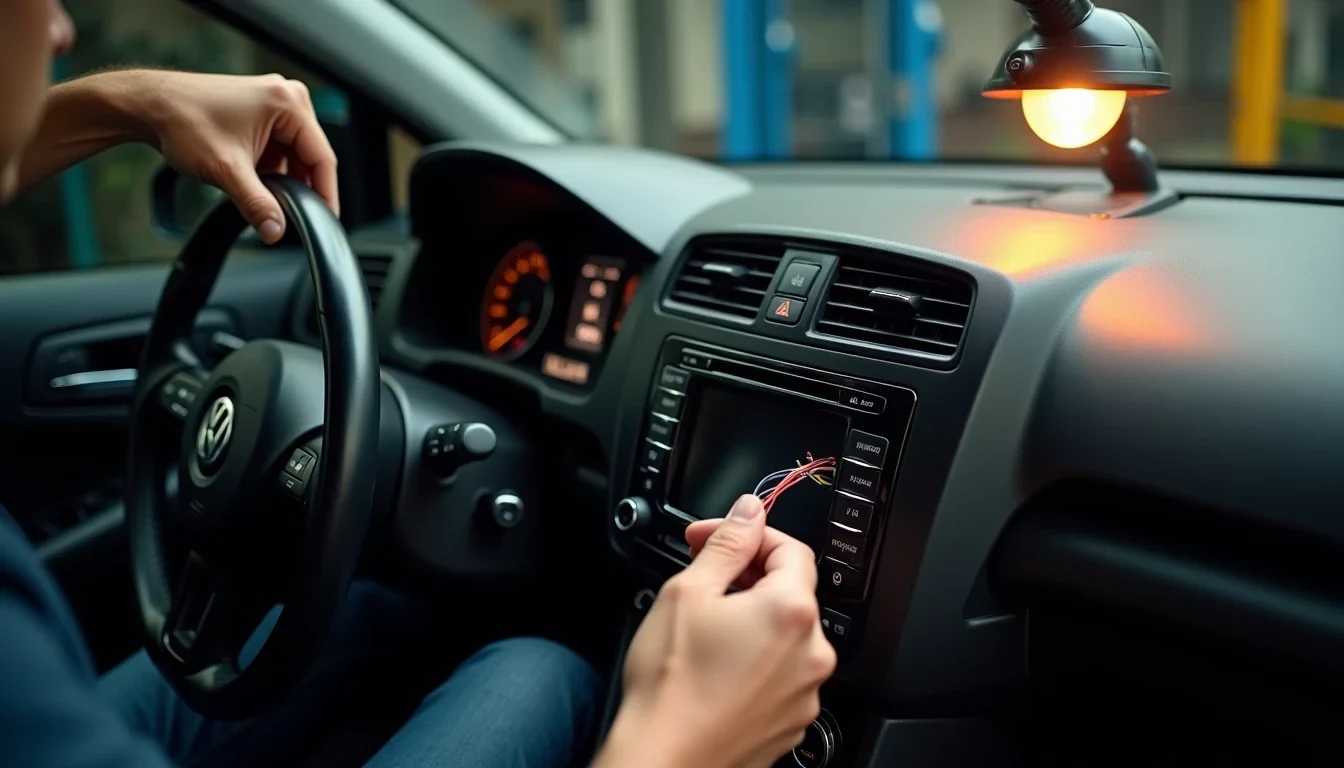
A modern double-DIN head unit is the biggest daily-life upgrade in the cabin. For a reputable Pioneer, Kenwood, or Sony unit with Apple CarPlay and Android Auto, budget R4,000 to R10,000 for the unit itself, plus R500 to R1,500 for the fascia adapter and wiring harness, and another R500 to R1,000 for installation. That puts the normal total near R5,000 to R12,500. If the Vivo is your commute car, this upgrade pays you back every single trip by making maps, calls, and music easier to live with.
Front component speakers are next. A decent set from JBL, Focal, or Infinity, fitted, usually lands between R2,500 and R4,500. A full four-door speaker swap generally runs R2,500 to R6,000 for parts, with installation adding R800 to R1,500. The factory system is serviceable, but not much more. Replacing all four speakers will not make the car sound like a show car, but it will clear up the mess in the midrange and give you more usable bass without forcing the volume knob into the red.
Sound deadening is the most ignored value mod on the list. A DIY door kit costs about R1,000 to R2,500 as of Q2 2024. If you pay for a proper install on the doors and floor, the bill can sit between R3,000 and R7,000. The gains are quieter door skins, less road roar, and a better stage for the new speakers. On a small hatch that spends its life on rough city roads, that is real comfort, not brochure talk.
Seat covers and a steering wheel wrap are not glamorous, but they change how the car feels. Custom-fit seat covers run from R1,500 to R4,000. A leather steering wheel wrap with fitment usually costs R800 to R1,500. This is not performance in the dyno-sheet sense, but it is the sort of improvement you notice every time you get in. That is usually how good builds start.
Intake and exhaust only make sense when you keep expectations honest
Naturally aspirated Polo Vivos, especially the 1.4 and 1.6, do not suddenly become fast because you fit a loud pipe and a cone filter. They become a little sharper, a little better to listen to, and sometimes a little more responsive. That is the ceiling unless you add proper tuning.
A cold air intake from Ramair, K&N, or VWRacing generally costs R3,500 to R8,000 as of Q2 2024. On a naturally aspirated Vivo, the credible gain is modest. The research pack points to tuner dyno tests showing around 2 kW to 5 kW in the right setup, with the bigger change being induction noise and throttle feel. That is a fair trade only if you want the car to feel more alive, not if you are hunting headline numbers.
A cat-back exhaust from Powerflow or Wildcat sits around R4,500 to R8,000 fitted. This is the better spend if you want the car to sound less strangled. It replaces the rear section, often the mid-pipe too, while leaving the catalytic converter in place. That keeps it in the more defensible part of the legal and practical range. This modification is for tone, not miracle output.
If the car is turbocharged, or you are dealing with a later TSI setup or a swap, the downpipe is the real hardware change. A performance downpipe from Milltek or APR is typically R6,000 to R12,000 as of Q2 2024. On a turbo motor, that can make a clear difference to spool and power, but only when matched with an ECU tune. Fit the pipe without the tune and you are asking for warning lights and an unhappy calibration. On a turbo car, the downpipe is a system part, not a decorative tube.
On a naturally aspirated Vivo, intake and exhaust alone usually add only about 5 percent to 10 percent at most before a remap, according to the performance-tuning names cited in the research pack, including Dimsport and Revo. These mods should be bought for response and sound first, and only for power second.
The sensible entry combo is a drop-in filter plus a mild cat-back exhaust. The honest budget for that pair is about R5,500 to R10,000. If your aim is to enjoy the car more on the commute and on the odd open stretch, that is a rational spend. If your aim is to outrun physics, it is not.
Suspension needs to survive the roads you actually drive
A lowered Vivo that scrapes every second speed hump is not “sorted”. It is annoying, expensive, and usually slower in the real world because the driver starts avoiding bad patches instead of driving normally. The target is better control, not a floor-scraping stance.
Lowering springs from Eibach or H&R are the first suspension step worth considering. The research pack lists Eibach Pro-Kit at R3,500 to R5,500 and H&R Sport Springs at R4,000 to R6,000 as of Q2 2024. Both usually drop the car about 20 mm to 35 mm. That is the useful zone. The car sits better, rolls less in corners, and does not turn every pothole into a crisis.
Springs are better when matched to uprated dampers. Bilstein B6 shocks are listed at R8,000 to R12,000 for a set of four, while Koni STR.T comes in around R6,000 to R10,000 as of Q2 2024. This is where the Vivo stops feeling fidgety and starts feeling tied down. The car settles faster after bumps, brakes with more confidence, and keeps its shape better through fast direction changes.
Entry-level coilovers from V-Maxx or JOM are priced around R8,000 to R15,000. They give you height adjustment and some tuning room. This sounds useful until the car gets wound too low and every school-zone hump becomes a test. Better kits like Bilstein B14 or H&R Monotube run about R18,000 to R30,000 as of Q2 2024. Those are for owners who really want adjustability without wrecking ride quality. Even then, the sensible drop on local roads is still mild.
For this platform, the best compromise is usually modest lowering with decent shocks, not the lowest possible ride height. The research pack points to 20 mm to 30 mm as the sweet spot for local conditions. That keeps clearance usable and reduces the risk of bottoming out on the sort of road damage that still exists outside the marketing photos.
Plan on R1,500 to R3,000 for professional installation and alignment after suspension work, depending on complexity. Skip that line item and you are saving in the wrong place. A bad alignment eats tyres and undermines the whole exercise.
The wrong upgrades are usually the loudest ones
There is a long list of Polo Vivo “mods” that look clever in a parking lot and make the car worse everywhere else. They are cheap for a reason.
Cheap HID or LED bulb kits fitted into halogen reflector housings cost roughly R300 to R1,000 a set as of Q2 2024. They throw glare, shape the beam badly, and run into the National Road Traffic Act regulations that require compliant headlamps meeting SANS 1047, with the research pack citing Regulation 159. If you want better lights, fit proper equipment. If you want to annoy everyone coming the other way, buy the cheap kit.
Cut springs are another hard no. The research pack pegs them at R500 to R2,000, with bargain coilovers from about R5,000 to R8,000. Both can drop the car into the ground-clearance danger zone and punish the suspension on bad roads. A Vivo that has been slammed on junk parts does not look clever, it looks tired.
Oversized wheels are the same story. Replica sets often run R4,000 to R8,000, but the hidden cost is harshness, bent rims, and extra wear on bearings and suspension. Once you go too large, especially toward 18-inch territory, the wheel becomes a problem instead of an upgrade. Local roads do not care what the wheel looked like on a render.
Cheap “chip boxes” are probably the worst money-for-disappointment ratio in the whole segment. The research pack gives them a range of R500 to R2,000. They plug into the OBD port and promise power, but they do not replace proper calibration. A reputable ECU remap is the real tool. Anything else is usually a sales pitch with a connector.
Window tint can also bite you. The research pack notes that front side windows darker than 35 percent VLT, and windscreens darker than 70 percent VLT, breach Regulation 200. That can fail a roadworthy check and make night driving worse. If you are going to tint, stay within the legal limits and choose visibility over looking like a bank courier van.
A realistic budget ladder
If you want a clean plan, build it in stages and stop when the car gives you diminishing returns.
An entry stage of about R8,500 to R16,500 can cover a performance drop-in filter, an aftermarket head unit with CarPlay or Android Auto, and quality front component speakers. That is the best first spend for most owners because it improves the daily experience without creating any headaches.
A mid-range stage of roughly R15,000 to R35,000 can add a cold air intake, cat-back exhaust, and lowering springs. The car starts to feel more purposeful, but only if the suspension parts are matched properly and the alignment is done afterward.
A fuller budget of about R25,000 to R55,000 can include shocks with the springs, more complete sound deadening, and a better audio setup with a compact active subwoofer. The subwoofer budget in the research pack sits around R3,000 to R6,000 fitted. The car becomes genuinely better to live with, not just louder or lower.
For most Polo Vivo owners, the best value order is simple. Fix the cabin first. Then sort the sound and response. Then buy suspension that suits the roads. Only after that should you start chasing more aggressive engine changes. Anything else is just spending to feel busy in a fitment centre waiting room.