Spitronics, Gotech, and Dictator Standalone ECUs Still Dominate South African
14 August 2026
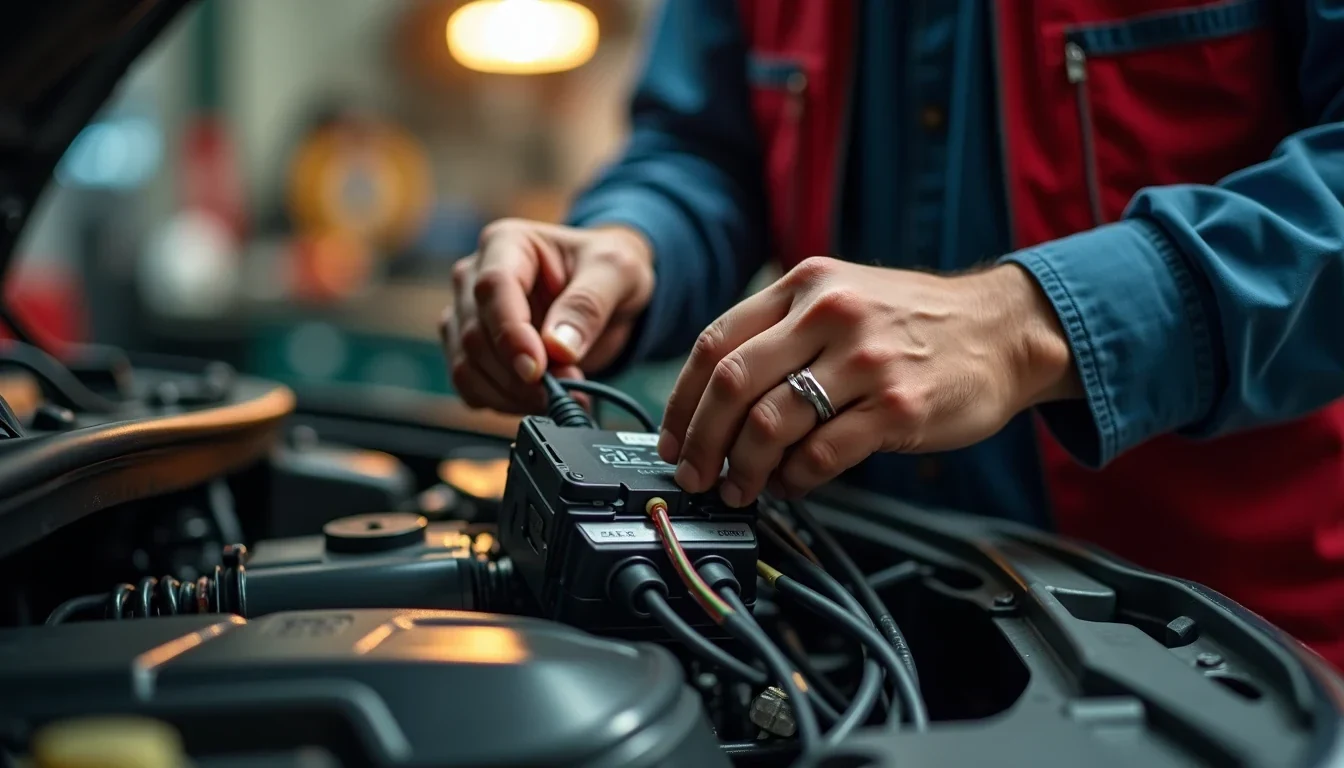
A standalone ECU is the first place many local builds go wrong. People spend on cams, injectors, exhaust, even a decent turbo kit, then try to tune it on an ECU that was never meant to carry the job. Spitronics, Gotech, and Dictator still earn their keep. They are not glamorous, but they are the reason a rough street car starts on Monday morning, idles in traffic, and still has enough control left for a proper pull on Saturday.
They still matter for a simple reason: they sit in a price band that many South African builders can reach. They also have local support and are familiar to the workshops that fit and tune them every week. Haltech may be the benchmark many tuners compare against, but in day-to-day South African modification, these three homegrown systems remain the practical choice for a huge part of the market.
What you actually pay
The sticker price is only the first bite. A standalone ECU build usually means the ECU itself, a harness, fitment, wiring work, and a base tune. Based on published price ranges in the research pack, the entry-level total for a 4-cylinder build lands roughly between R11,500 and R24,000, depending on brand and model, with larger and more complex packages climbing higher. Those figures are as of late 2023 and early 2024 in the source material, and they are the right way to think about the spend, as a range rather than a fantasy single number.
| Brand | ECU price | Harness | Install and base tune | Typical entry total |
|---|---|---|---|---|
| Spitronics | R5,000 to R15,000 | R1,500 to R6,000 | R5,000 to R10,000 | R11,500 to R21,000 |
| Gotech | R6,000 to R16,000 | R1,500 to R3,000 | R6,000 to R12,000 | R13,500 to R24,000 |
| Dictator | R7,000 to R18,000 | R1,500 to R3,000 | R5,000 to R10,000 | R13,500 to R23,000 |
Those ranges are broad because the job is broad. A simple 4-cylinder street car with batch fire injection is one thing; a more involved setup with sequential injection, boost control, extra sensors, or throttle by wire is another. Fitment centre rates also vary by city, and a tuner who has to chase wiring faults for half a day will bill differently from one who is wiring a neat, already prepared engine bay.
Spitronics is the broad church choice
Spitronics has the biggest reputation for being the ECU people reach for when they want something local, familiar, and not absurdly expensive. The research pack places its basic units, such as the Orion or Venus, around R5,000 to R8,000, with more advanced units like the Mercury2 or Orion2 running from about R8,000 to R15,000 as of late 2023. Add a harness, usually R1,500 to R3,000 for a universal setup or R3,000 to R6,000 for a vehicle-specific loom, and then allow R5,000 to R10,000 for installation and a base map. On a sensible 4-cylinder build, that puts the system in the low to mid-R10,000s before extras.
That price point is only half the appeal. Spitronics is described in the research pack as the most user-friendly of the three, which fits what many builders want. The software gives you the core control most street cars need, including fuel and ignition, closed-loop lambda, idle control, basic boost control, and on higher-tier units features like sequential injection, launch control, flex fuel, variable cam timing, and drive-by-wire. For a daily driven turbo Polo, a 2.0-litre Toyota swap, or a weekend bakkie project that needs to remain civil on Gauteng roads, that mix makes sense.
The support picture is also a big part of the Spitronics story. The source pack points to direct manufacturer help, online manuals, a wide dealer and tuner network, and active user communities. In practice, that means fewer dead ends when a build gets awkward. A local workshop can usually find someone who has already seen your problem, or at least your engine family, which shortens the painful part of the process.
Spitronics begins to lose ground not in basic competence, but in depth. The more serious the engine management job gets, the more the tuner needs fast, granular control and a software environment that does not fight them. Spitronics can absolutely run proper builds, but if the car is moving from fast street toy into race car territory, it starts to feel like the system for people who want strong function without spending all day in the laptop.
Gotech is the tuner’s tool
Gotech is the sharper, more technical option in this group. The source pack puts the entry MFI unit around R6,000 to R9,000 and the Pro-X range around R9,000 to R16,000. Harness pricing is similar to the others at roughly R1,500 to R3,000, while installation and base tuning can run from R6,000 to R12,000 because the calibration work can become more involved once you start using the more advanced feature set. That can lift a complete entry build into the R13,500 to R24,000 range.
The software profile is where Gotech separates itself. The research pack describes it as functional and comprehensive, with a steeper learning curve than Spitronics. This usually means the ECU is happier in the hands of a tuner who knows exactly what they are doing. It offers batch or sequential injection, wasted spark or coil-on-plug ignition, closed-loop lambda, advanced boost control, individual cylinder fuel and ignition trim, multi-map switching, launch control, anti-lag, nitrous control, some variable cam timing support, and limited drive-by-wire on Pro-X units. It also supports stronger logging, with the ability to export data for analysis.
This matters on a serious build. If you are trying to correct cylinder imbalance, run different maps for pump fuel and race fuel, or get a drag car to leave consistently, Gotech gives the tuner the knobs they want. It is the most obvious choice here for someone who treats the ECU as a calibration instrument rather than just an fuel and ignition box.
Its support ecosystem is also healthy. The source pack points to direct assistance, tuner training and certification, and a strong presence in performance circles, especially drag racing. This makes sense. Gotech has a reputation for attracting people who want more control than the usual budget systems hand out. The trade-off is that it asks more from the person holding the laptop. If your fitment centre already lives and breathes Gotech, fine. If not, the learning curve can become your problem.
Dictator still survives on honesty and simplicity
Dictator is the old soldier in the room, and it survives for a reason. The research pack places its standard 60-2 ECU at about R7,000 to R10,000, with the 60-2 Pro at R10,000 to R18,000. Add the same sort of universal harness pricing, R1,500 to R3,000, and budget another R5,000 to R10,000 for installation and tuning. That keeps it in the same broad spend zone as the others, though usually with a simpler shape to the job.
The software and feature set reflect that no-nonsense approach. Dictator gives you the fundamentals: fuel, ignition, idle, closed-loop lambda, and solid boost control, with batch or sequential injection depending on the model, plus launch control and basic anti-lag on Pro variants. The research pack notes that advanced functions such as variable cam timing or drive-by-wire often need extra modules. Dictator is built to be straightforward and robust, not to impress on a spec sheet.
For a builder who wants a reliable street setup and does not care about fancy graphics on the tuning screen, that can be a virtue. There is less to argue with, fewer features to misconfigure, and a more direct relationship between the hardware and the result. On a clean turbo conversion, a dependable naturally aspirated package, or a project where the owner wants to keep the setup understandable years later, Dictator makes a strong case.
Support is a large part of why it remains relevant. The source pack describes long-standing manufacturer backing and a loyal tuner base. That sort of continuity matters in a market where cars stay alive far longer than the warranty period and where a workshop often has to revisit the same build years later. A tuner who has already mapped fifty Dictator cars is not learning on your motor.
Which one suits which build
For a street-focused daily driver, Spitronics is usually the cleanest fit. It gives you enough control to run a proper modified engine without dumping you into unnecessary complexity. It is priced in the middle of reality, not fantasy, and its support network is broad enough that most builders will not be stranded when something needs attention.
For a race car, Gotech is the strongest option of the three. The deeper tuning tools, multi-map capability, stronger logging, and extra cylinder-level control make more sense once the car is being used for competition or repeated testing. That is where the extra time in the software pays back.
For a simple, robust project where the owner values ease of maintenance and a no-fuss tune, Dictator is still the one with the least drama. It is not the prettiest package. It does not need to be. It gets used because it works, and because a lot of local tuners know exactly how to make it work.
Why these brands still exist beside Haltech
The global benchmark is one thing; the local market is another. South African standalone ECU brands survived because they solved South African problems. Imported ECUs often land with a higher purchase price, more expensive accessories, and less immediate local backup. A local brand with a visible tuner network, a quick support line, and parts that do not require international shipping has a practical edge before the first dyno pull even starts.
There is also history here. These systems grew alongside a car culture that was already modifying VW, Toyota, BMW, and Opel hardware in garages, workshops, and backyard setups where every rand counted. They became the default because they were available, understood, and supported by people who were already doing the work. Once enough workshops know a platform, it creates its own momentum. The next customer asks for the same ECU because the last three cars ran well and came back for service without drama.
Local brands still beat pure spec sheet logic in the real world. A Haltech may offer more polish, broader international recognition, and a stronger global ecosystem, but a builder in Johannesburg or Cape Town is not buying global prestige. They are buying an ECU that can be fitted, mapped, understood, and repaired without turning the car into a waiting game.
The straight verdict
Spitronics is the safest all-round choice for most street builds. Gotech is the one to buy when the build is serious enough to justify deeper tuning control. Dictator remains the sensible option for simple, durable projects and tuners who want direct, unfussy calibration.
All three survive because they are local, known, and priced in a way that still makes sense once you add the harness, labour, and tuning time. That is the real comparison. Not which one has the flashiest feature list, but which one gets your car on the road, keeps it there, and lets the tuner fix it next year without starting from zero.