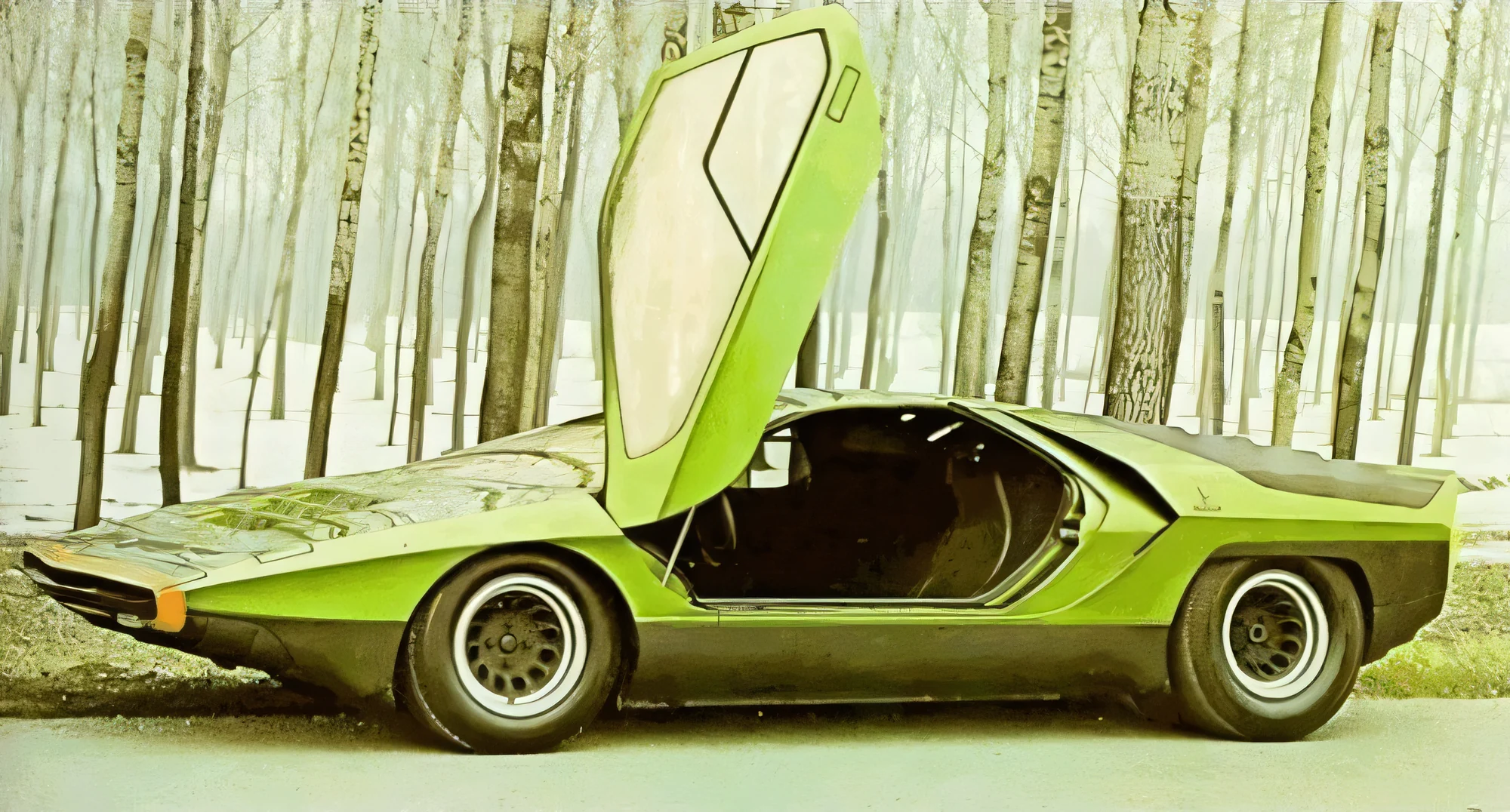
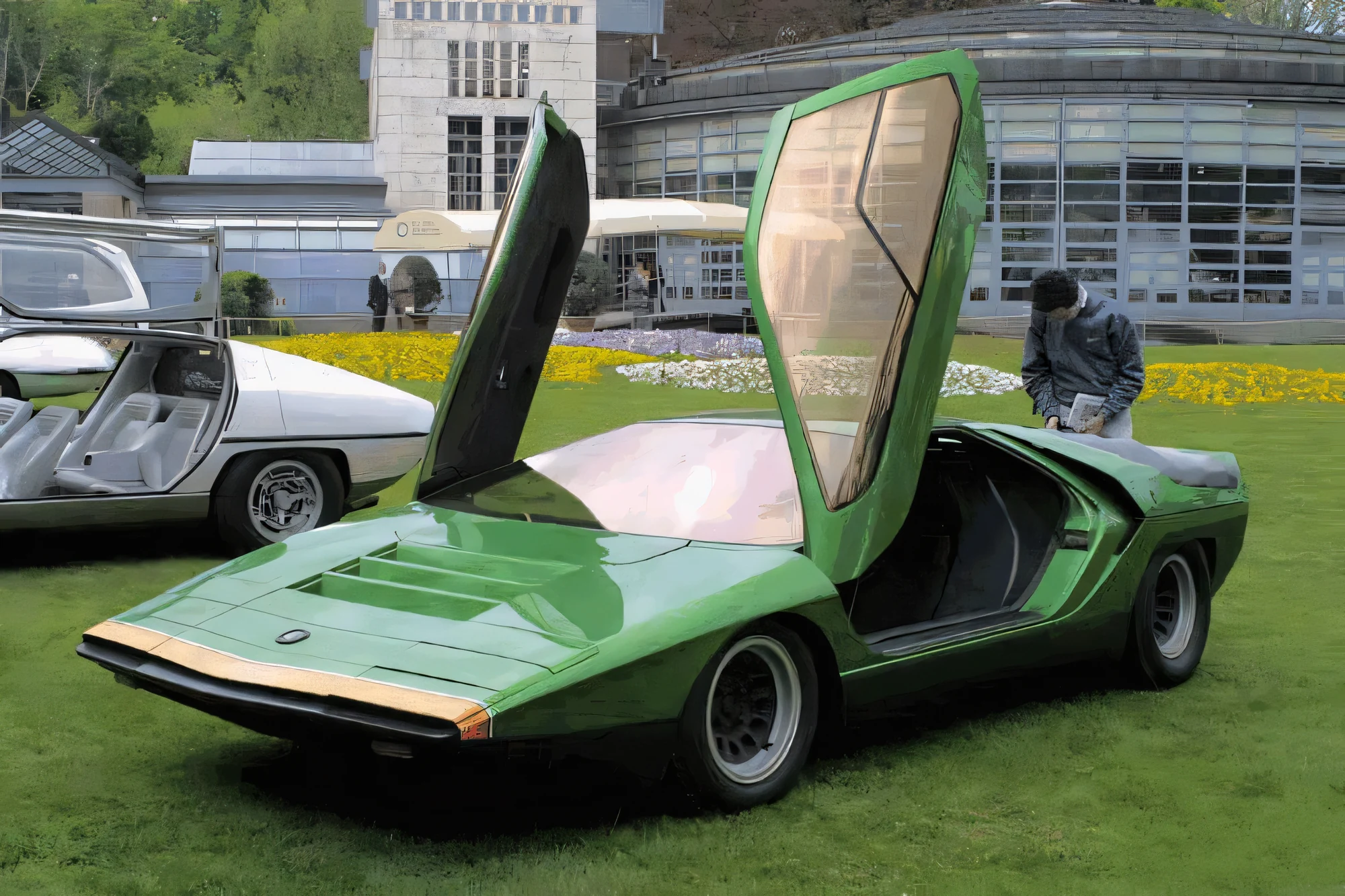
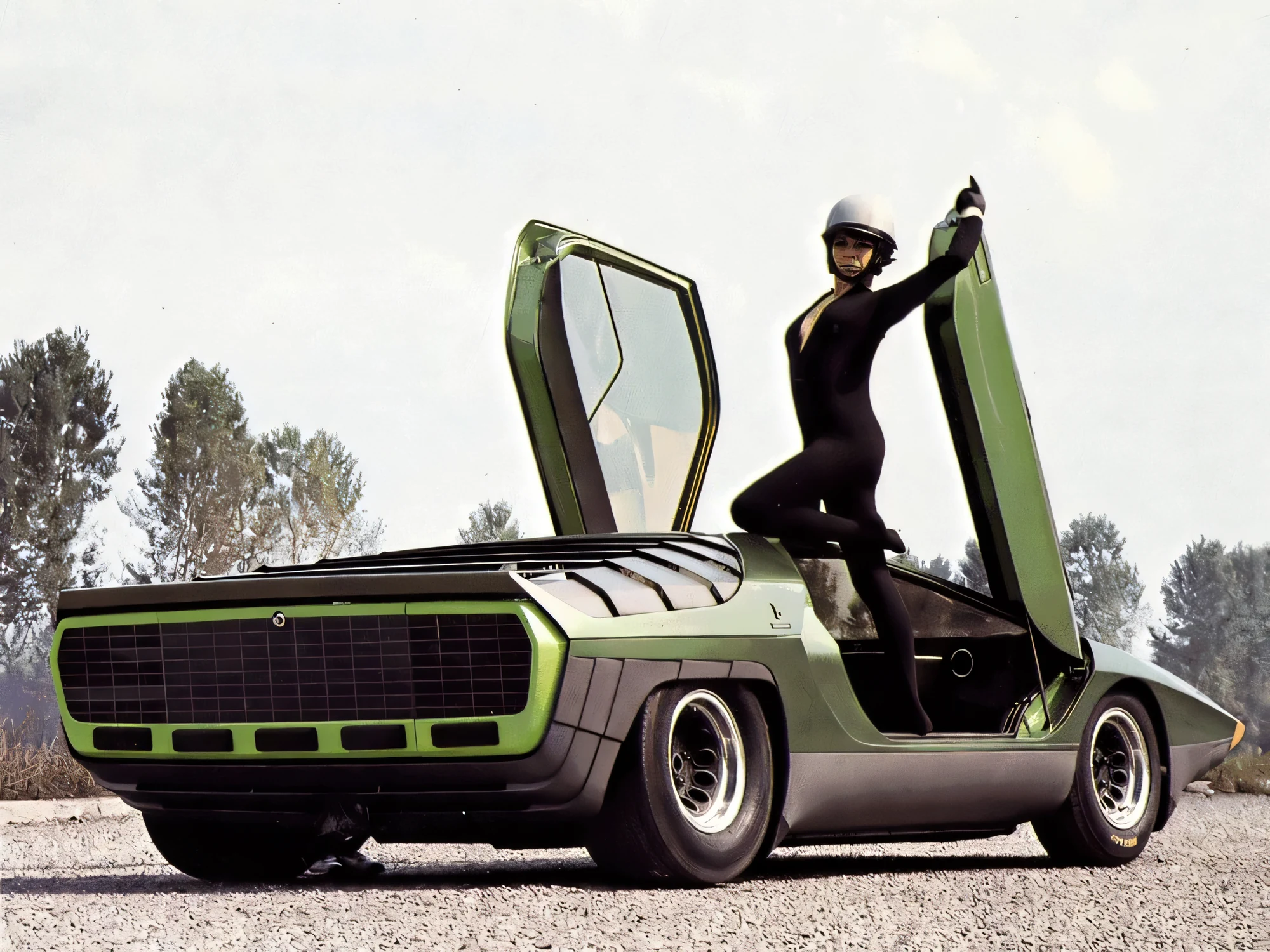
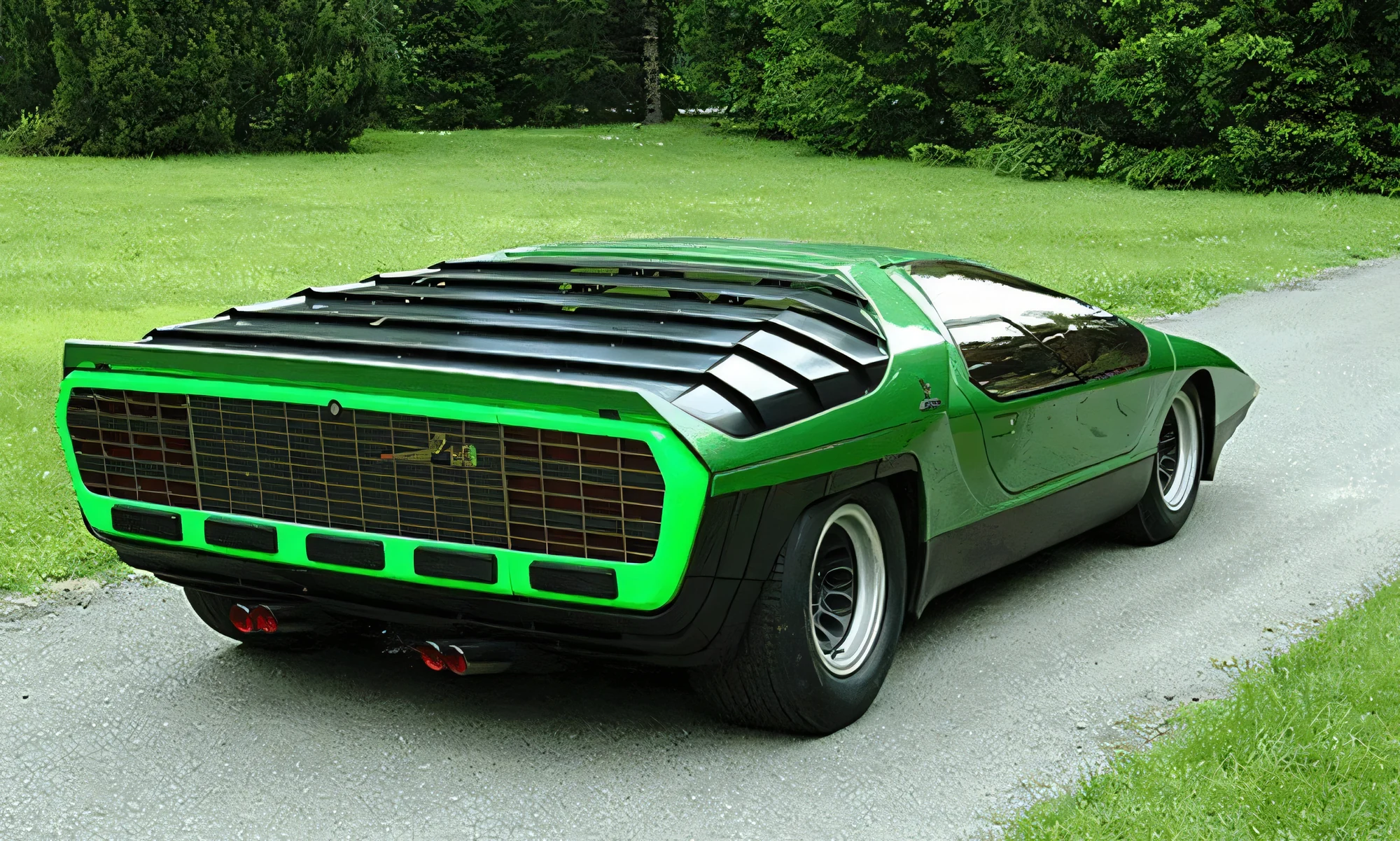
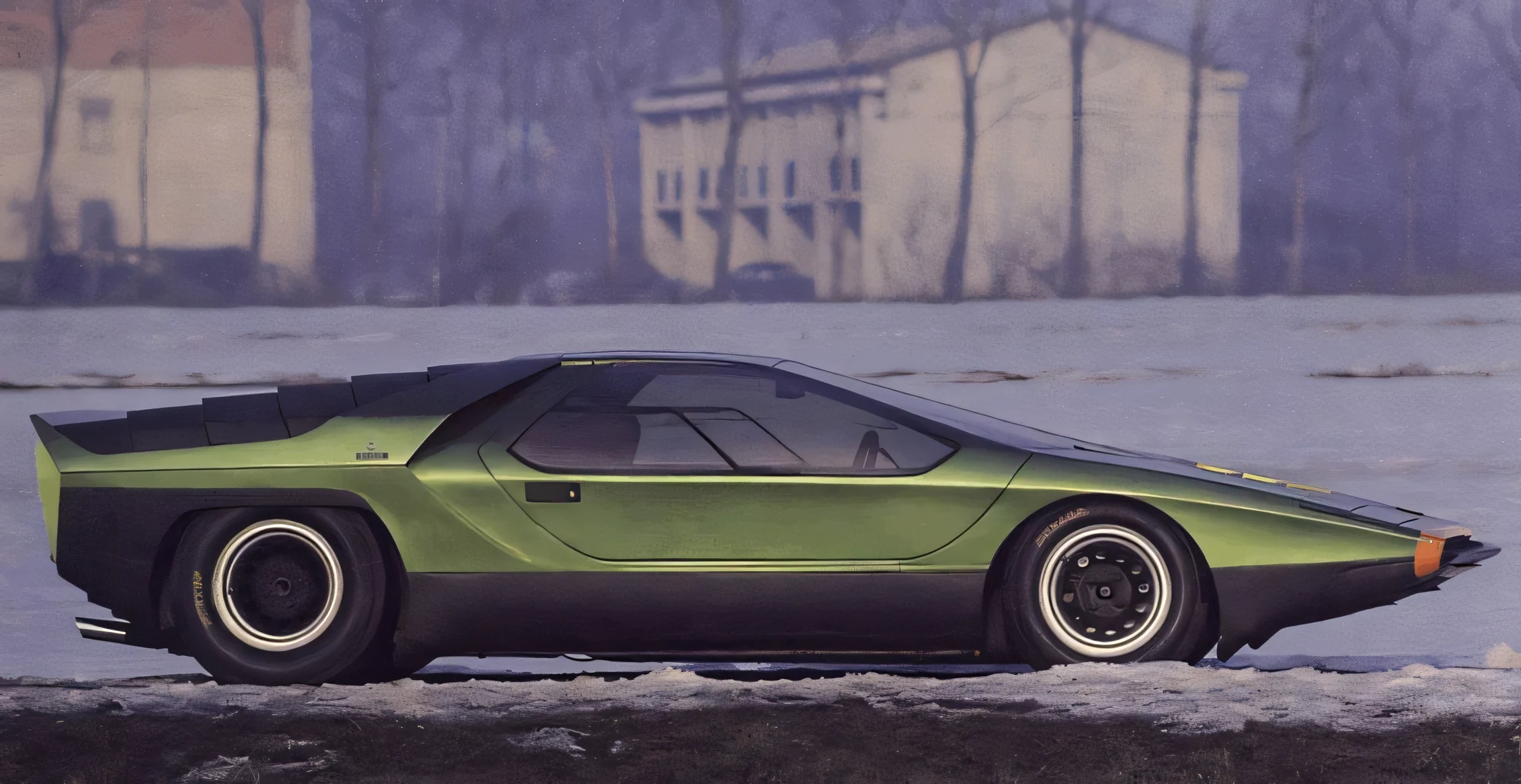
The Carabo is the rare concept car that can claim to have invented not one thing but two — the wedge, and the scissor door. Marcello Gandini drew a low green Alfa in the shape of a beetle, hung its doors so they opened toward the sky, and in doing so wrote the visual grammar that supercars would speak for the next fifty years. Almost everything dramatic about the cars on a teenager's wall traces back to this one, built in ten weeks in 1968.
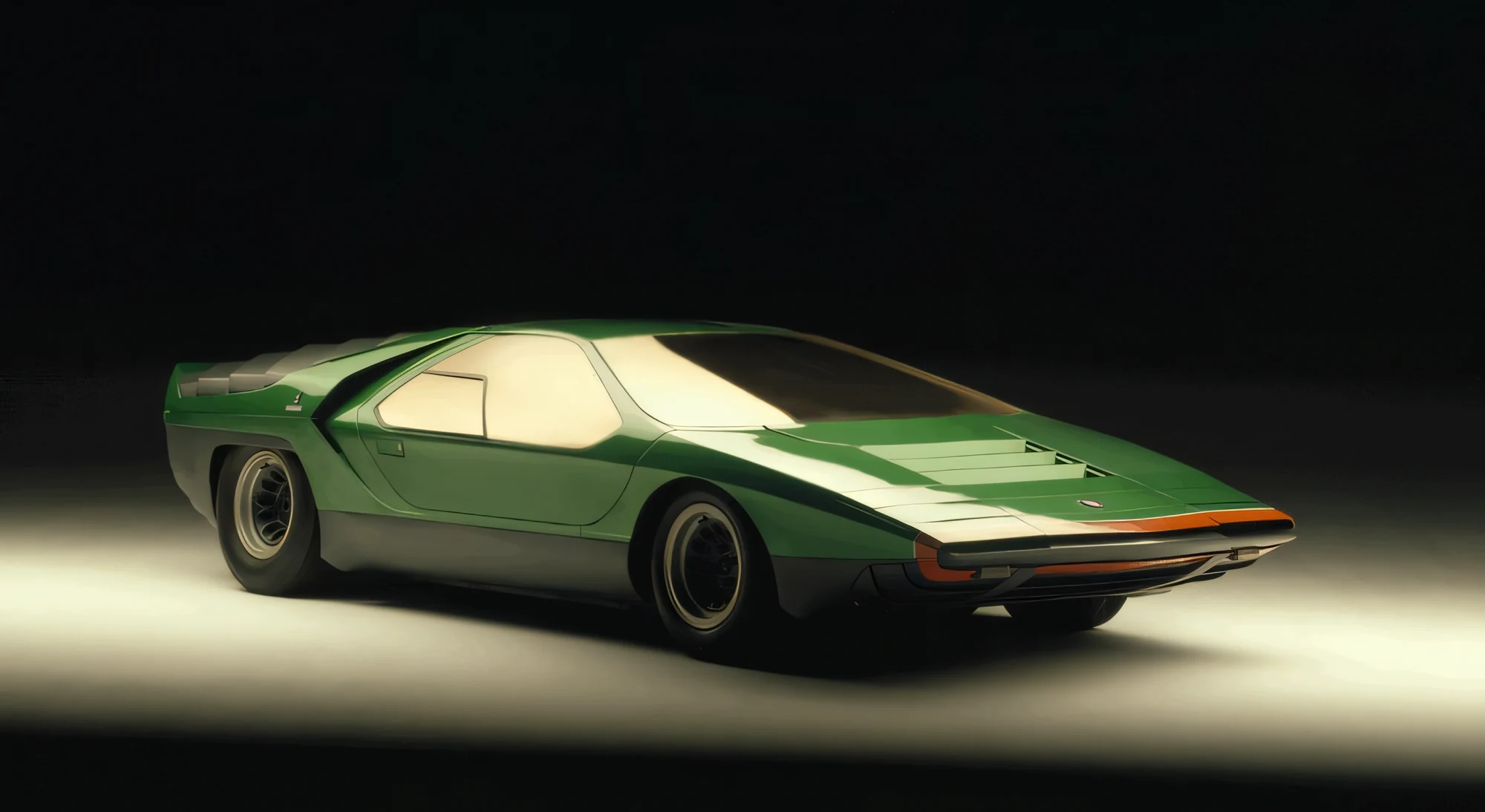
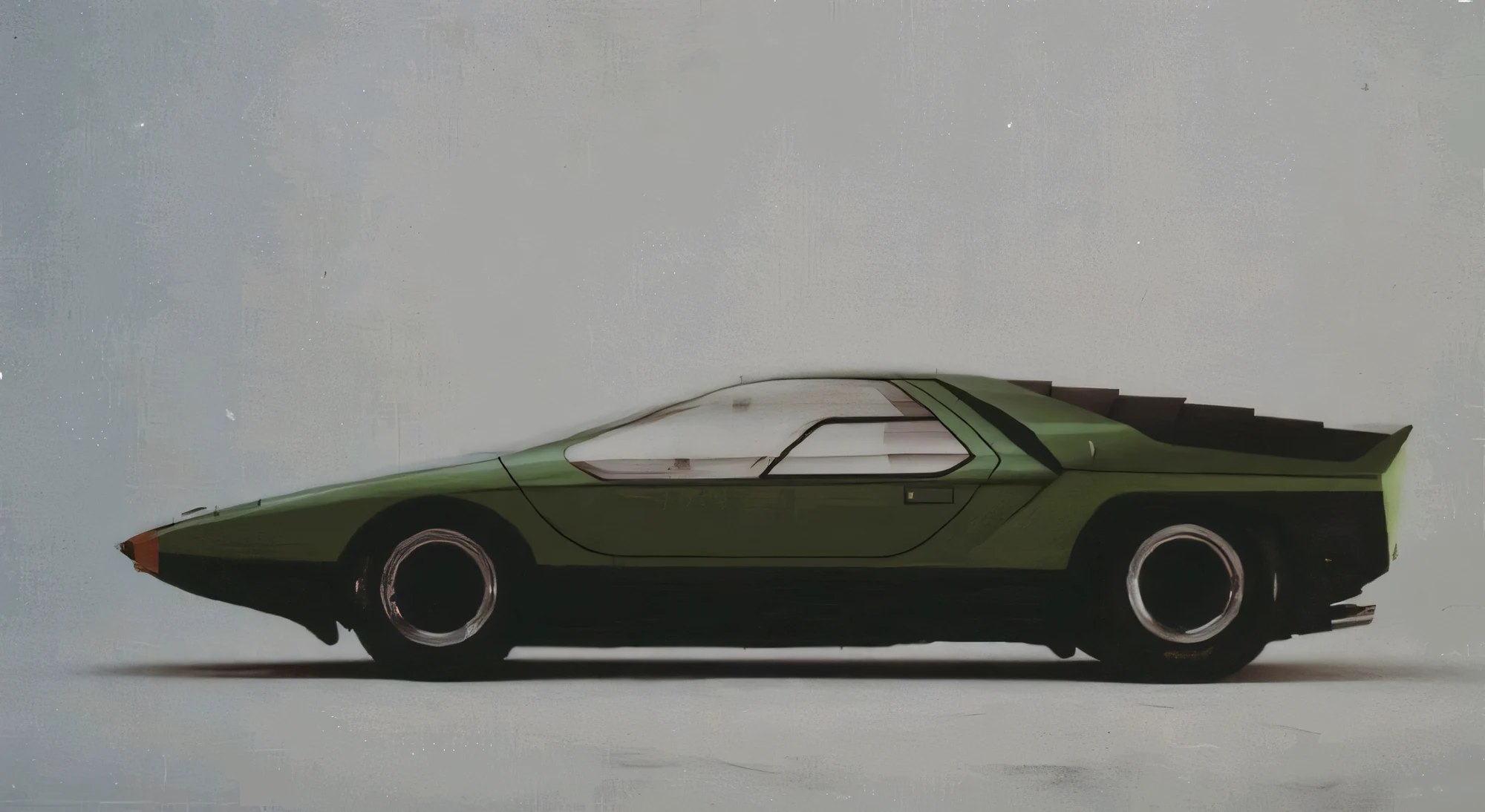
- It's the car that invented the wedge — the low, flat, straight-lined doorstop shape that went on to define the entire 1970s supercar era.
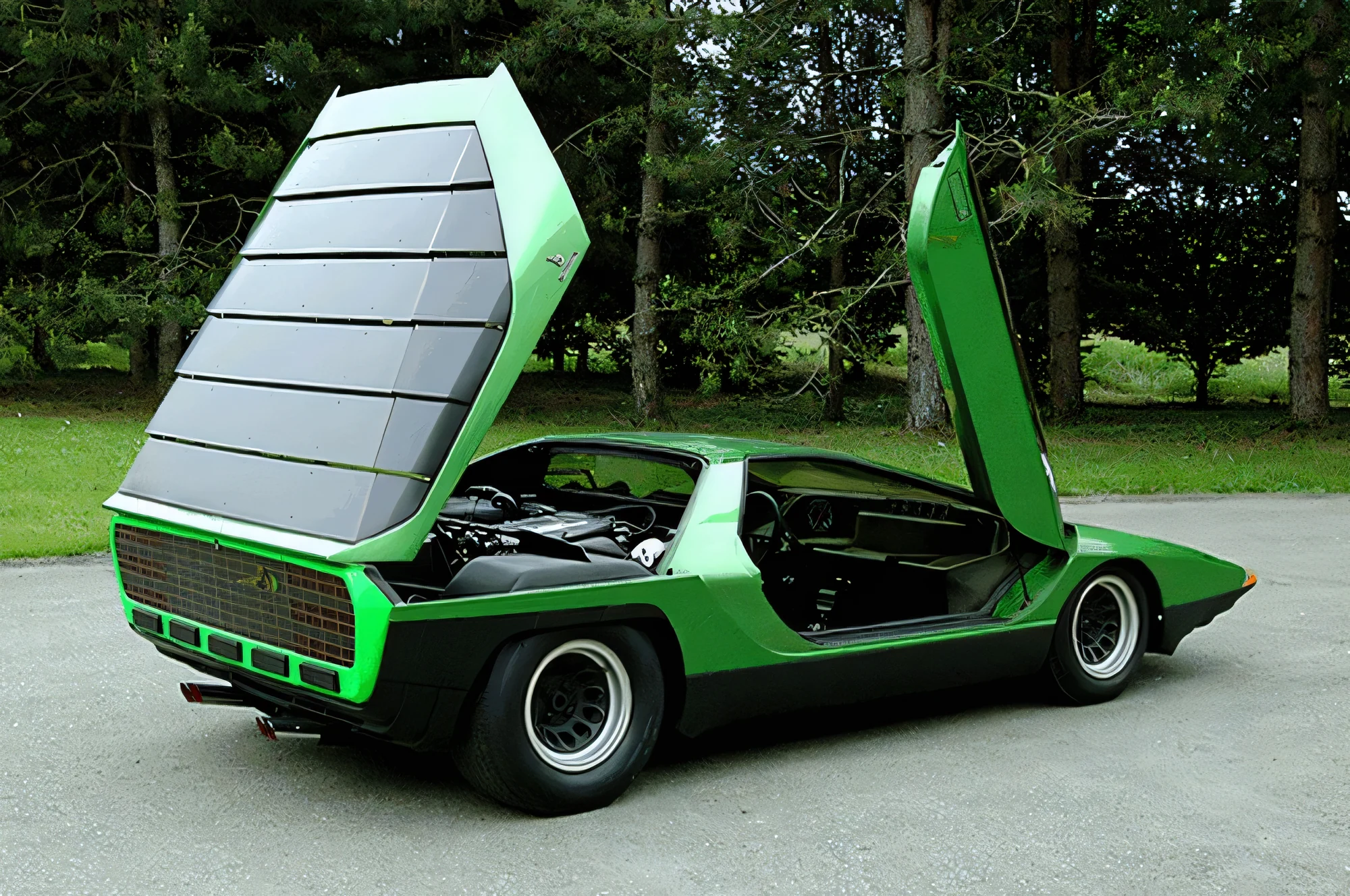
- And the first car in the world with scissor doors — Gandini drew them here, partly just so you could see out the back, then took them to the Countach.
- Its name and its iridescent green-and-orange paint both come from a beetle, the Carabidae — right down to the orange nose stripe standing in for the insect's legs.
Some concept cars predict the future. The Carabo invented it. In one low, green, ten-week
fibreglass show car, Marcello Gandini laid down two ideas — the wedge and the scissor door — that
between them would shape how supercars looked, and opened, for the next half-century. It is arguably
the single most influential concept car ever built, and it did the job dressed as a beetle.
The shape that became a template
Before the Carabo, fast cars were curved. After it, for a decade, they were wedges. Gandini reduced
the car to a set of flat, intersecting planes falling in a straight line from a blunt tail to a
knife-edge nose — the ‘cuneo’, the doorstop. It looked like nothing before it and like almost
everything after it. The specific moves are catalogued above; what matters is that this is the
silhouette the 1970s copied, from the Stratos to the Countach to a hundred motor-show wedges that
never made production.
Doors born of a blind spot
The scissor doors are the Carabo’s most famous gift to car culture, and the story behind them is
better than the myth. Gandini needed them partly because his own wedge was nearly impossible to see
out of: hinge the door at the front and let it rise, and the driver could lift it and lean out to
reverse. A piece of pure theatre, it turns out, began as a fix for a practical problem — and then
became the single gesture that still, fifty years on, means “supercar” the instant a door goes up
instead of out.
Two inventions, ten weeks
What is almost harder to believe than the Carabo’s influence is its economy. Bertone built it, in
fibreglass, in about ten weeks — and out of that rush came two of the most enduring ideas in car
design at once. Most studios chase a single signature across a whole career. Gandini put both the
wedge and the scissor door into one green show car before he was thirty, then spent the decades
afterward watching the rest of the world catch up. A concept car’s job is only to propose. The
Carabo’s proposal simply never stopped being accepted.
The design language
The cues that make it what it is — and why each one was drawn that way.
The wedge The shape that became a template
The Carabo is the car that launched the 'cuneo' — the wedge. A low, flat, straight-lined doorstop running from a chunky cut-off tail to a knife-edge nose, all hard planes and no curves. Almost every wedge supercar and concept of the 1970s, and a good many since, traces its silhouette back to this one.
The doors The world's first scissor doors
The Carabo is the first car ever built with scissor doors — front-hinged, opening straight up toward the sky. Gandini invented them here, then carried them to the Lamborghini Countach, where they became the single most recognisable supercar gesture there is — one that has never gone out of fashion since.
The name Dressed as a beetle
'Carabo' comes from the Carabidae, the iridescent ground beetles — and the car is painted to match: metallic green with golden reflections, and an orange stripe across the nose standing in for the insect's legs and antennae. The name and the colour scheme are a single idea, carried right through the car.
The glass Gilded mirror glass
The glasshouse is gold-tinted, one-way reflective mirror glass — you can't see in, and it throws back a golden sheen that completes the beetle-carapace illusion. It's the detail that literally gave the Carabo its colour, and half of its name; the museum that owns it still calls the glass 'gilded'.
Design deep cuts
Is the Carabo really the first car with scissor doors?
Yes. The 1968 Alfa Romeo Carabo is documented as the first vehicle ever to feature scissor doors — the front-hinged, upward-opening type — designed by Marcello Gandini at Bertone. He later put the same idea on the Lamborghini Countach, from where it spread across the whole supercar world; but the Carabo is where it began.
Why scissor doors — was it just for the drama?
Partly, but there was a genuinely practical reason too. The wedge shape gave the Carabo almost no rearward visibility, so the upward-hinging door let the driver simply lift it and lean out to see behind when reversing. One of the most theatrical features in car design started, in part, as a solution to a blind spot.
Where does the name "Carabo" come from?
From a beetle. 'Carabo' derives from the Carabidae, the family of iridescent ground beetles, and the car's colours were chosen to evoke them — metallic green with golden reflections and an orange stripe across the nose. The gold-tinted mirror glass completes the effect. It's one of the more literal name-and-livery pairings in car history.
What's actually underneath it?
A race-derived Alfa Romeo 33 Stradale chassis — the road-going relative of the Tipo 33 sports racer — carrying a mid-mounted 2.0-litre Tipo 33 V8 with a claimed 230 bhp, a six-speed gearbox, and a kerb weight of around 700 kg. It's a genuine running car, just 990 mm tall. As with any one-off show car, those performance numbers are period claims, never independently tested.
Did the Carabo lead to other cars?
Enormously. It launched the wedge era, and Gandini made the lineage explicit himself: the even more extreme Lancia Stratos Zero followed in 1970, and in 1971 the Lamborghini Countach inherited both the wedge silhouette and the Carabo's scissor doors wholesale. The language it started still echoes through Lamborghini's cars today.
Where is the Carabo now?
Only one was ever built, and it didn't disappear into a private vault — it lives in Alfa Romeo's own museum, the Museo Alfa Romeo at Arese near Milan, displayed in the section the museum simply calls Bellezza: beauty.
More from the drawing board