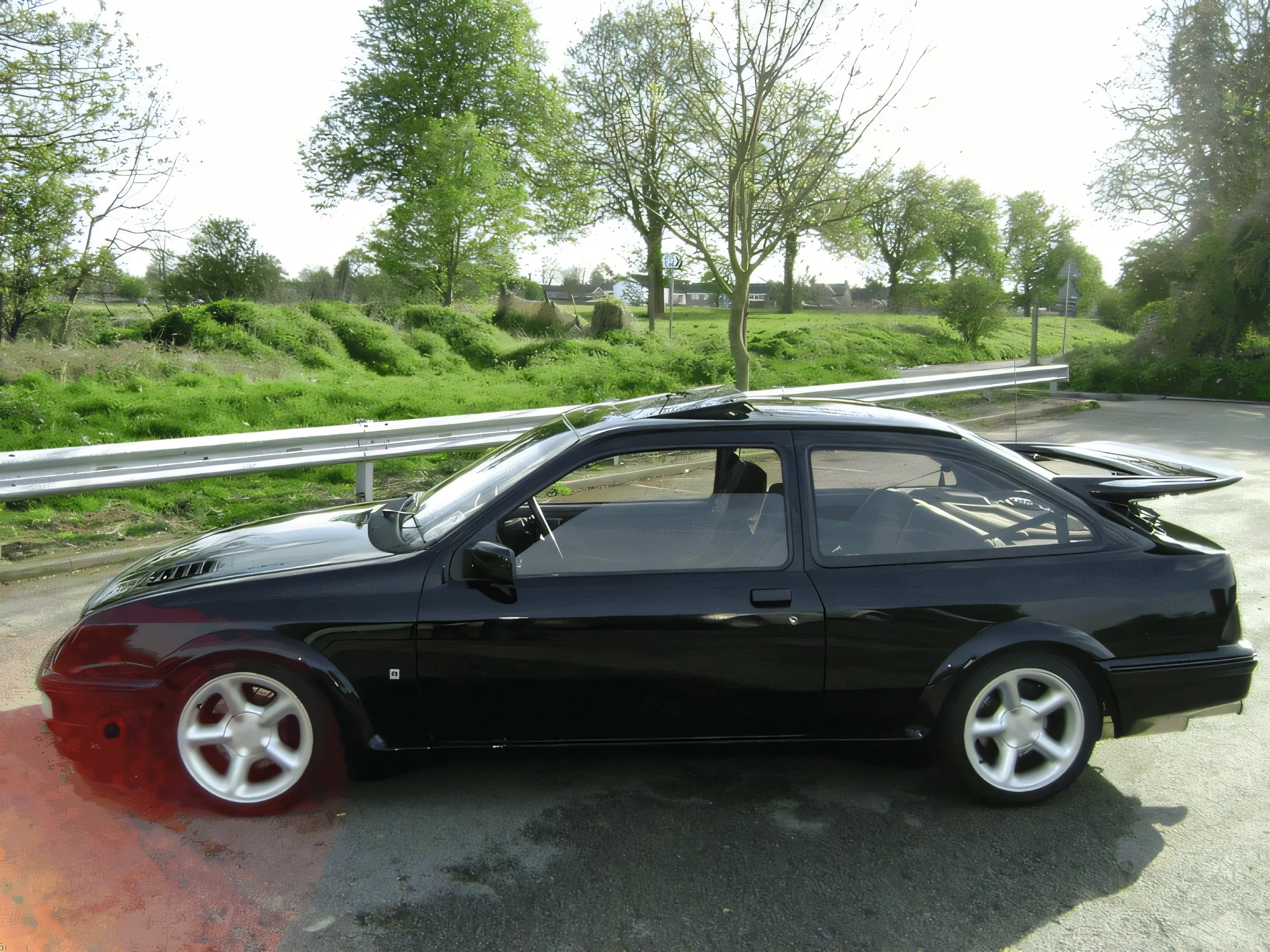
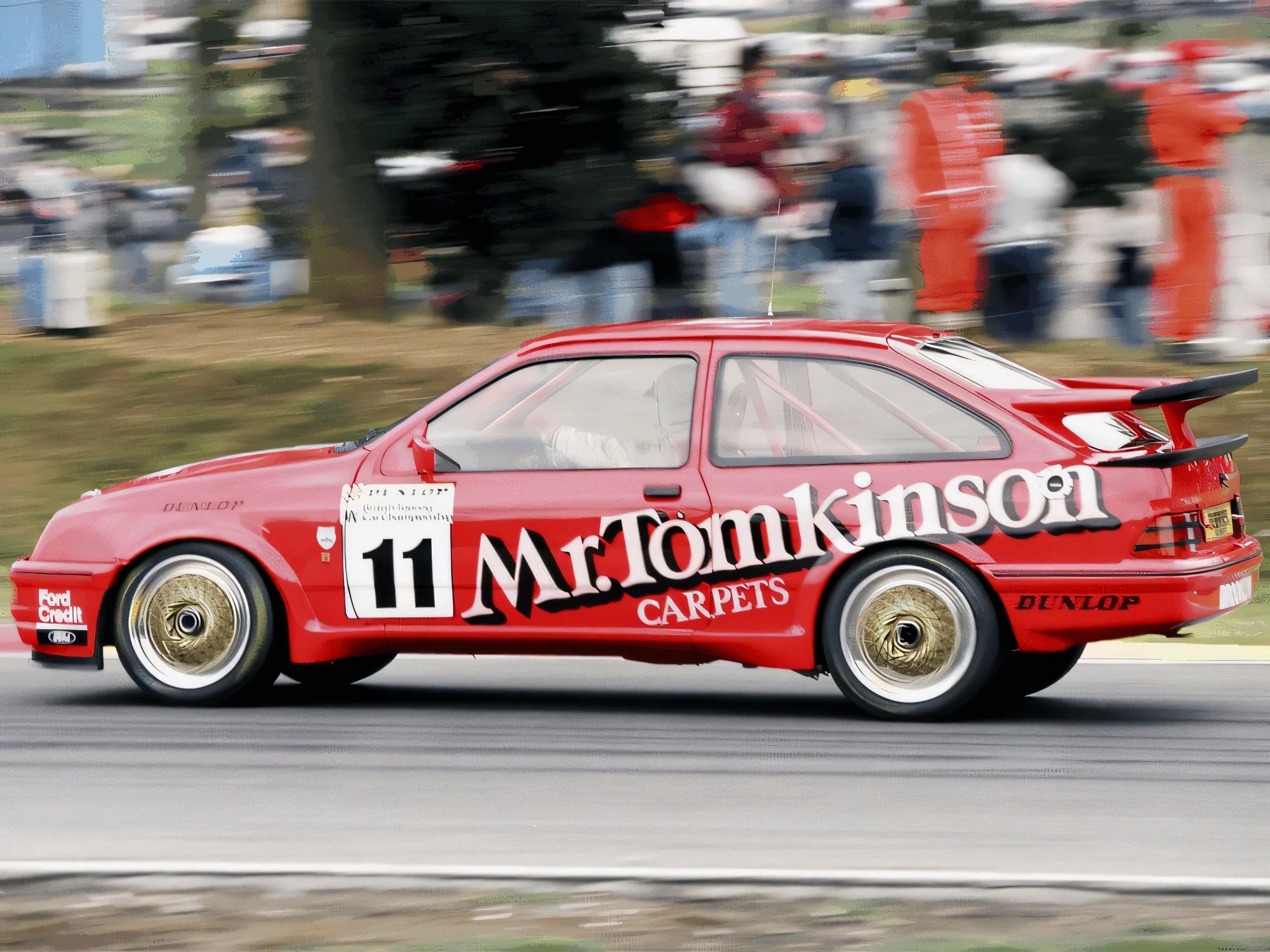
track40British Touring Car wins for the RS500 — the most of any single carAutocar / BTCC records
spec5.0 V8The XR8's Mustang Windsor engine — imported to SA in marine specHagerty / DriveZA
model~250XR8s Ford South Africa built — rarer than the RS500Hagerty
dyno500+ bhpWhat the Cosworth YB will take on its stock 2.0 blockTuner consensus
reimagined£596kThe RS500 auction record — a 5,000-mile car in 2023Silverstone Auctions
spec8Injectors on the RS500 — four of them non-functional on the road carSports Car Market
The Sierra started as the car that dared to look like the future — a rounded, slippery replacement for the boxy Cortina that buyers first thought too strange. Then it became two completely different legends: a Mustang-engined V8 South Africa built for itself, and a 2.0-litre turbo four that conquered the world's touring-car grids. This is both.
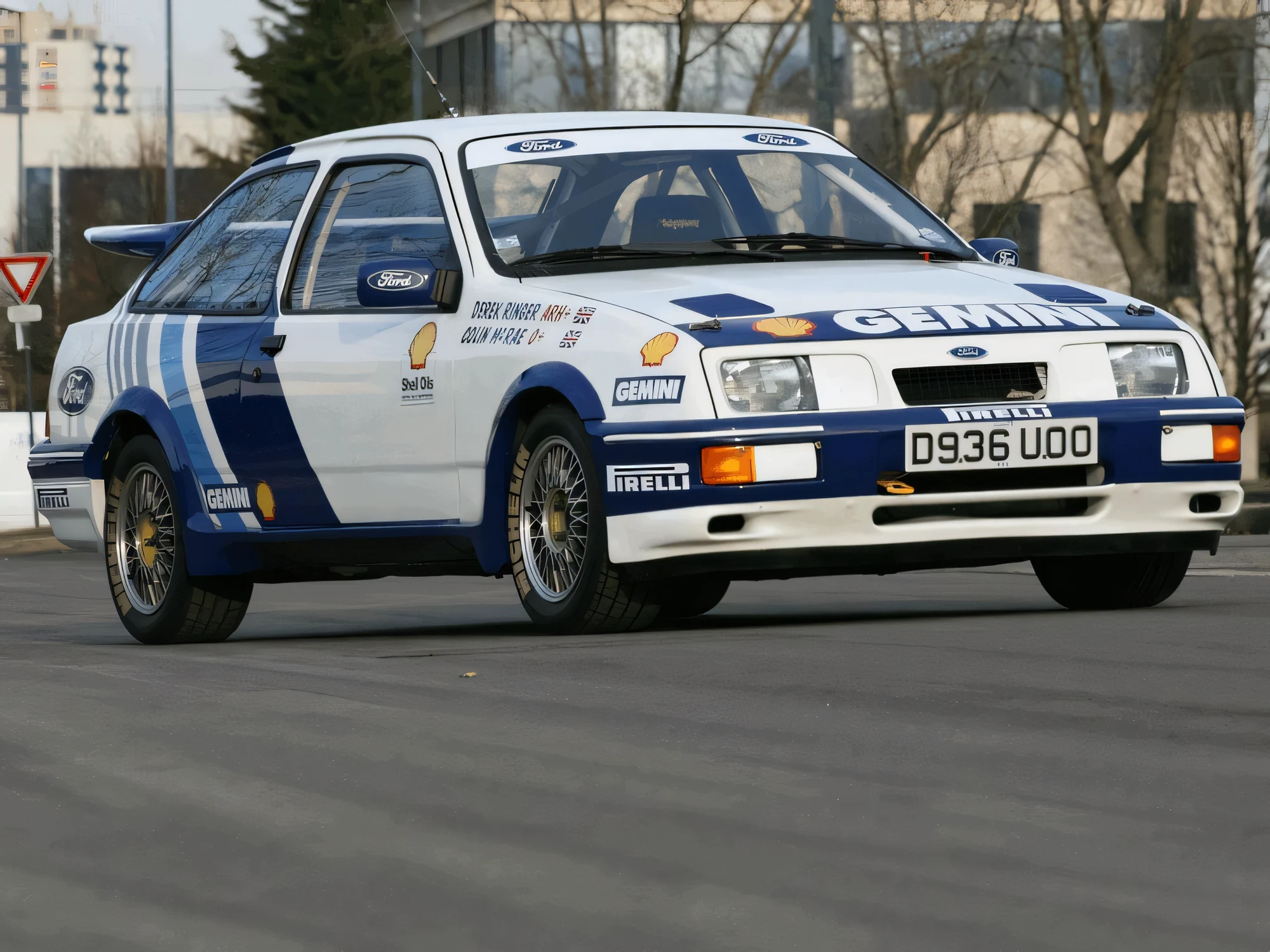
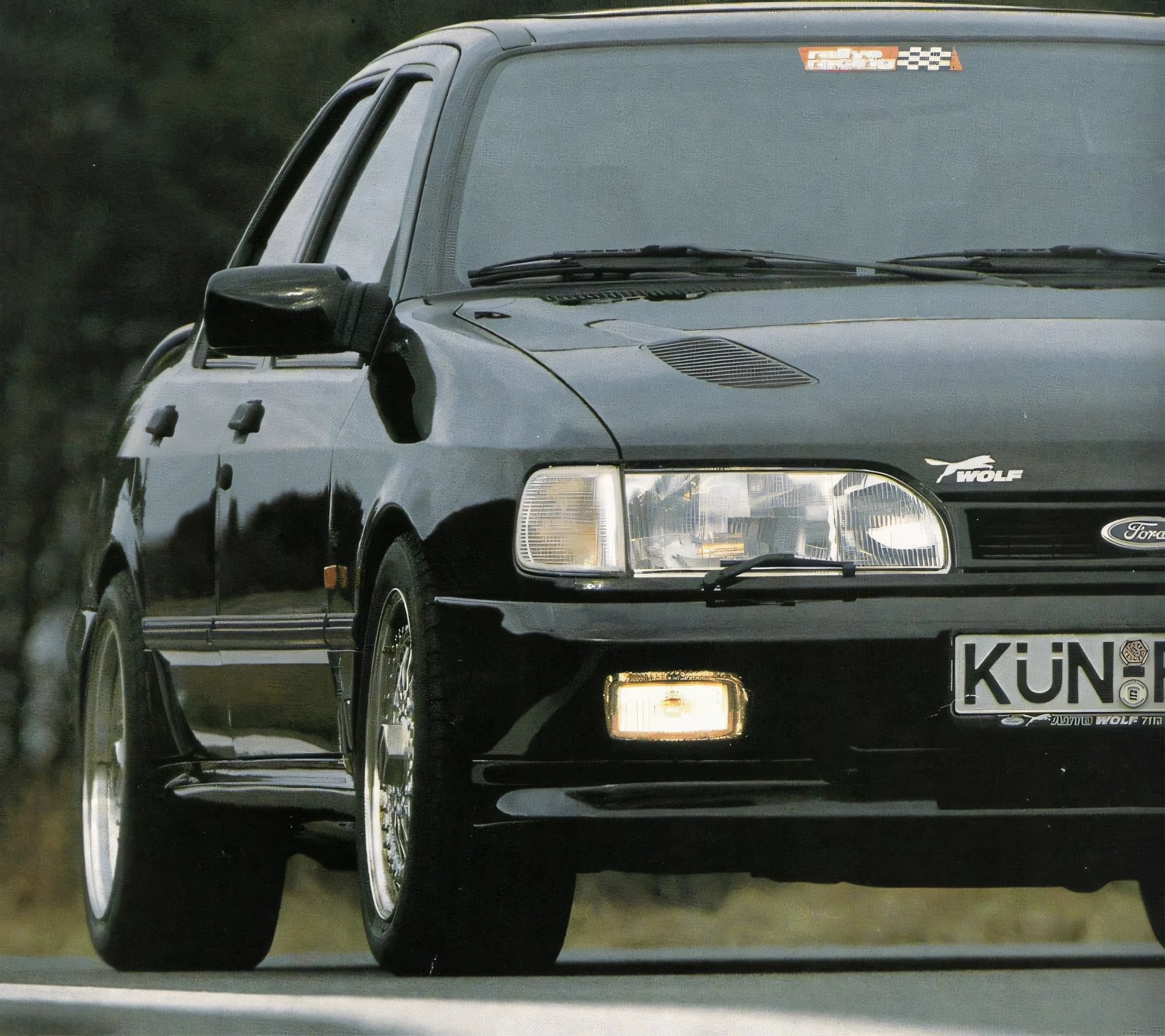
South Africa built its own V8 Sierra — the XR8 — using a Mustang engine imported in marine spec.
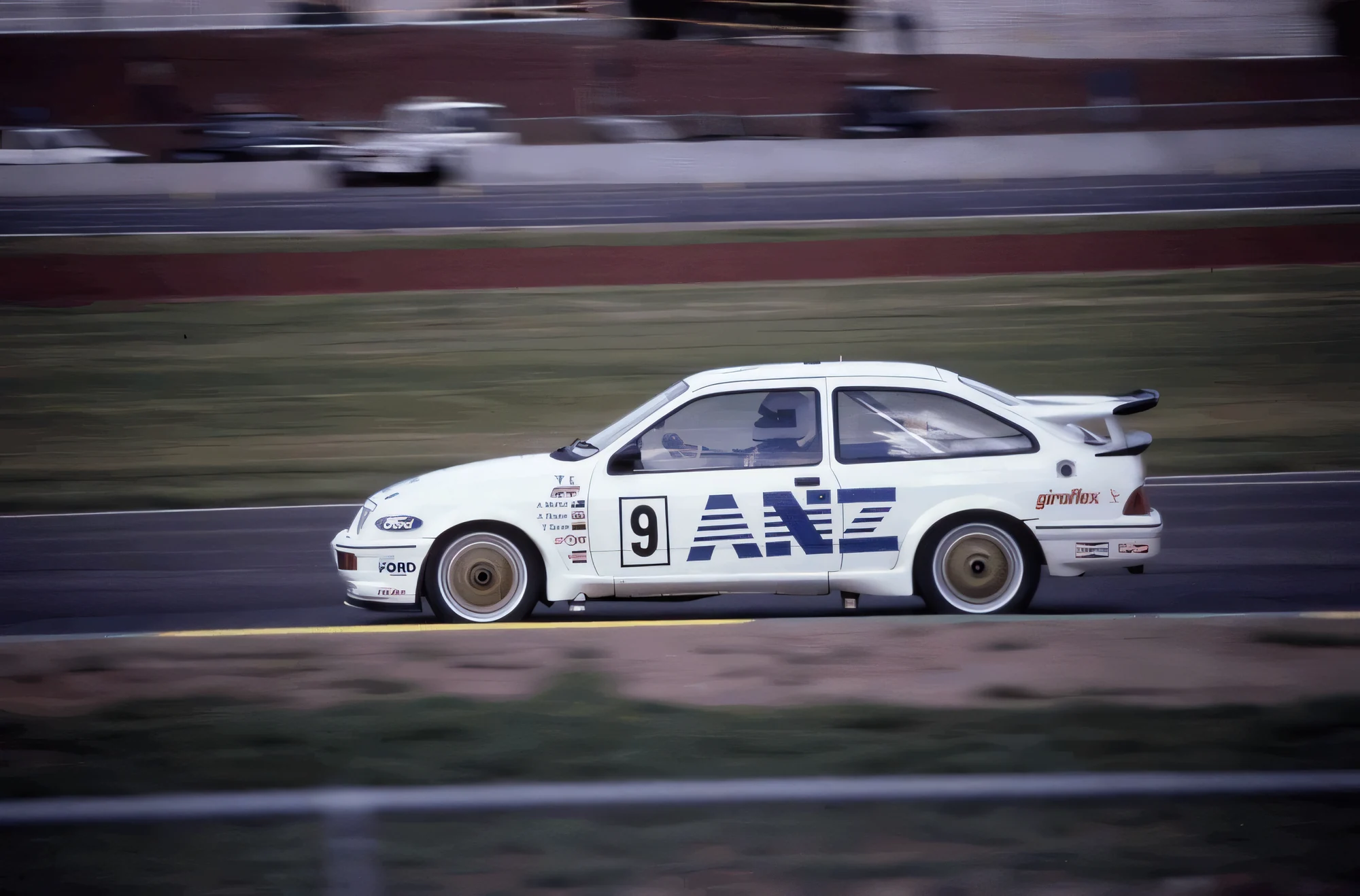
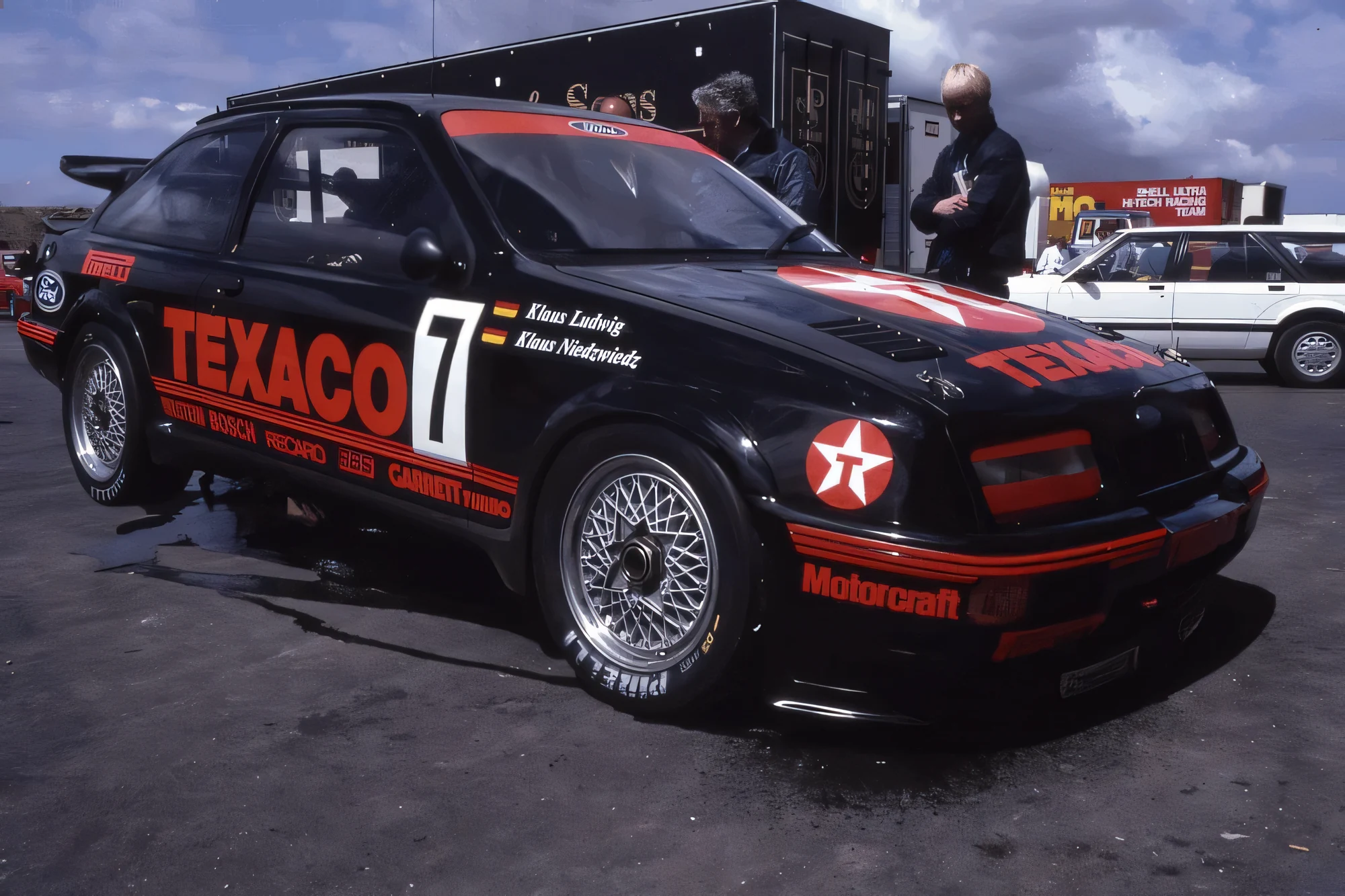
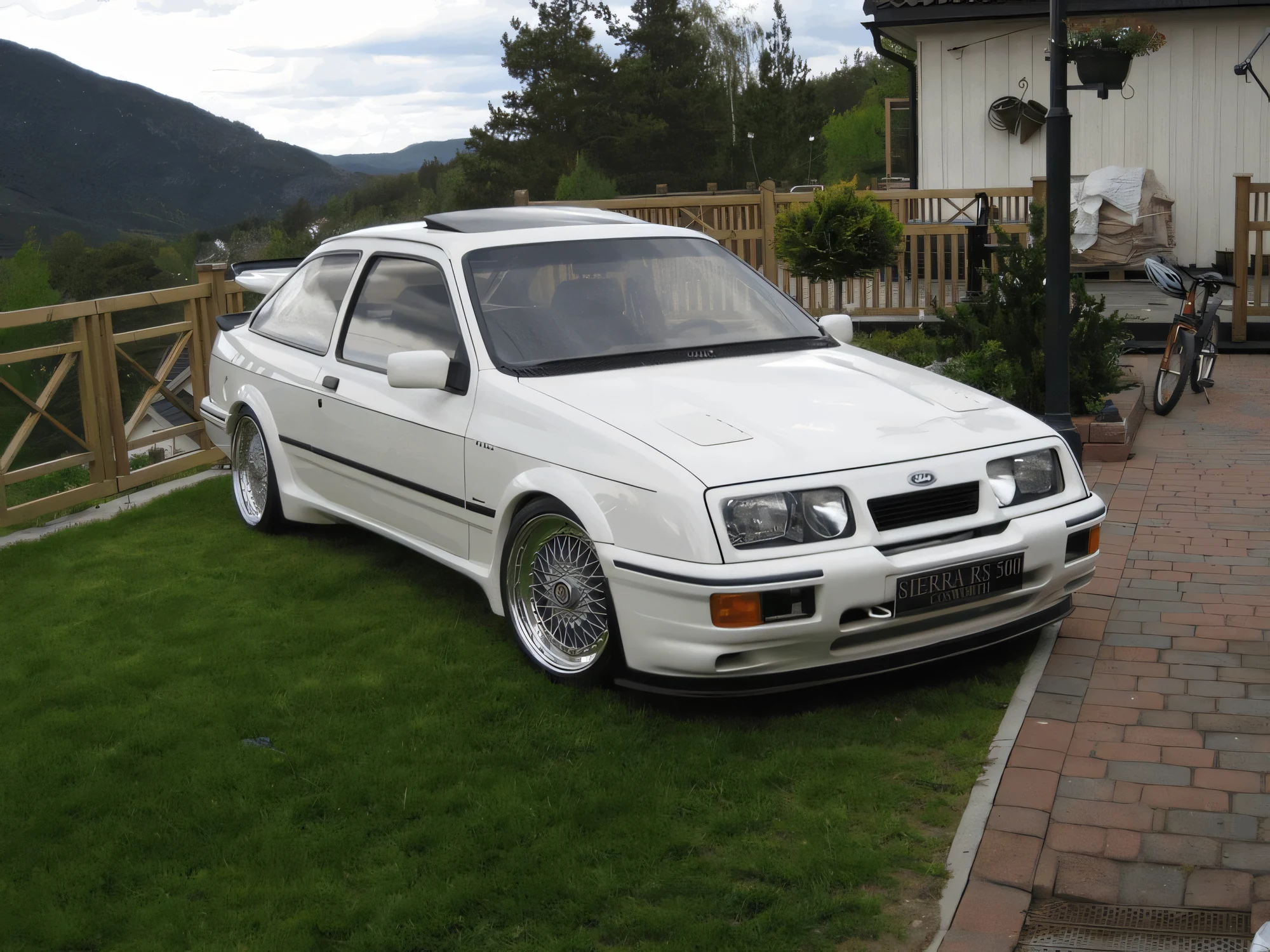
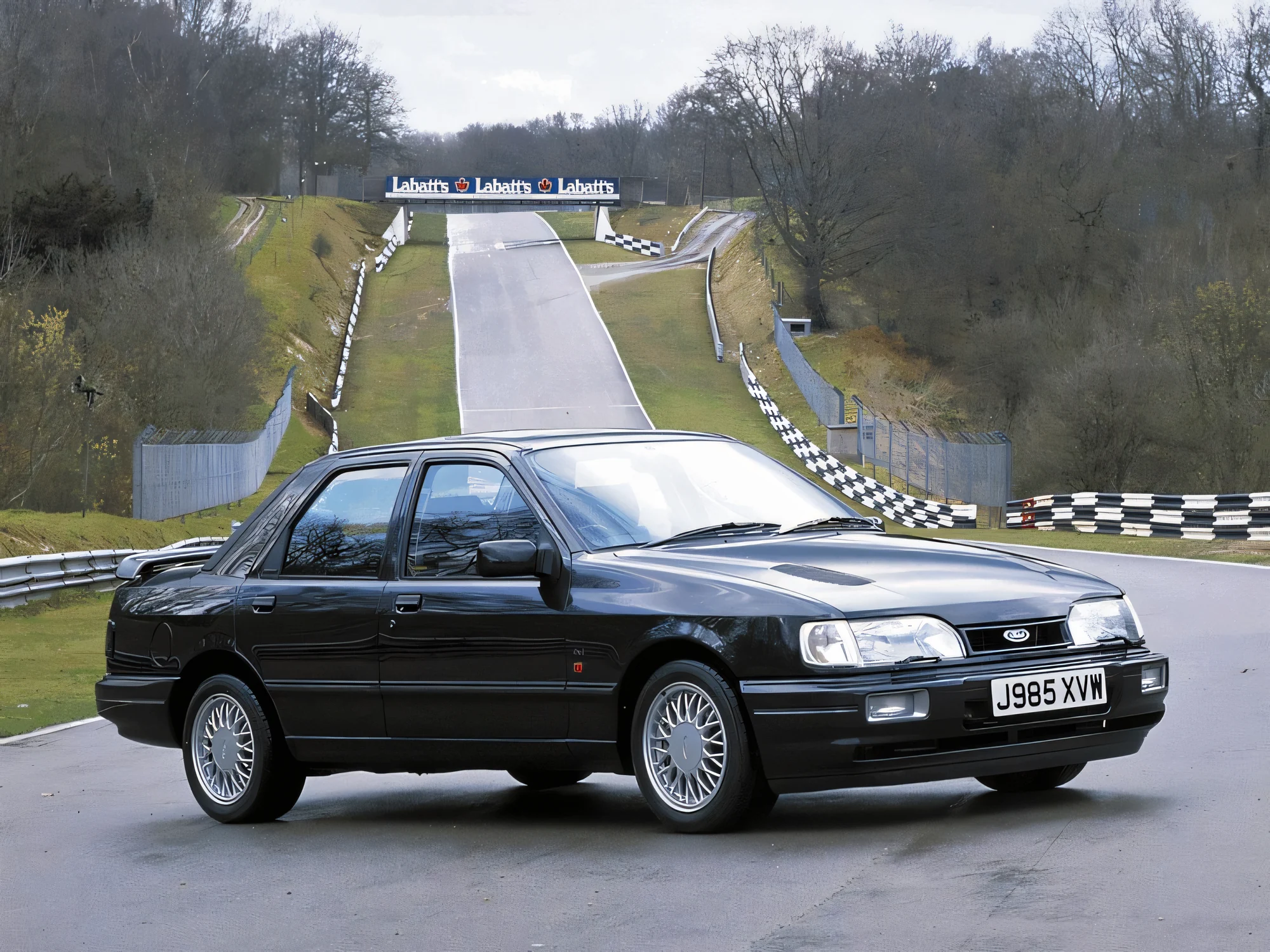
The whale-tailed RS500 is widely called the most dominant Group A touring car ever built.
One 2.0-litre four under both: the Cosworth YB, legendary for taking 500+ bhp on its stock block.
The Sierra arrived in 1982 as the car that dared to look like the future. Where
the Cortina it replaced was all straight lines, the Sierra was rounded and
slippery — so aerodynamically radical that buyers first recoiled from it. Ford
held its nerve, and the shape aged into an icon. Then its performance versions
turned a sensible family car into two of the most worshipped Fords ever made —
and, unusually, one of them was born in South Africa.
South Africa’s own Sierra: the XR8
While Europe was still working out what to do with the Sierra, Ford South Africa
built a V8 muscle car out of it. The XR8 was a homologation special for the local
Group One touring-car championship, aimed squarely at the BMW 745i — and to power
it, Ford SA reached for the 5.0-litre Windsor V8 from the Mustang. The twist that
makes it legend: the engines couldn’t be sourced locally, so they were imported in
marine spec — marine and industrial units — and re-engineered for the road,
with dozens of components redesigned to fit the big V8 in the Sierra’s bay. Around
250 were built, all right-hand drive, in Ford Motorsport white. That makes it
rarer than the RS500 the rest of the world reveres, and one of the most sought-after
Sierras on earth.
The whale-tail and the Cosworth YB
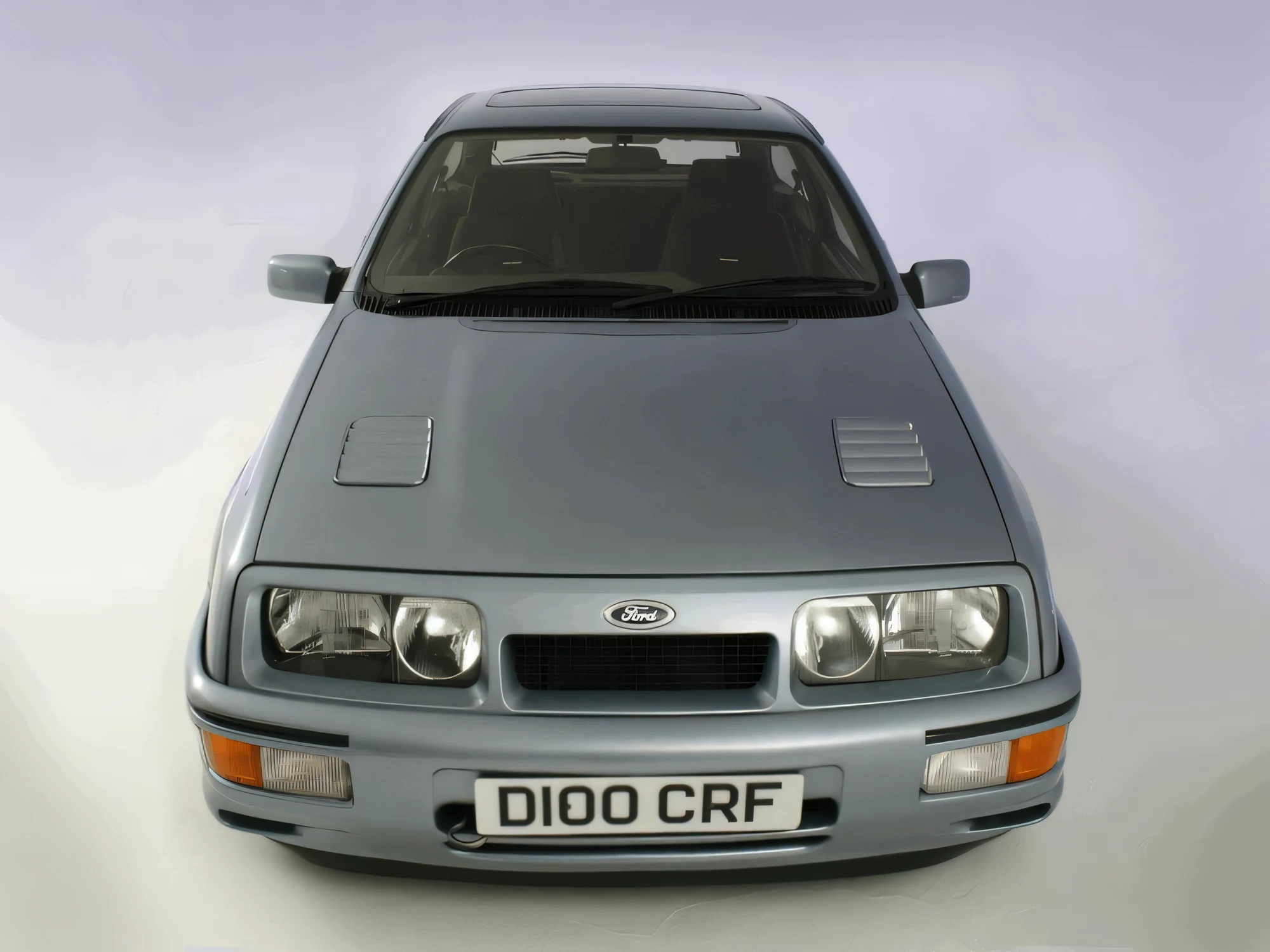
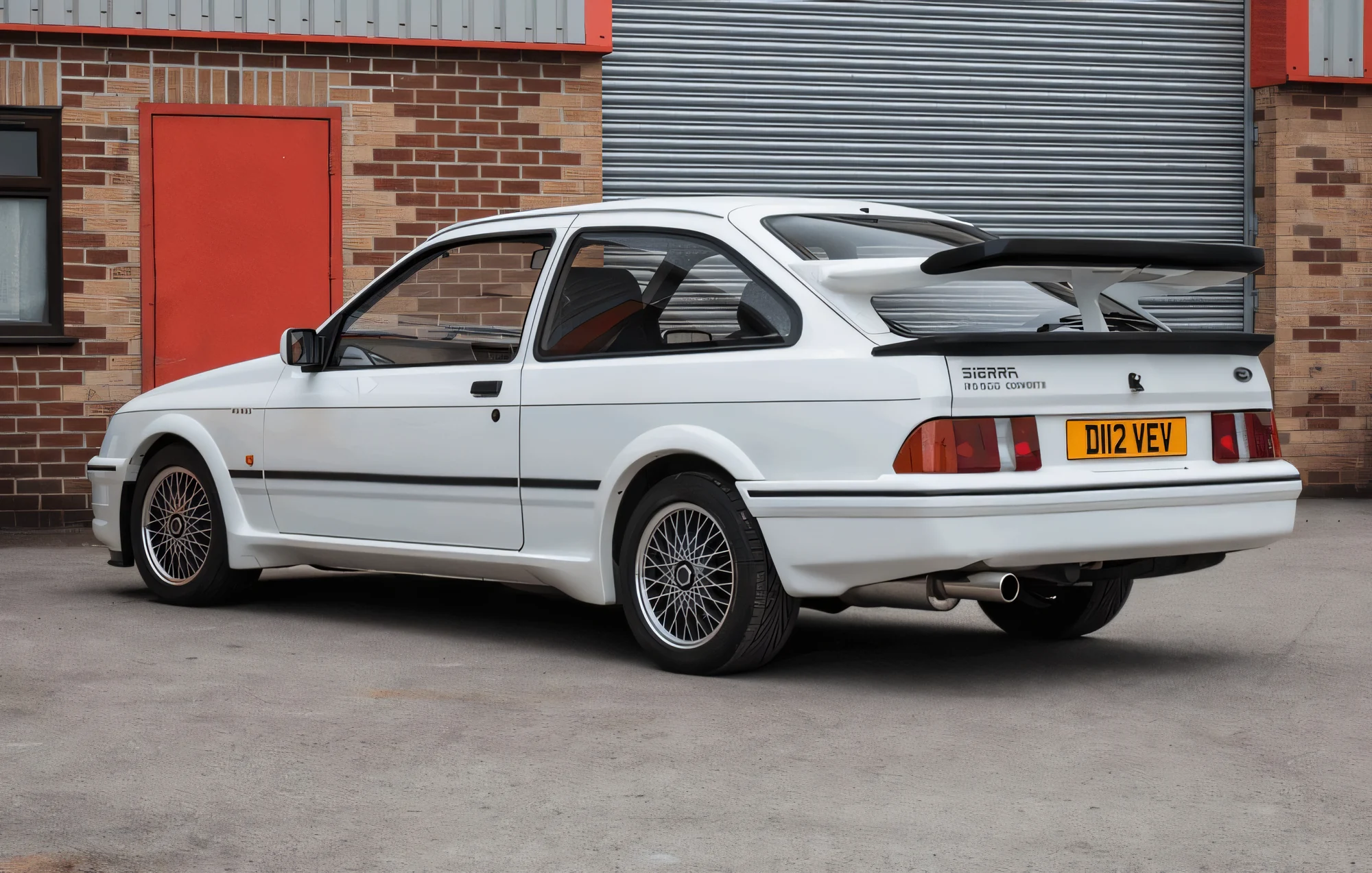
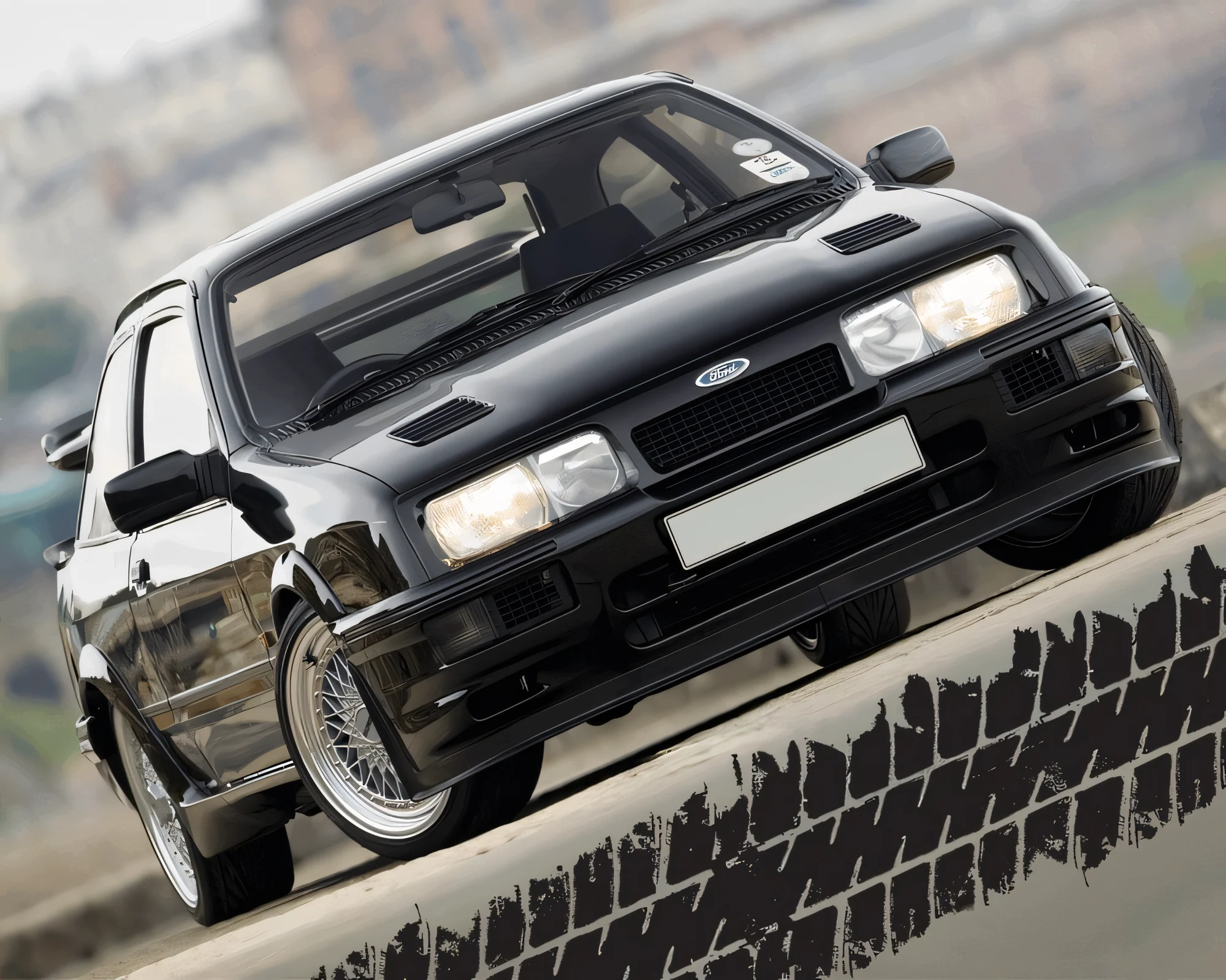
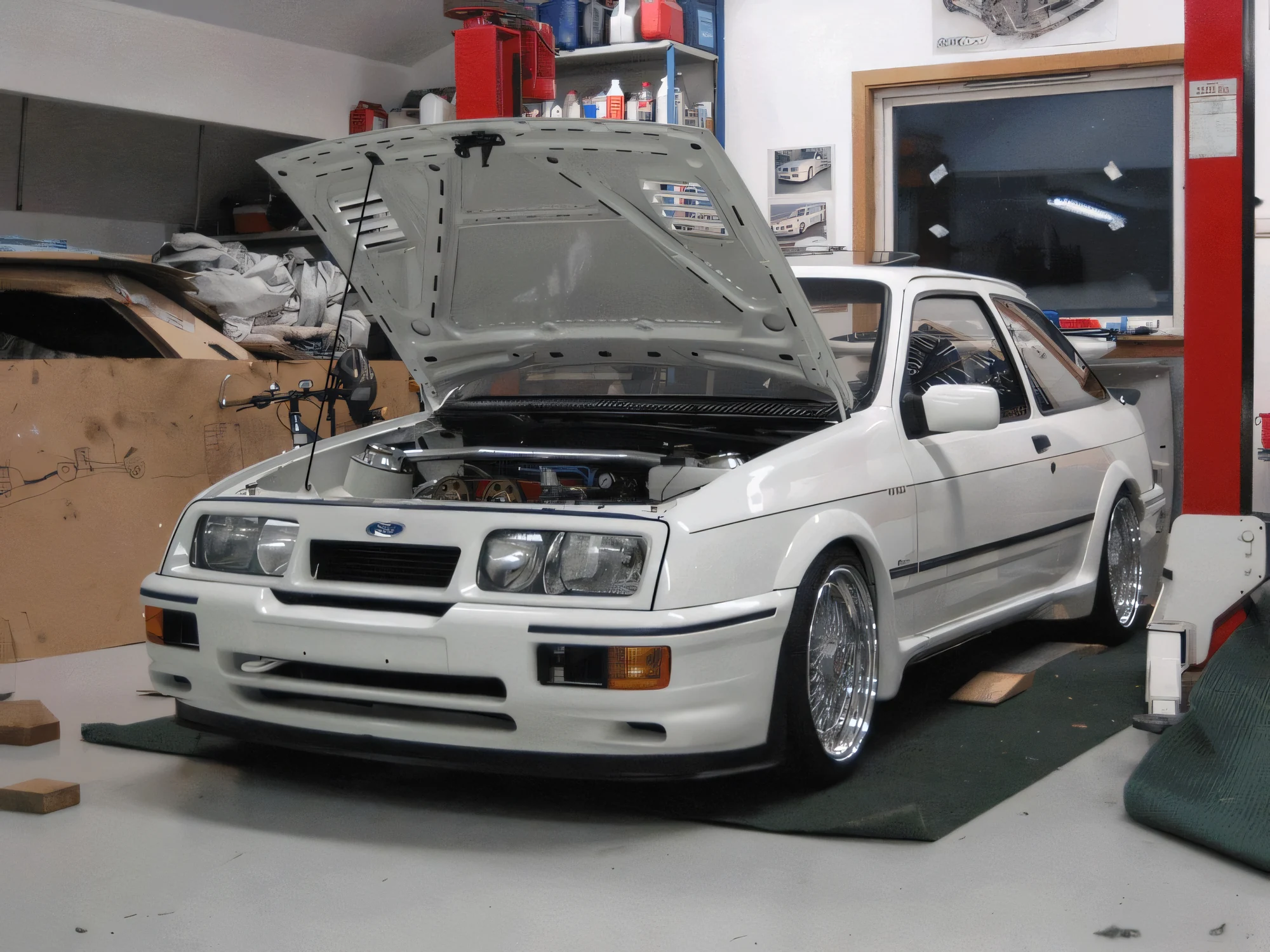
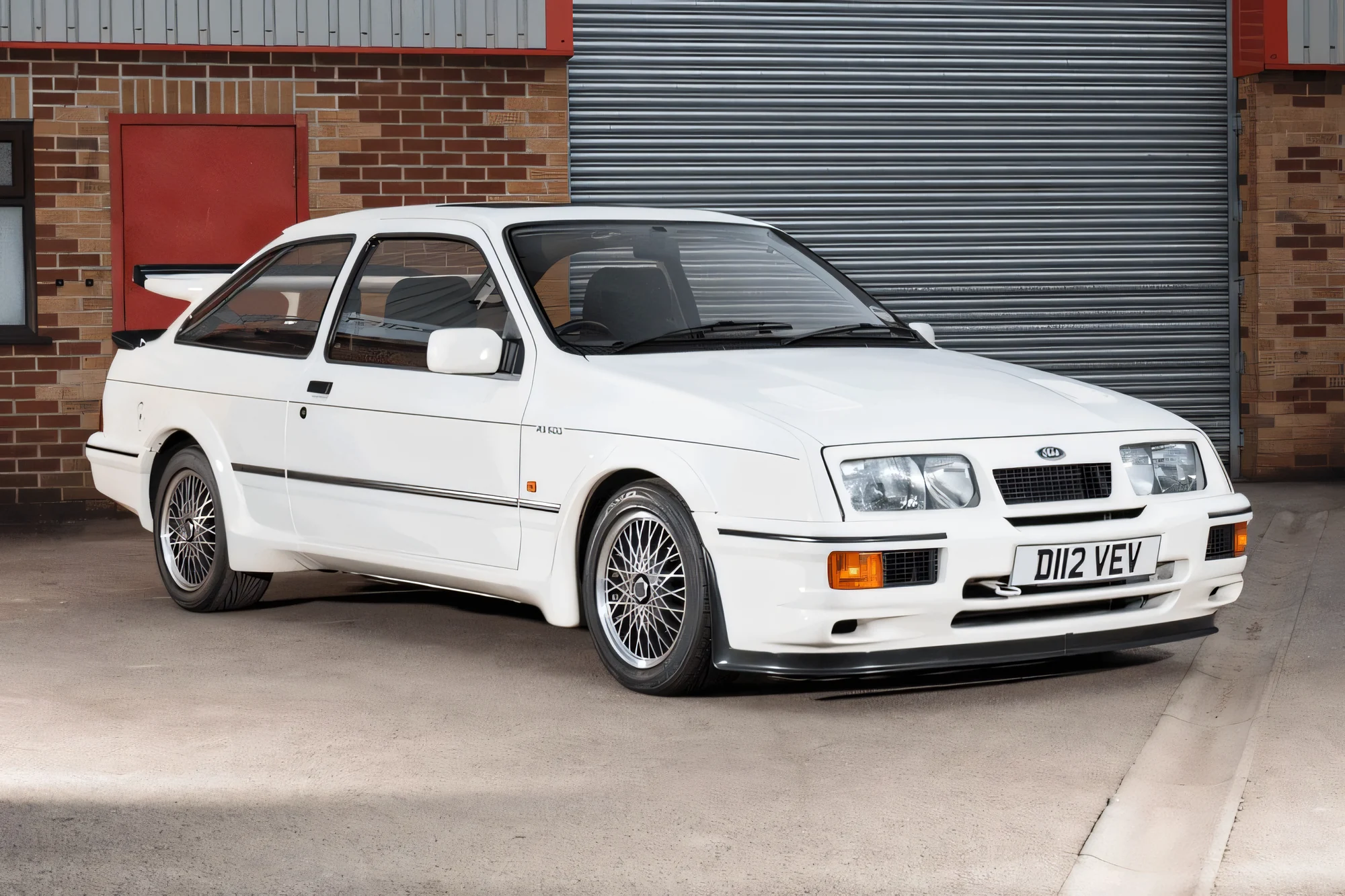
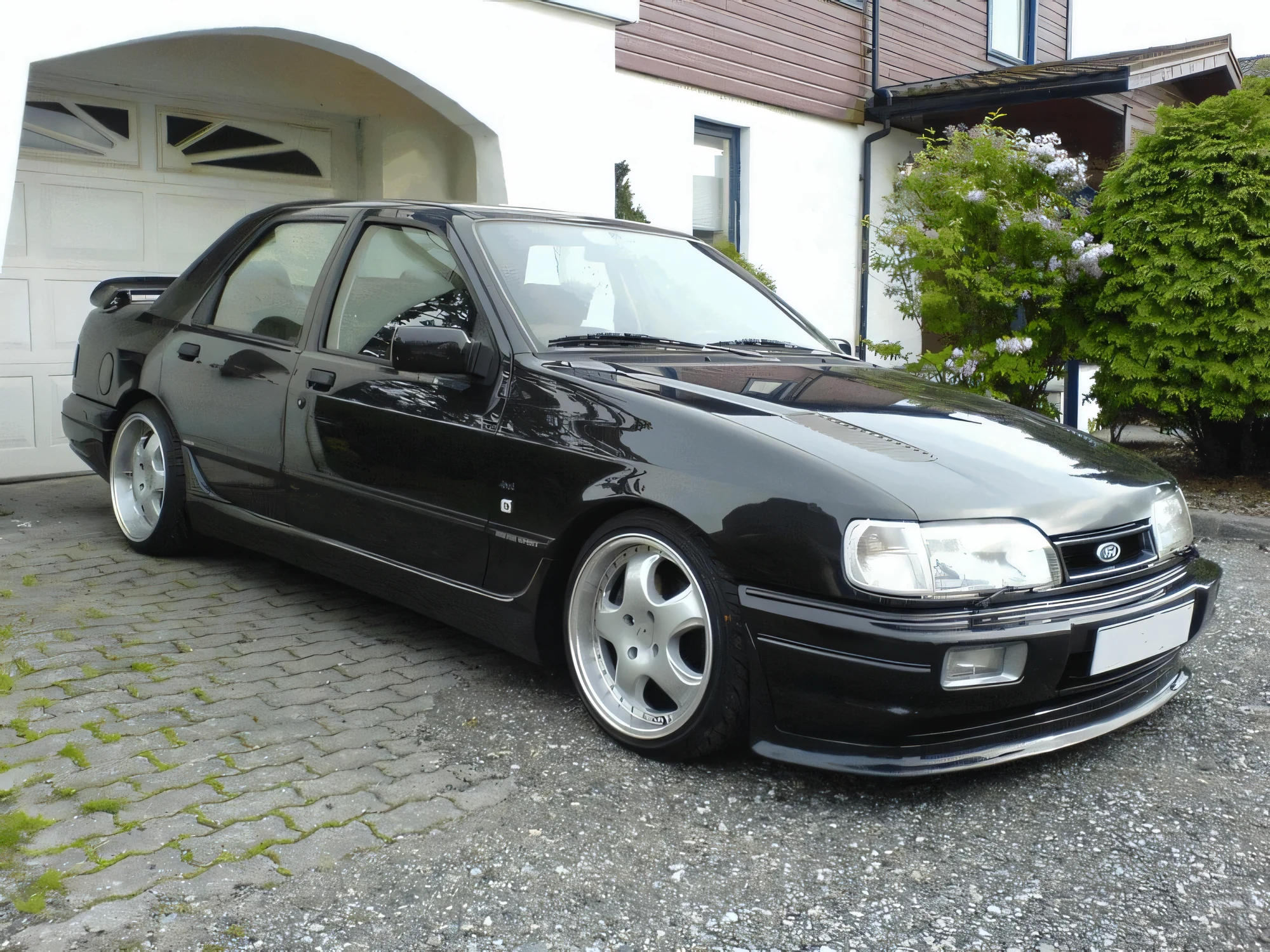
Everywhere else, the Sierra’s icon wore a wing. The RS Cosworth (1986) took a
2.0-litre Cosworth-headed turbo four — the YB — and a colossal whale-tail rear
wing, and built the 5,000 road cars needed to go Group A racing. The RS500 that
followed weaponised it. And the road cars were, deliberately, only the beginning:
the YB is the icon of affordable big power, a 2.0-litre four whose stock block will
take 500 horsepower and whose tuning parts are traded by part-number like currency.
Half the reason these cars are loved is what they’ll do; the other half is the
noise, the wing, and the fact that a family Ford humbled everything on track.
Owning one now
Both stories end in the same place: money. Clean Cosworths are blue-chip classics
now — thinned by decades of theft, so originality and history matter more than
mileage, and the specials (a real RS500, a genuine XR8) are firmly collector
territory. In South Africa the XR8 is the crown jewel, changing hands rarely and
for serious sums; the Cosworths that came here are appreciating in step with the
rest of the world. Buy on rust, documentation and a hard look at whether a
“survivor” really is one — and if it’s a good one, resist the urge to chop it.
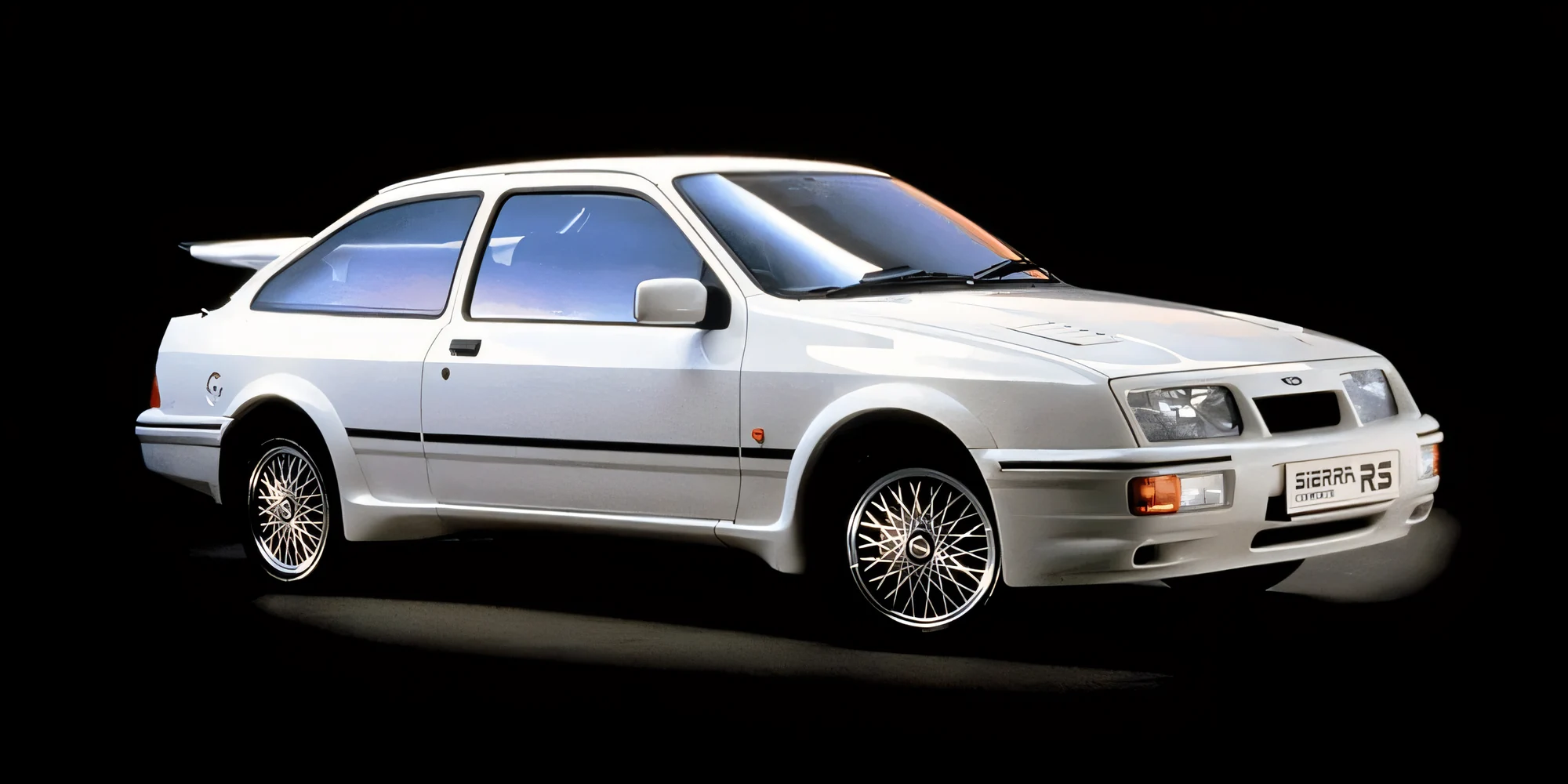
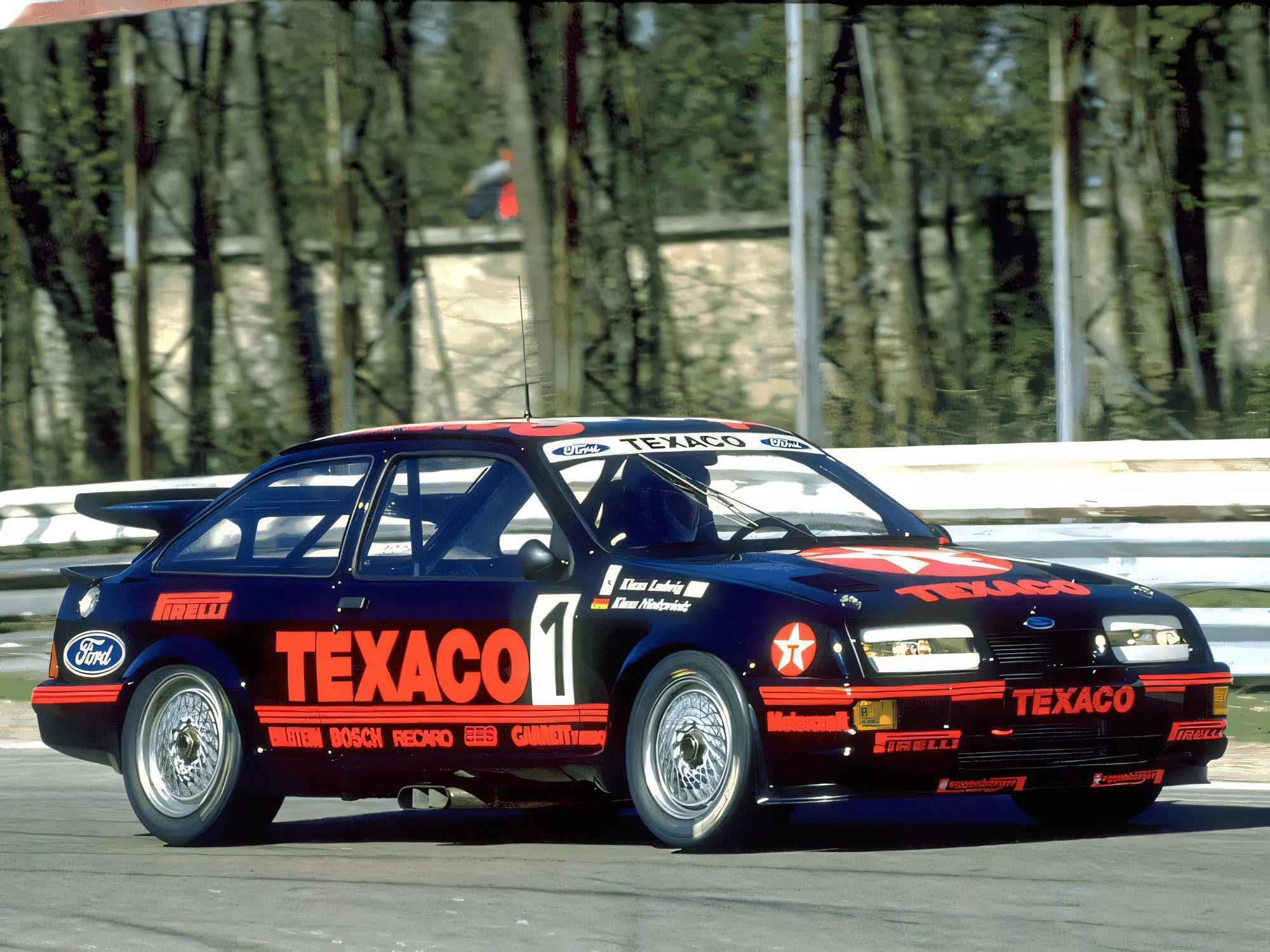
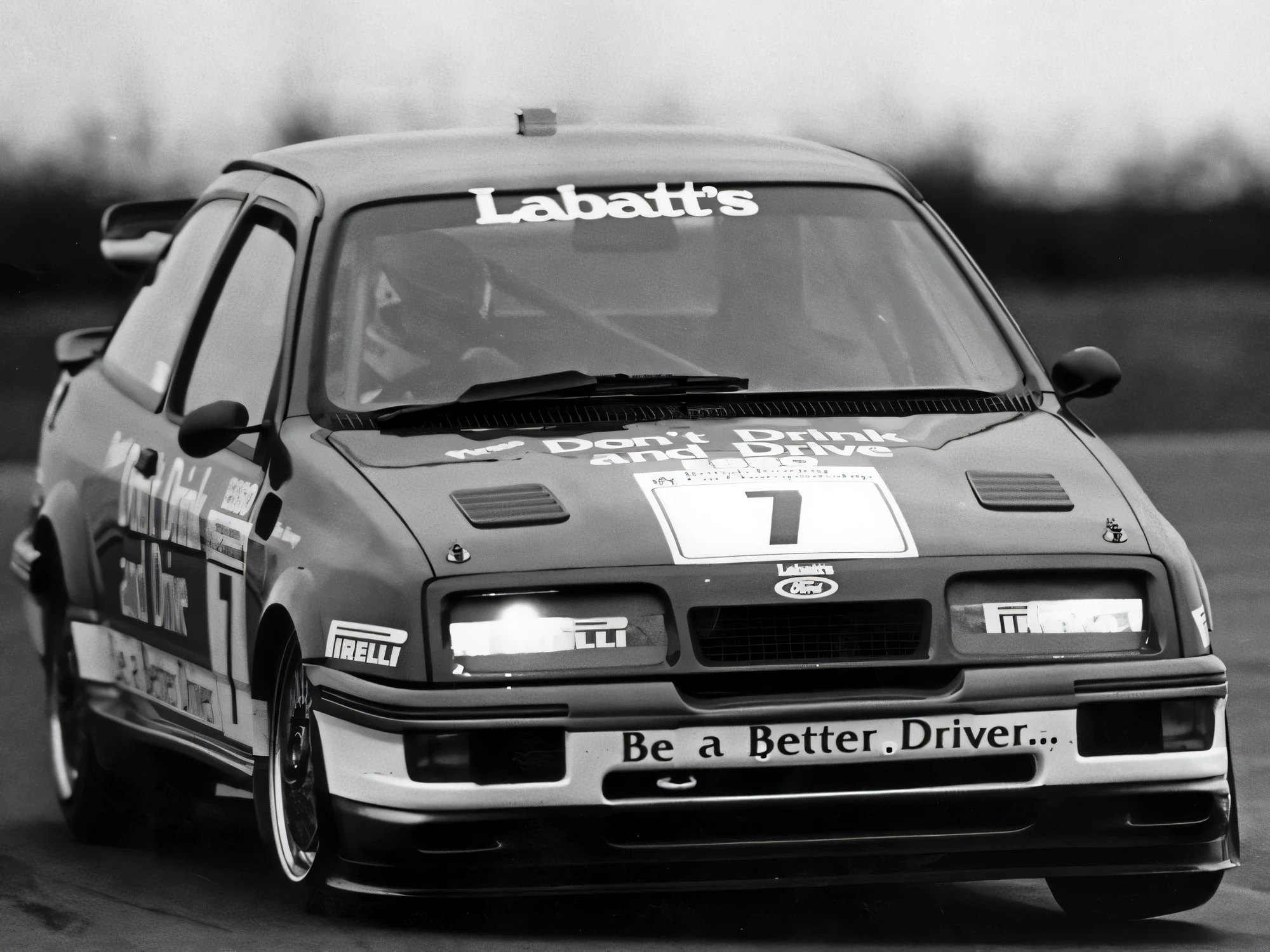
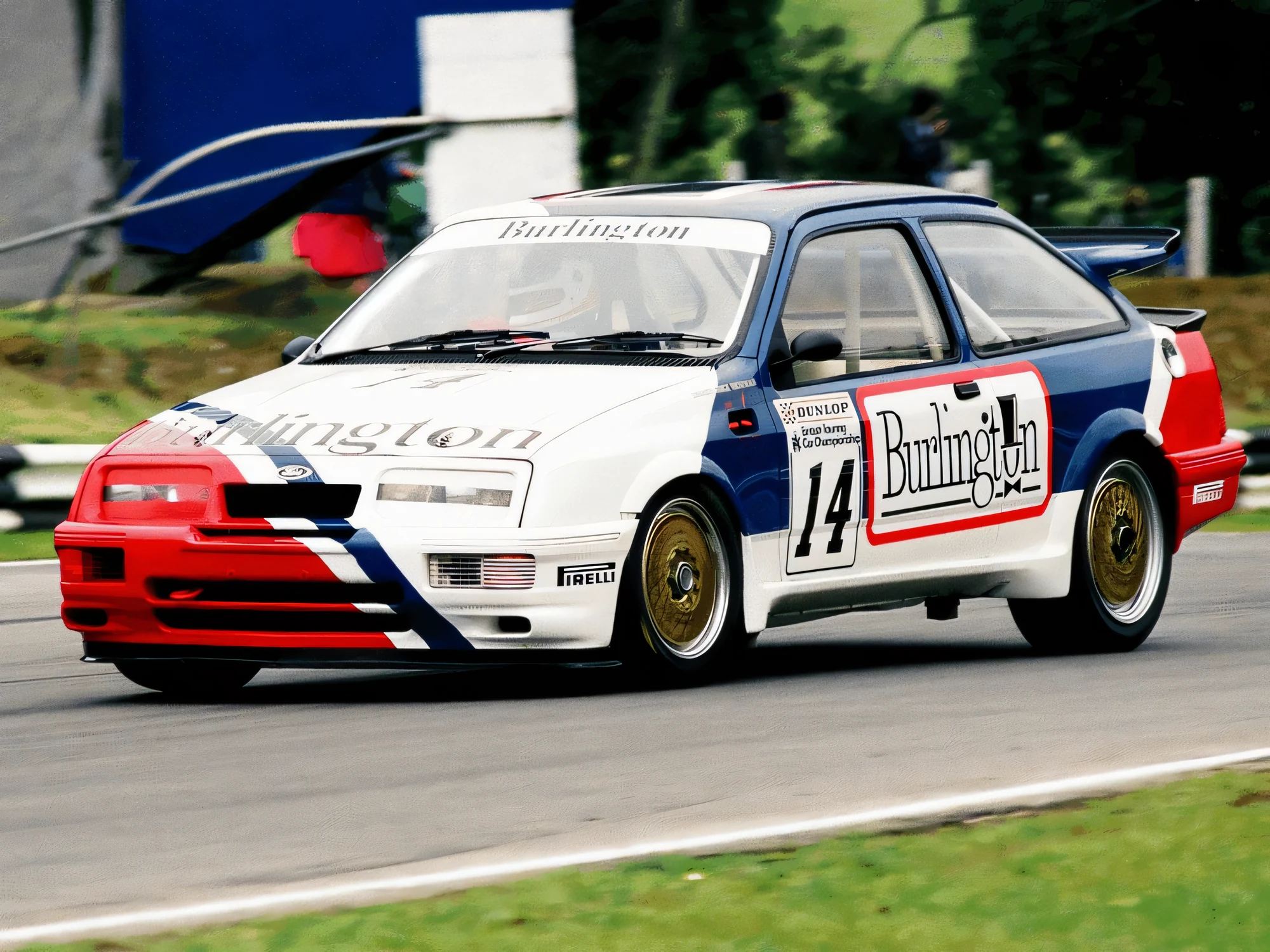
Ford Sierra RS500 Cosworth BTCC (1988) · Manufacturer press
The car that broke Group A
How the RS500 conquered touring cars
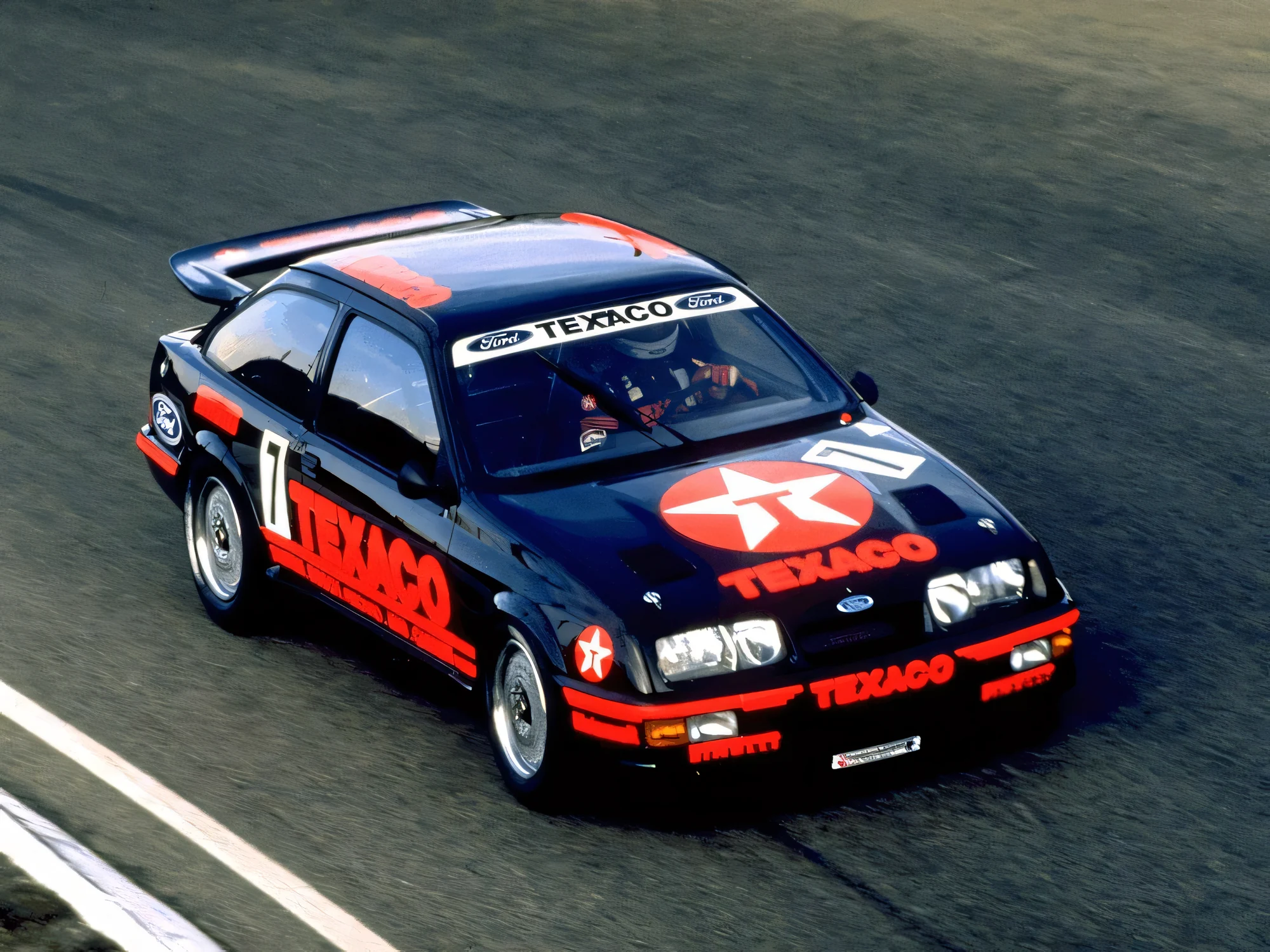
Ford built 500 RS500s for one reason: to homologate a weapon. Aston Martin Tickford — chosen because it had just finished Ford's RS200 Group B cars — took 500 stored 3-door Cosworths and fitted a bigger turbo, a thicker block, more aggressive aero and a second bank of four injectors. On the road car, those extra four don't even work. They exist only for the race engine.
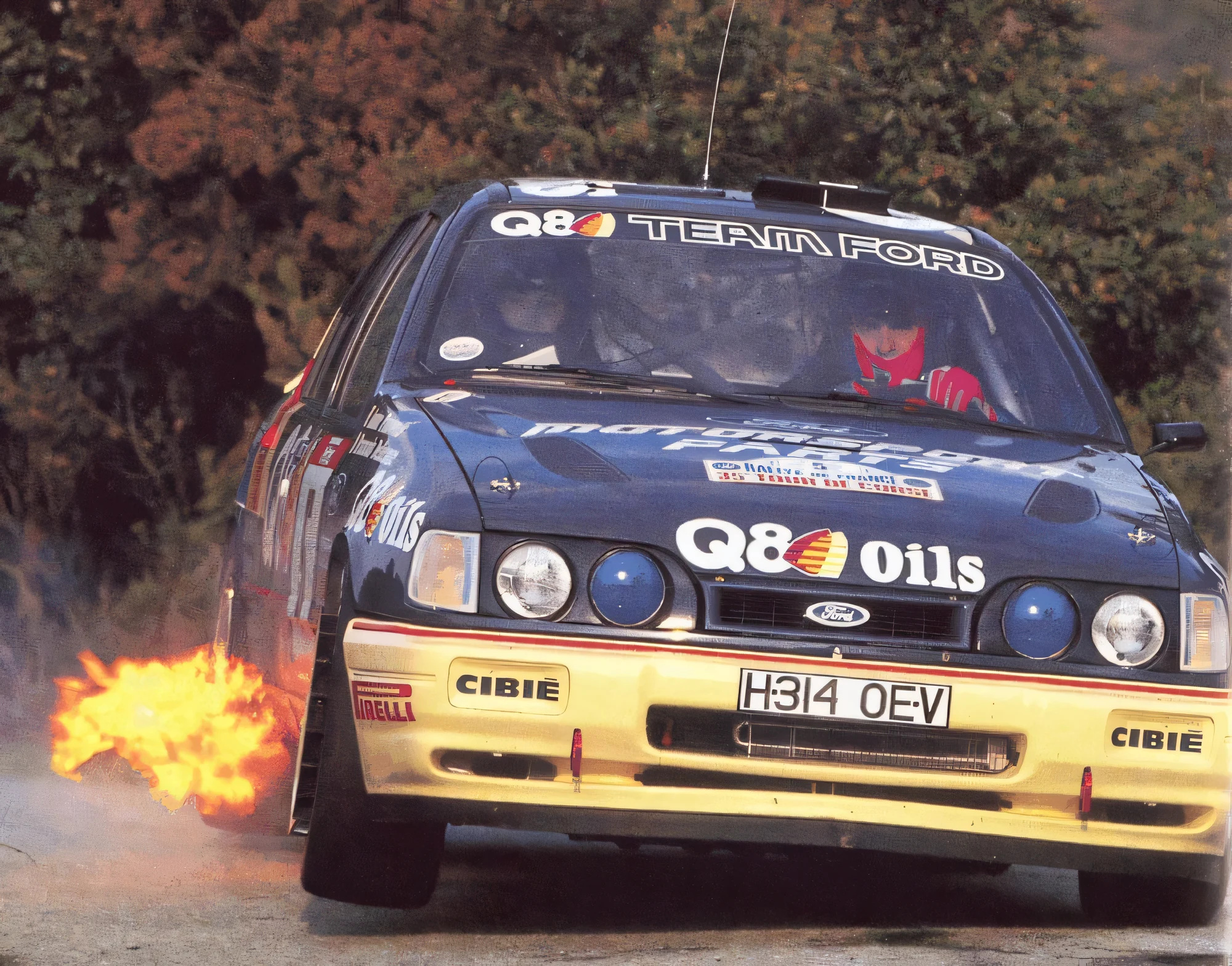
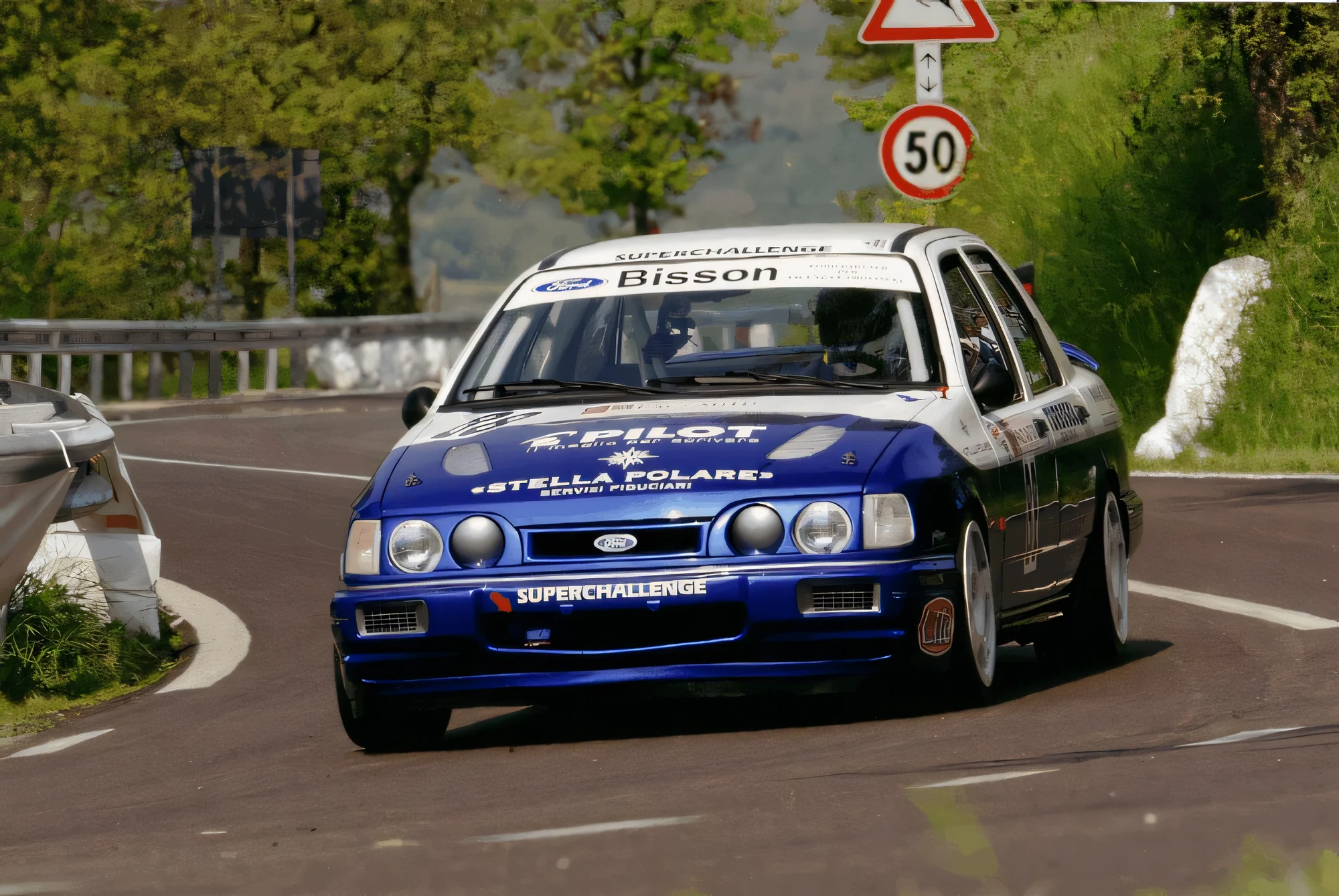
On track that engine made around 500 bhp and, by the end of Group A, 550–575-plus. The RS500 didn't just win — it dominated: the most British Touring Car wins of any car, DTM and Australian titles, Bathurst victories, and it was still taking World Touring Car rounds having only been homologated that August. Its supremacy is a standard reason cited for touring cars abandoning Group A altogether.
It wasn't all clean theatre. At Bathurst in 1987 an RS500 crossed the line first and was thrown out for illegal wheel-arches — a controversy that helped hand the title to BMW. Even beaten on a technicality, the Sierra was the car everyone else was chasing.
How it gets modified
The modifications that actually get done — what each does, roughly what it gains, roughly what it costs.
Cosworth
YB on the stock block
The icon of affordable big power. The 2.0 YB's standard crank and block are considered good to around 500 bhp with a bigger turbo, injectors and fuelling. The cam-cover colour tells you which you've got — red for the 2wd/RS500 engines, green for the 4x4 Sapphire.
~500 bhp, stock bottom endThe cheap horsepower
Big turbo
Injectors + hybrid turbo
The path past 500: bigger injectors (tuner shorthand — Bosch 'light-blue 400' for ~520 bhp, 'grey 403' for ~570) on a big hybrid turbo. 500–600+ bhp street and drag builds are common on a 2.0 four.
570+ bhpFull build
SA V8
Windsor hot-rodding (XR8)
The XR8's 302 responds to classic small-block Ford tricks — carb/cam/heads, EFI conversions, larger-capacity strokers. It's prized for character and rarity more than headline power; you don't chop a car this scarce for a dyno number.
V8 torque and noiseSmall-block money
Chassis
Coilovers, brakes, LSD
The rear-drive Sierra chassis loves a suspension refresh, bigger brakes and a limited-slip diff; the 4x4 Sapphire adds the traction the big-power YB builds need to actually use their smoke.
Putting the power downThe handling tax
Keep it clean
Don't touch a survivor
So many were stolen in period that clean, unmolested cars are now serious money. The smart move with a good one is often to leave it standard, service it properly, and drive it — the market rewards originality.
A rising blue-chip classicRestraint
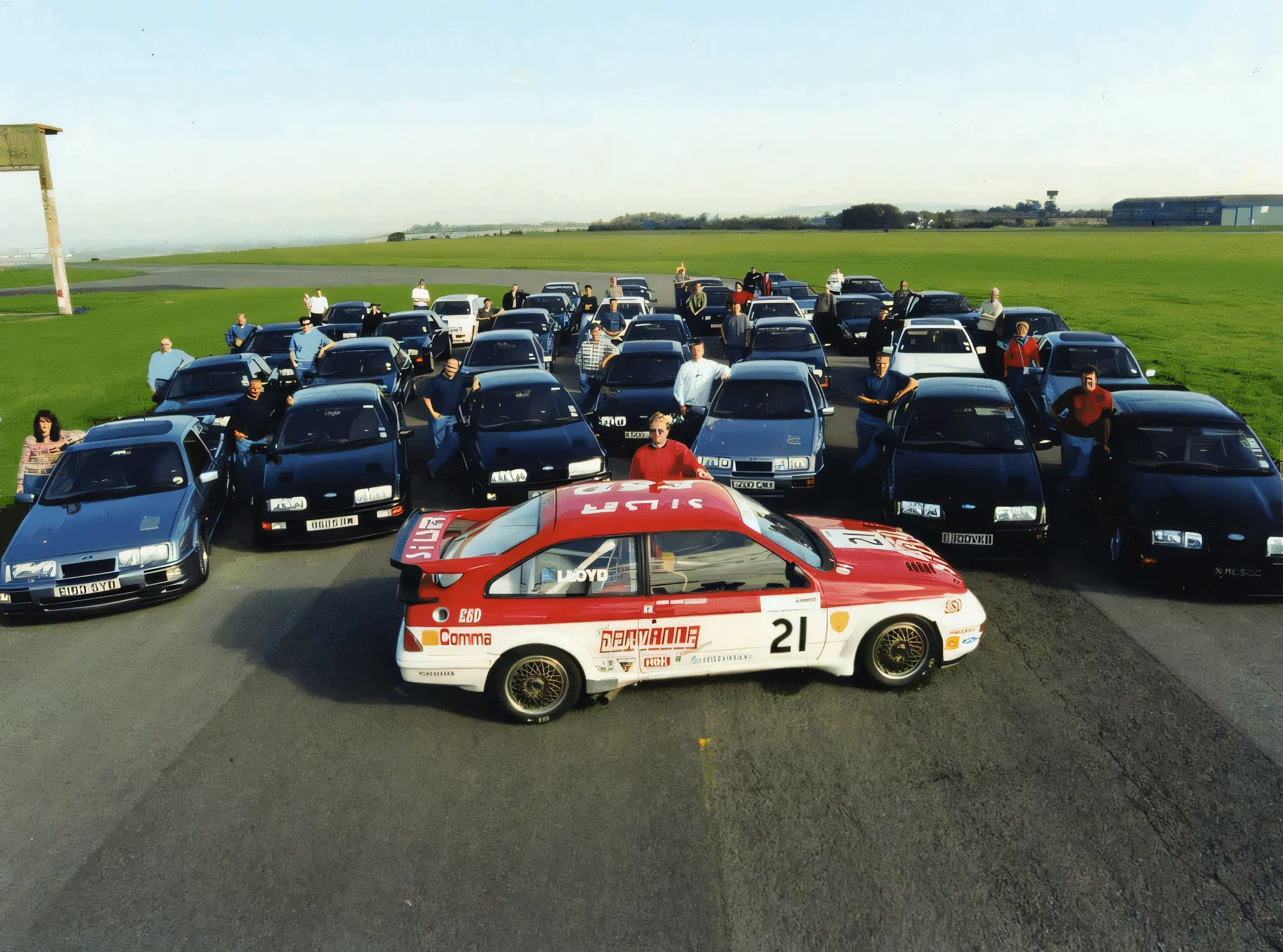
Every frame
The whole set — tap any to blow it up.
The progression
The numbers that actually changed, generation by generation.
The V8, the four, and the race car
South Africa answered with a 5.0 V8; the rest of the world with a 2.0 turbo four. On the road they were close — but it was the little four that went to 550+ on the track.
RS Cosworth
204 bhp
2.0 turbo · road
XR8
215 bhp
5.0 V8 · SA
RS500
224 bhp
2.0 turbo · road
RS500 race
550 bhp
Group A
Rarer than the Group A legend
Ford built around 6,000 RS Cosworths and 500 RS500s — but only ~250 XR8s. South Africa's V8 Sierra is rarer than the car that conquered touring cars.
XR8
250 built
SA-only
RS500
500 built
Tickford
RS Cosworth
6,000 built
homologation run
The Cosworth YB tuning ladder
The 2.0 YB is legendary because the stock block takes it. The injector part-numbers are tuner shorthand for how far down the road you're going.
The most successful Group A touring car ever — BTCC, DTM, Bathurst
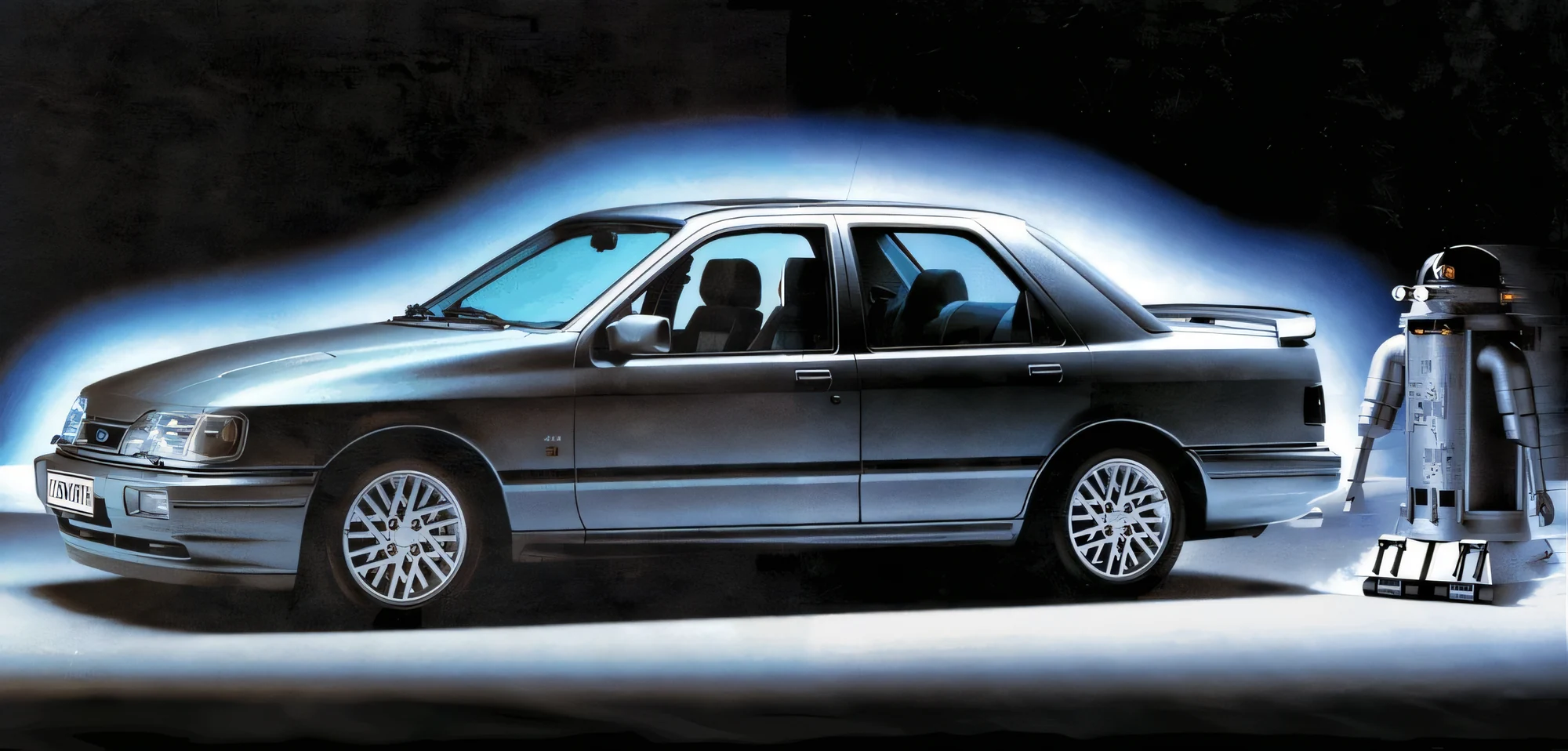
Sapphire · 1988–1992
Body
4-door saloon Cosworth — the discreet one
Engine
Cosworth YBB 2.0 turbo — 204 PS, 'red top'
1990
Switched to permanent 4x4 (~217 hp)
Legacy
Its 4x4 chassis underpinned the Escort RS Cosworth
Straight answers
Is it true the XR8's V8 came in "marine spec"?
Yes — one of the great South African car stories. Ford SA couldn't source the 5.0 Windsor V8 locally, so it imported the engines as marine/industrial units and re-engineered them for road use, reportedly redesigning 96 components and modifying around 150 more to shoehorn the Mustang V8 into the Sierra.
Why does an RS500 have injectors that don't work?
It has eight — two banks of four — but on the road car the second four are fitted and inert. They exist purely to feed the race engine. The RS500 was a homologation car first and a road car second, and those dead injectors are the clearest tell of it.
Why are clean RS Cosworths worth so much now?
Partly because so many were stolen. Weak locks, no immobiliser and joyrider and ram-raider fame made it one of Britain's most-stolen cars in the late '80s and '90s, which thinned the survivor pool badly — so genuinely clean, unmolested examples now command a premium. A 5,000-mile RS500 made £596,250 in 2023.
How much power does a Cosworth YB really take?
The stock 2.0 crank and block are widely considered good to about 500 bhp with a bigger turbo and proper fuelling, and big-injector, big-turbo builds go past 570. From a 2.0-litre four, that tuneability is the stuff of legend — and the cam-cover colour, red or green, tells you which YB you're starting with.
Did an RS500 really win Bathurst and then get disqualified?
In 1987 a Sierra RS500 crossed the line first at the Bathurst 1000 and was then excluded for illegal bodywork — the front wheel-arches — a famous controversy that also helped cost Ford the touring-car title that season.
Was the XR8 ever sold outside South Africa?
No. The V8 Sierra was South-Africa-only, built to homologate for local Group One racing and never offered as a factory model anywhere else. A few have since been privately exported, which is exactly why a genuine XR8 is such a sought-after, globally rare Ford today.