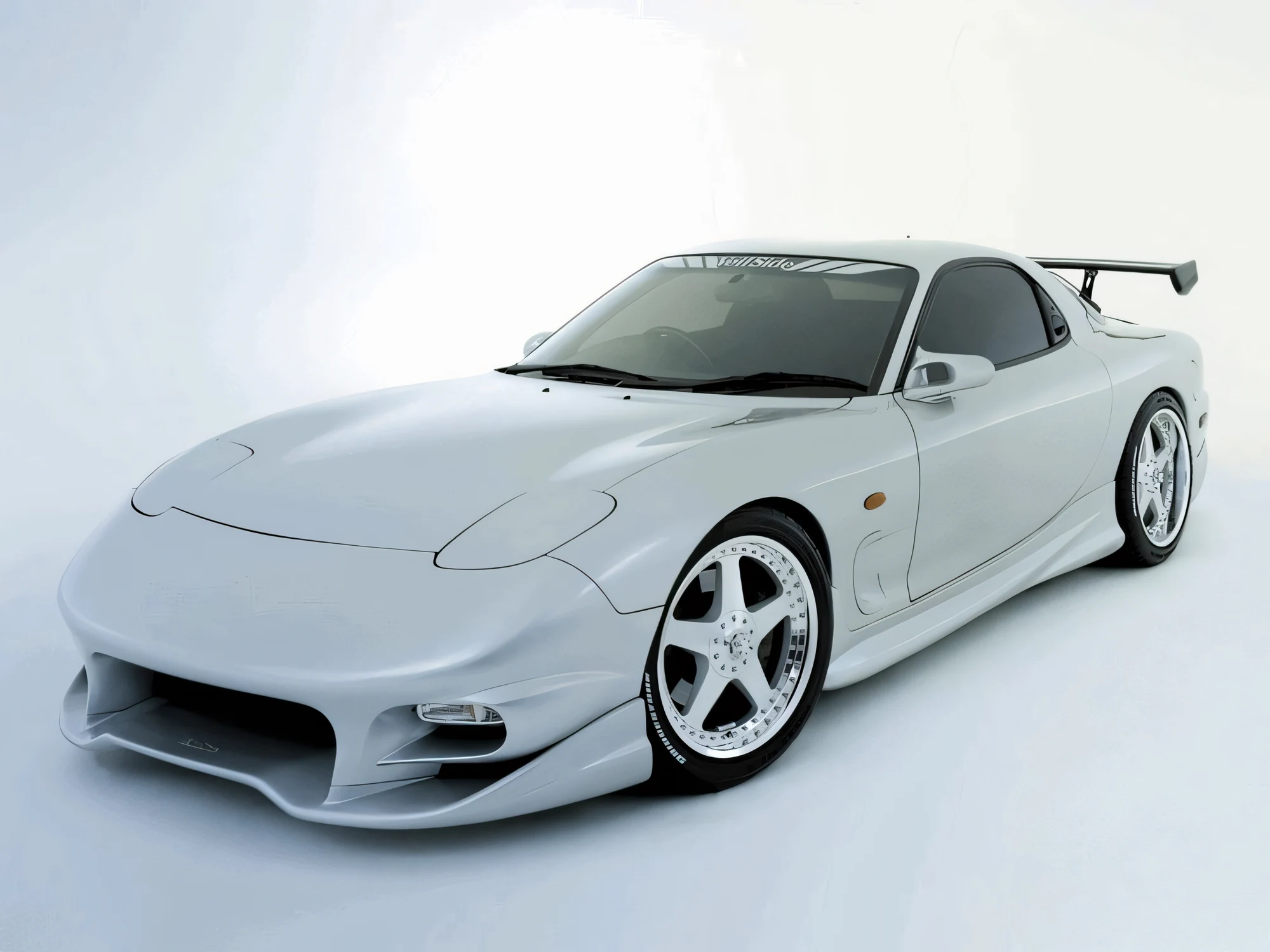
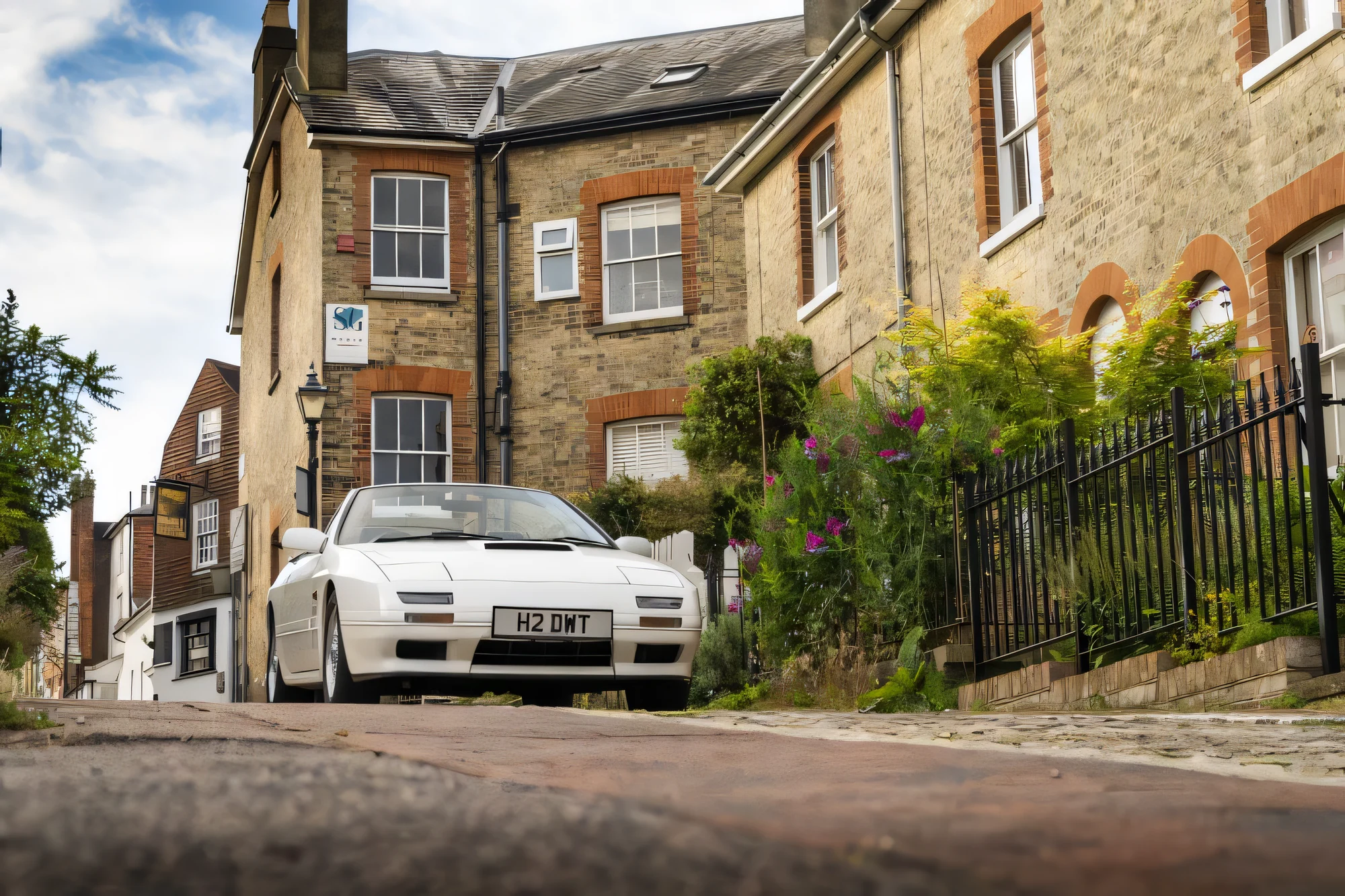
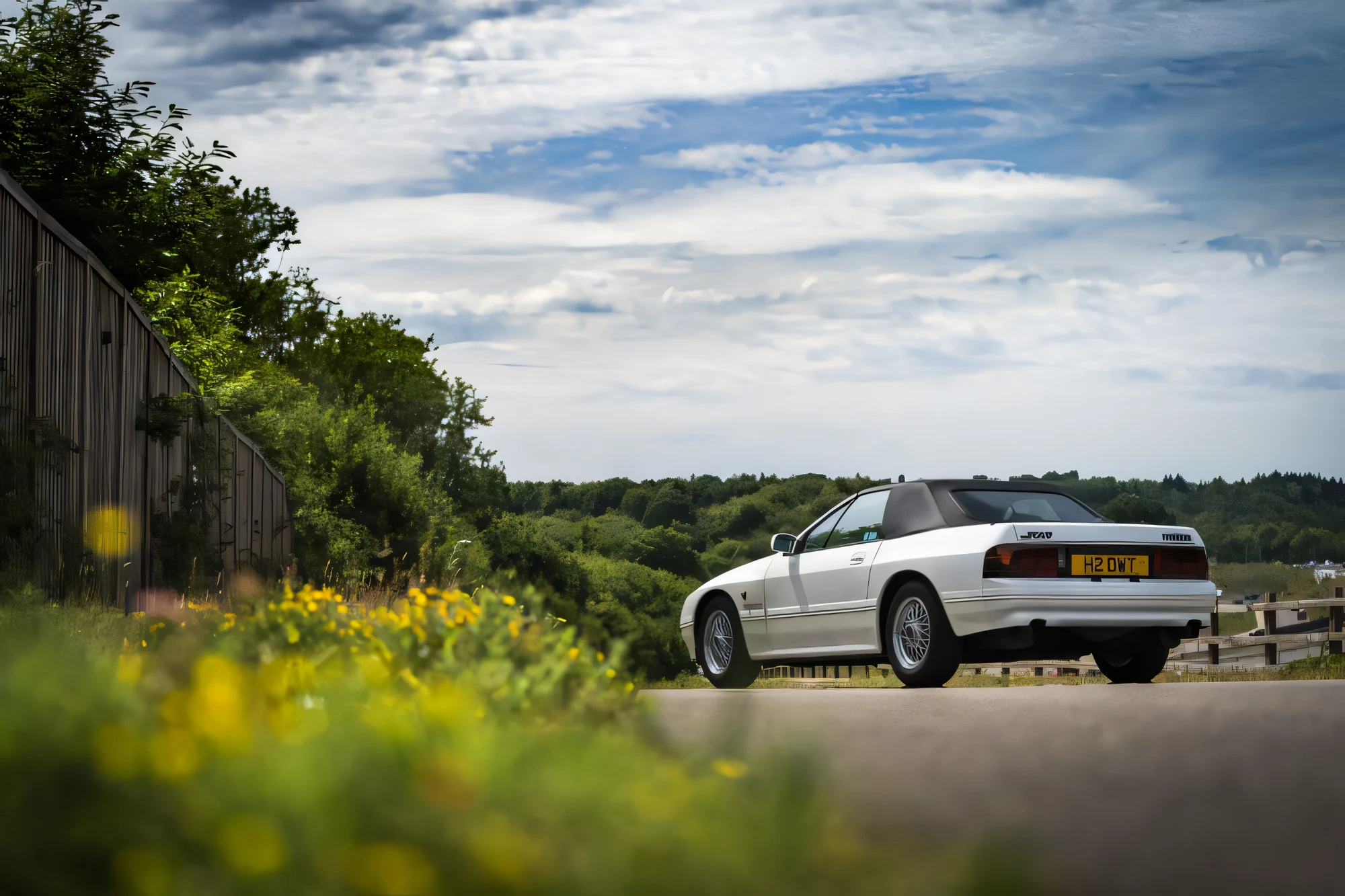
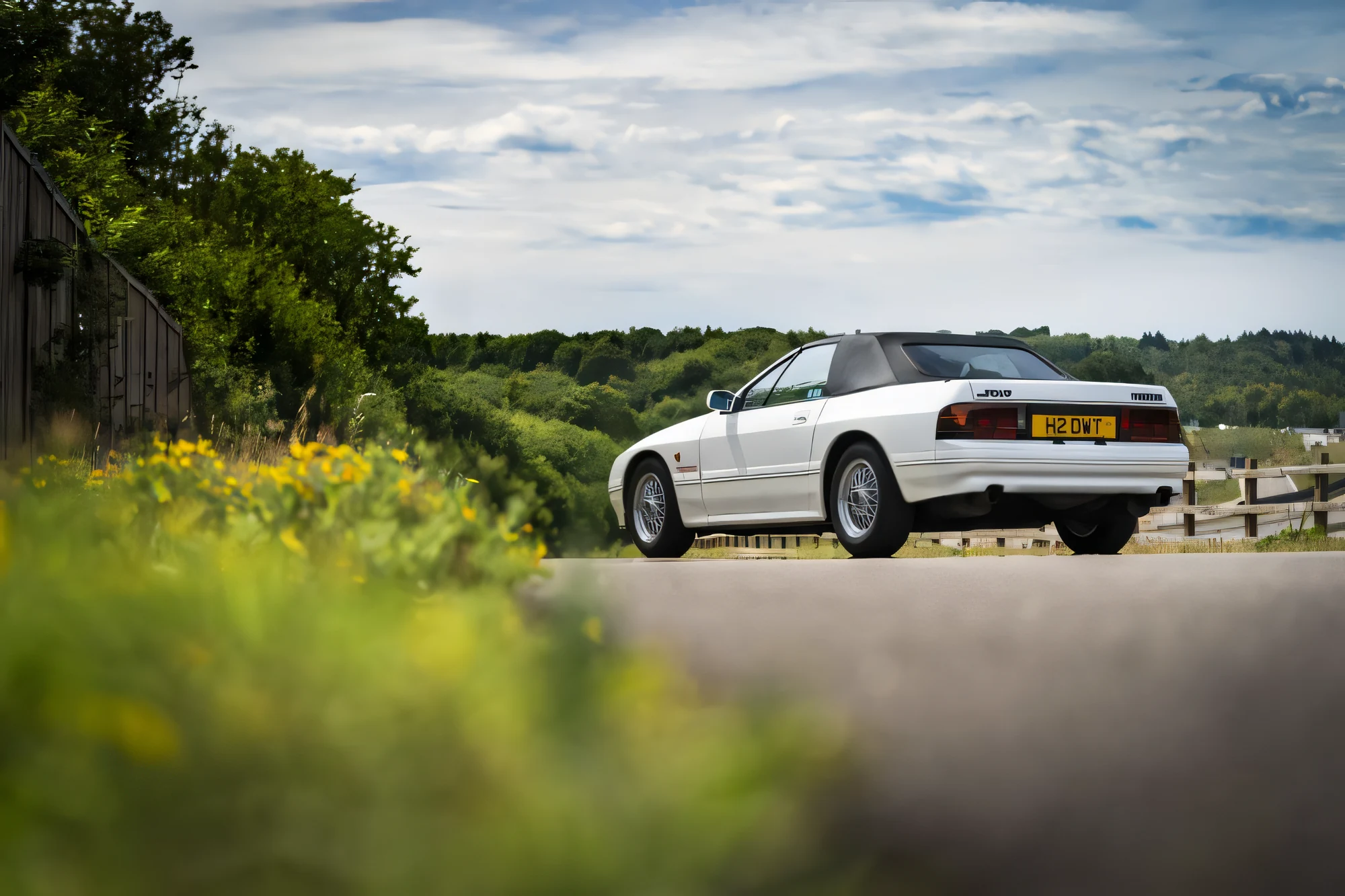
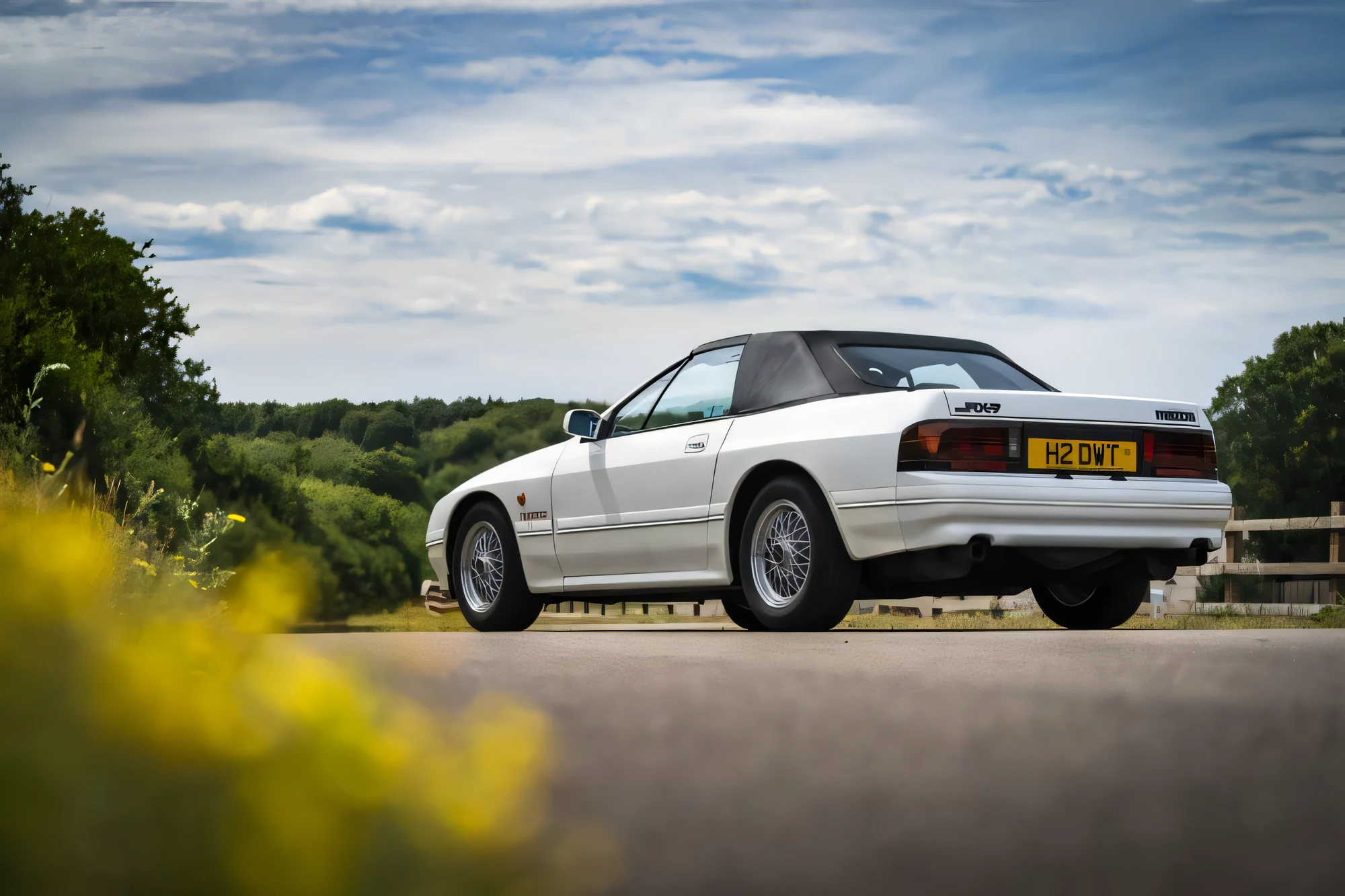
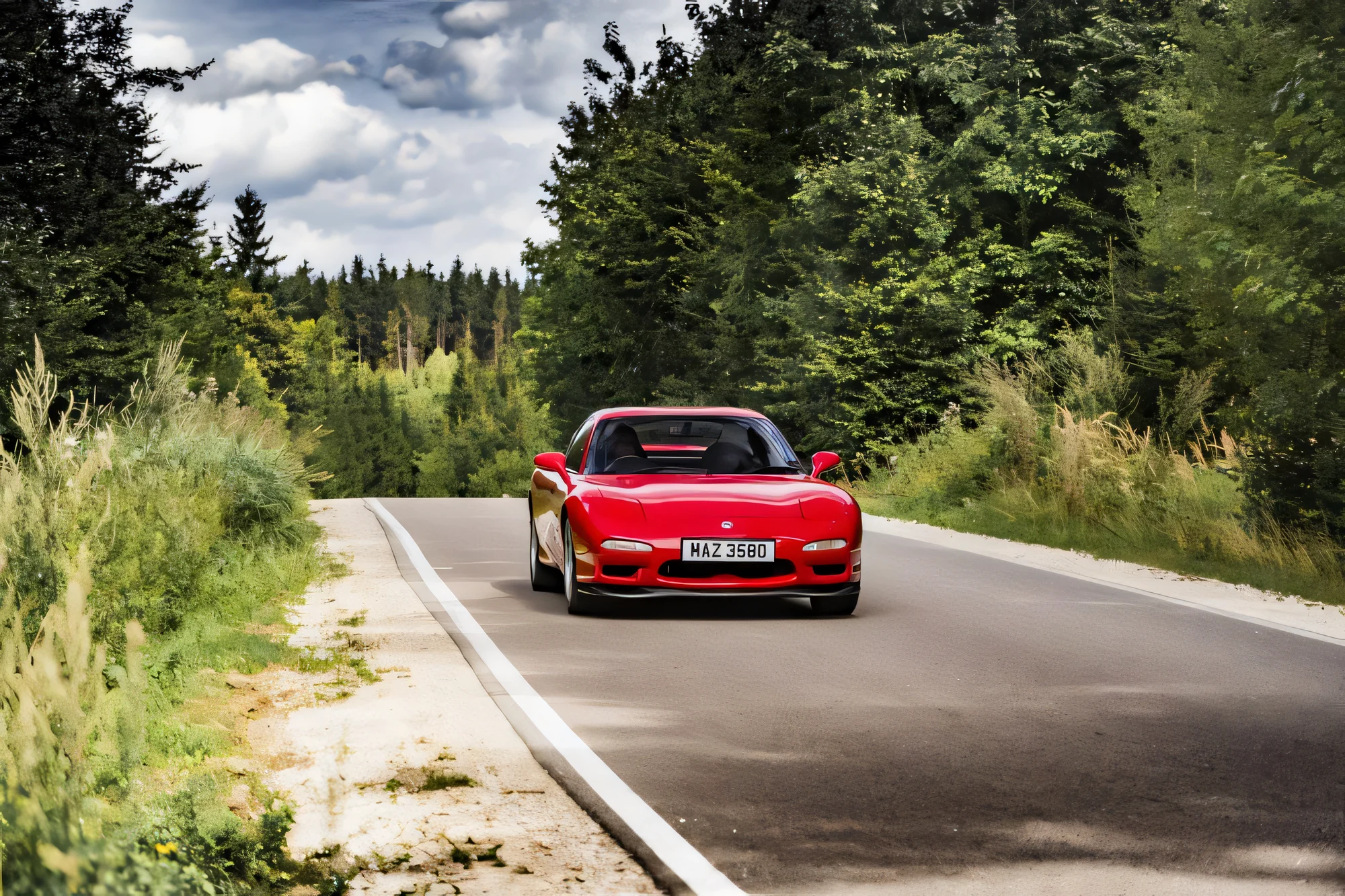
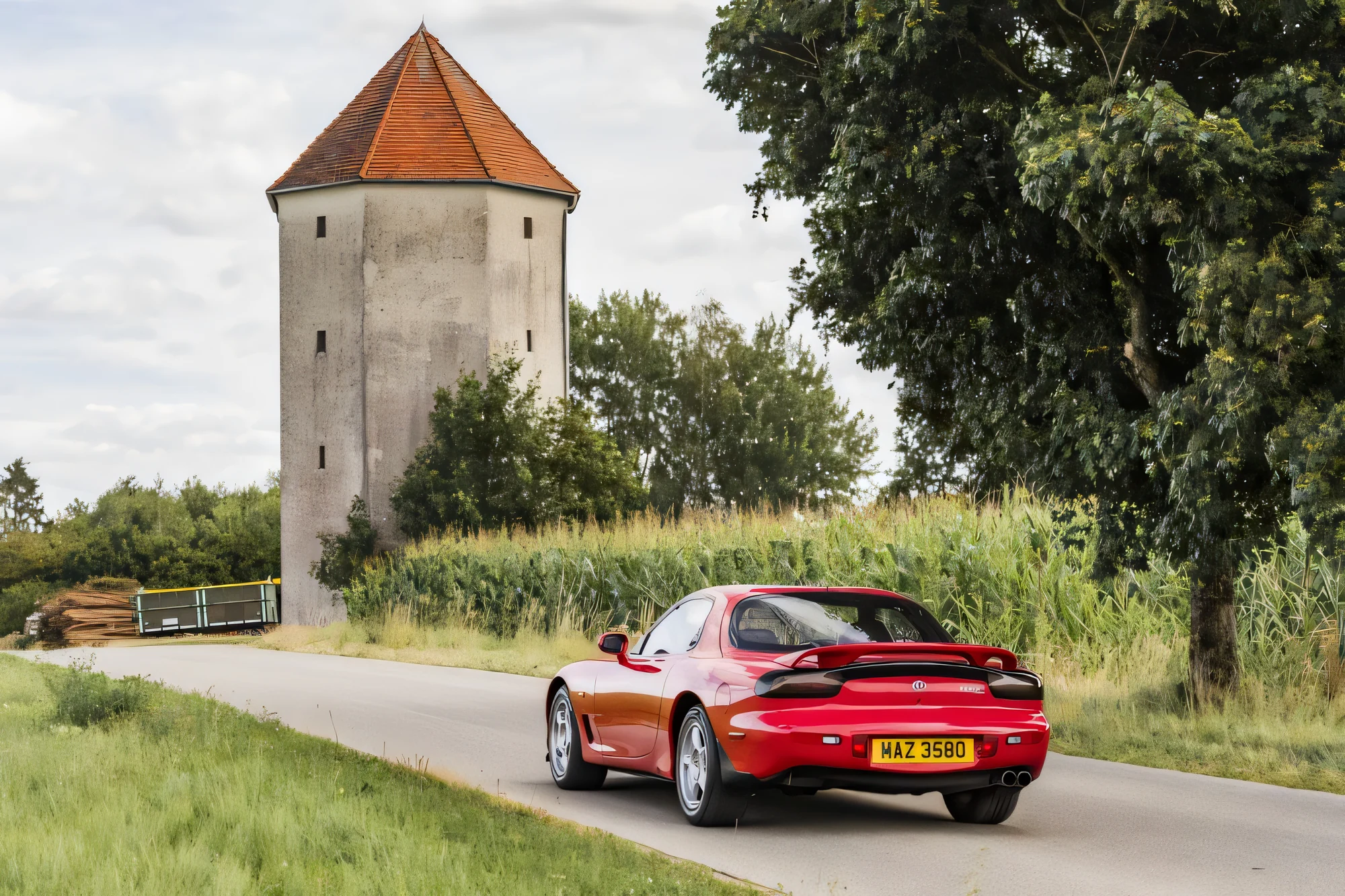
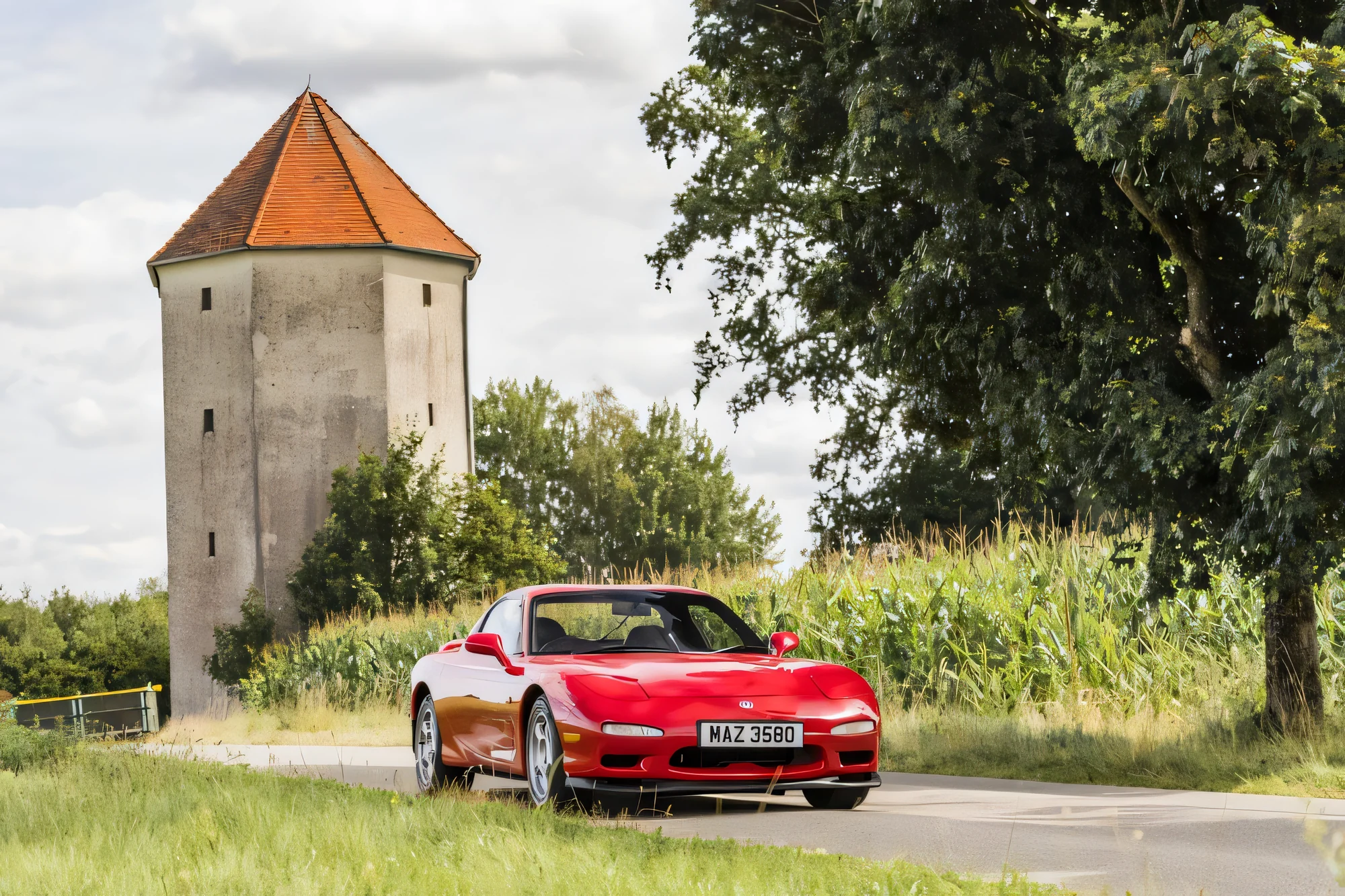
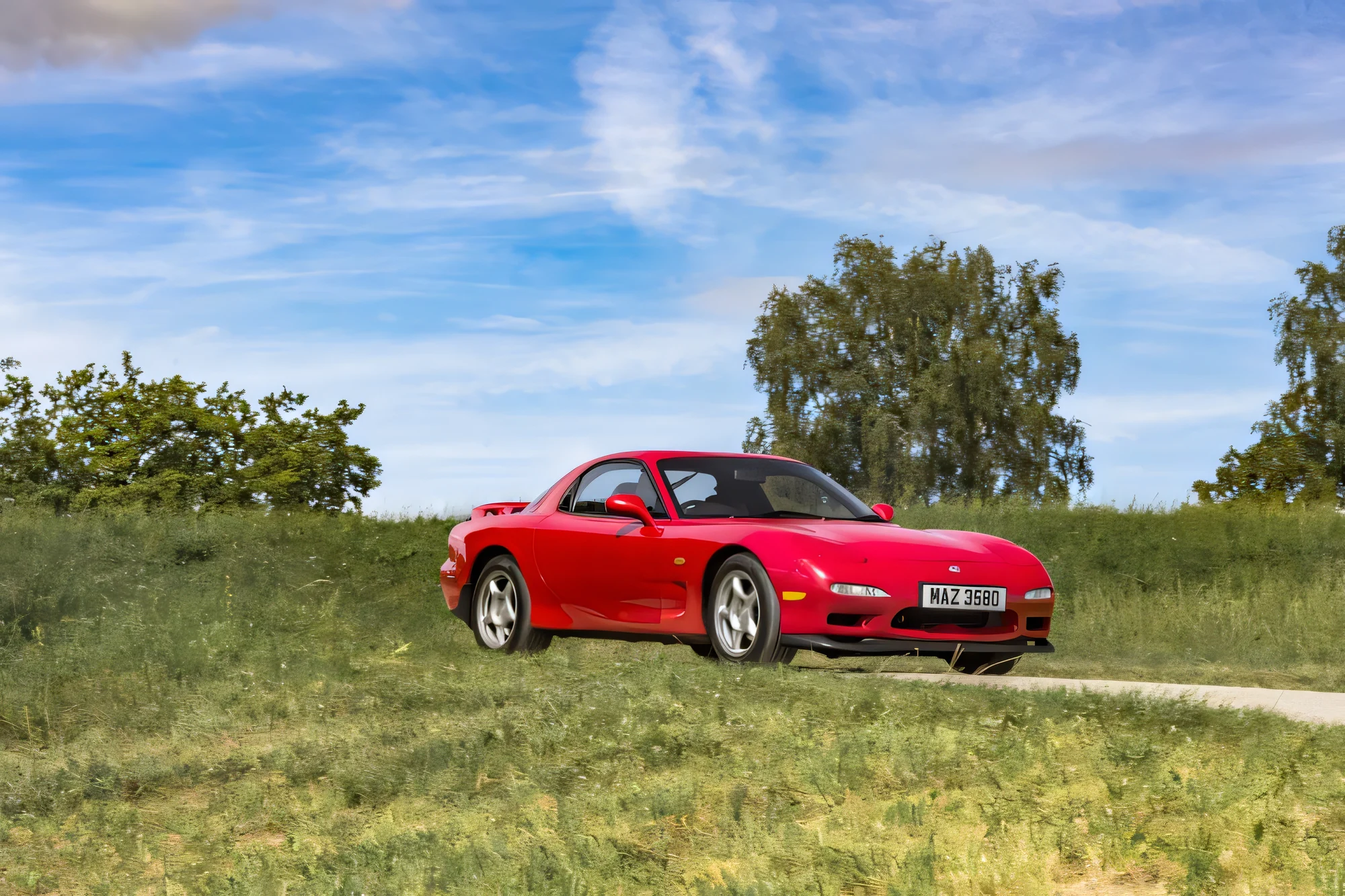
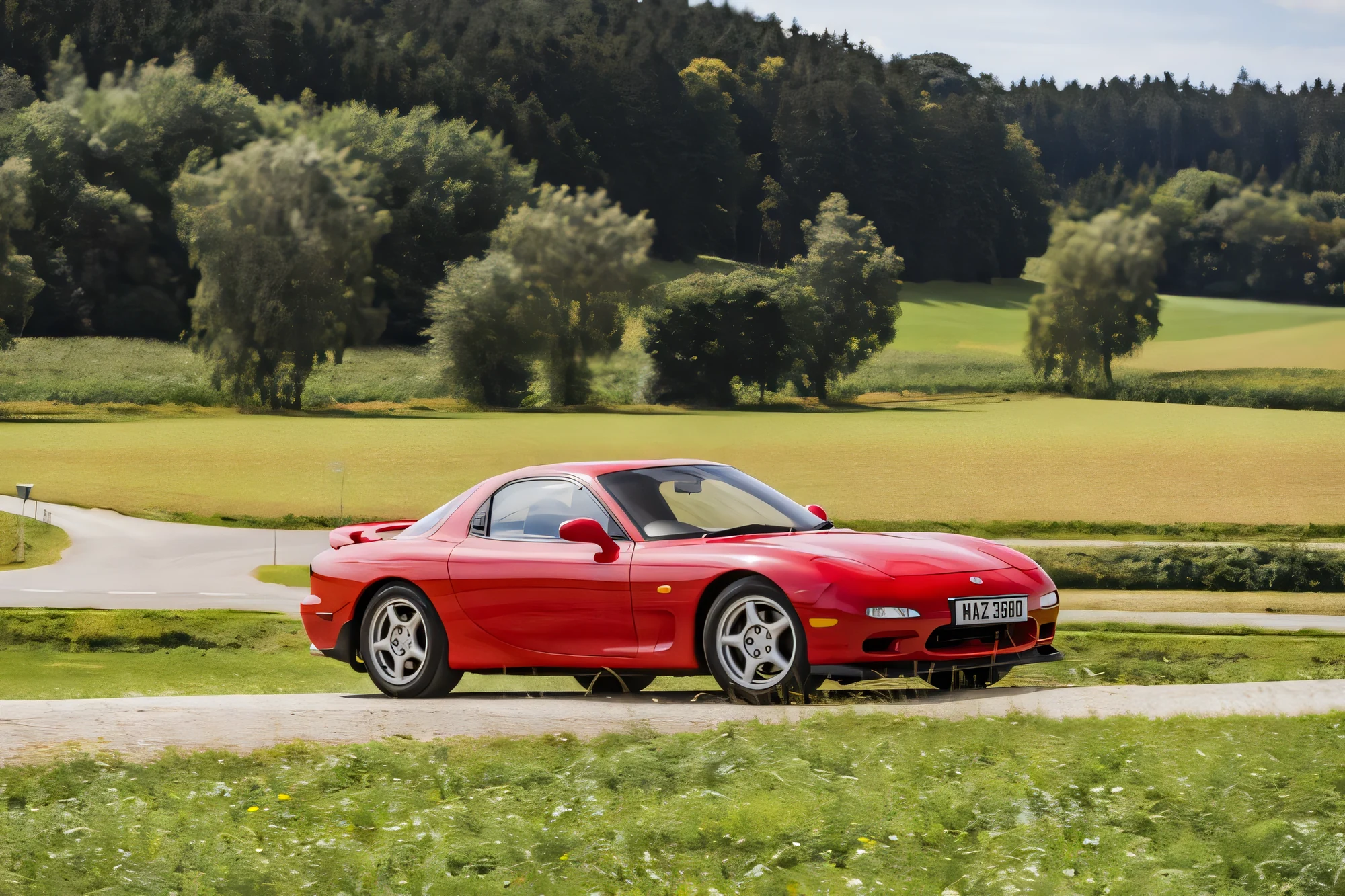
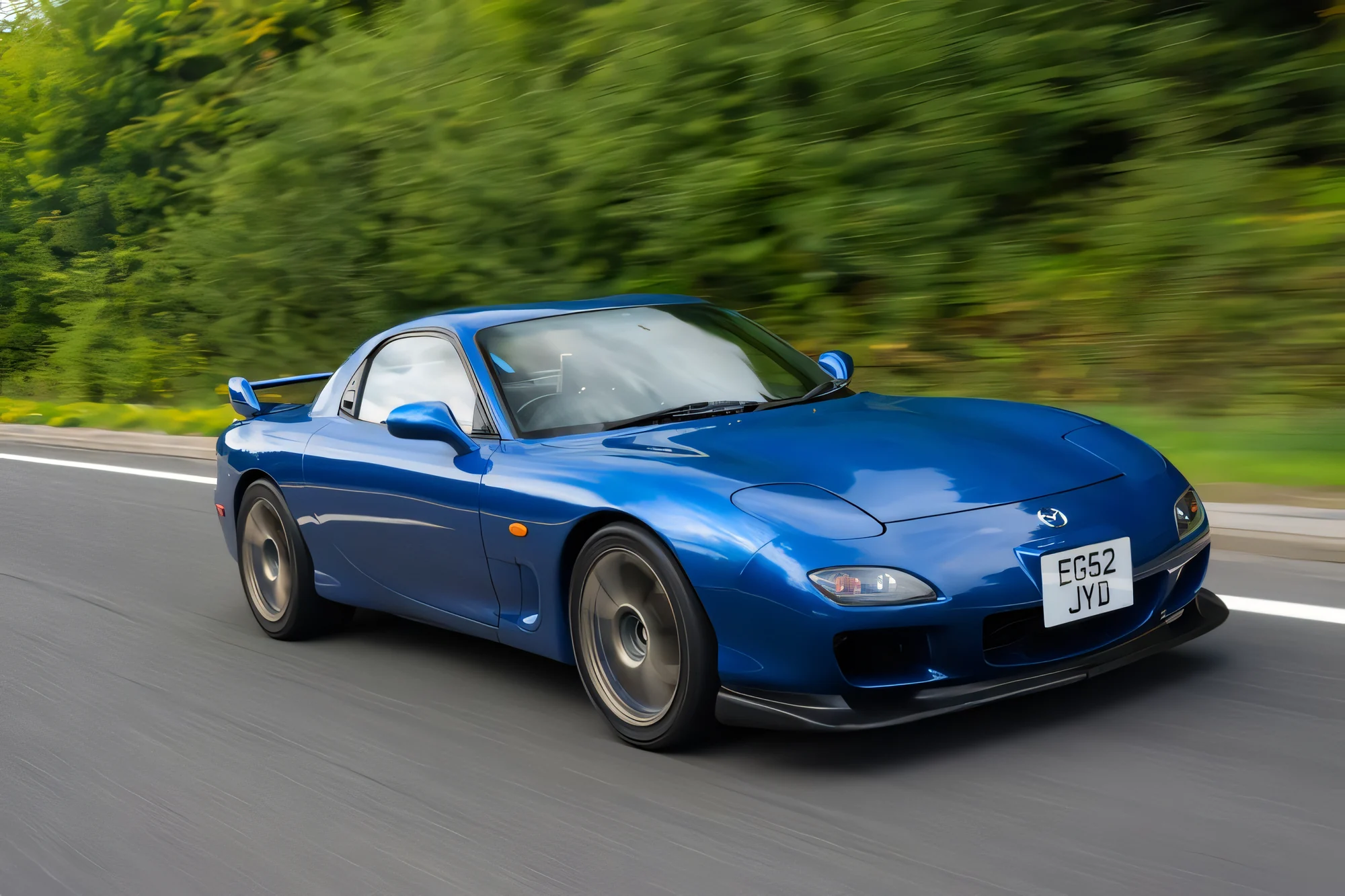
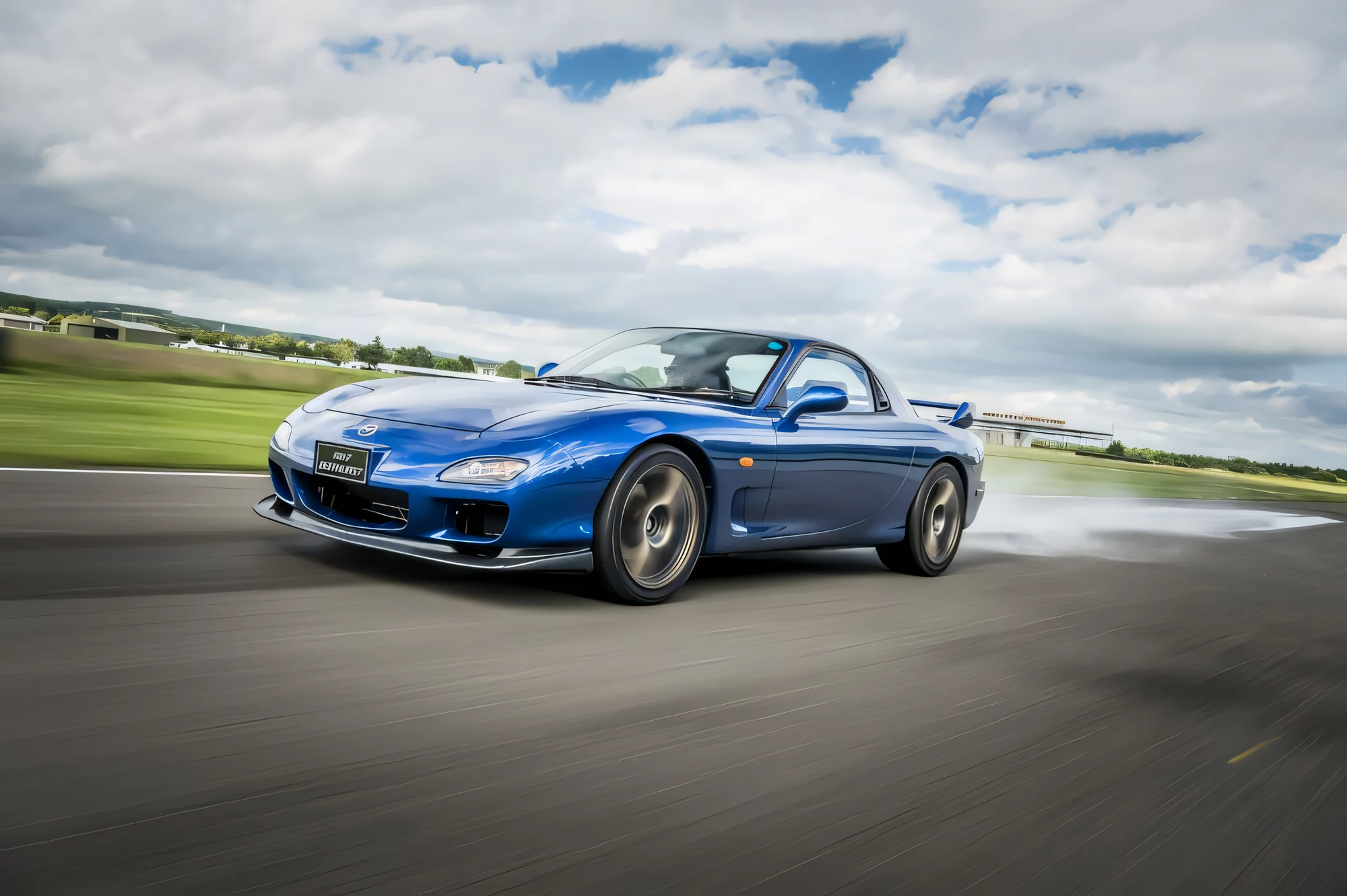
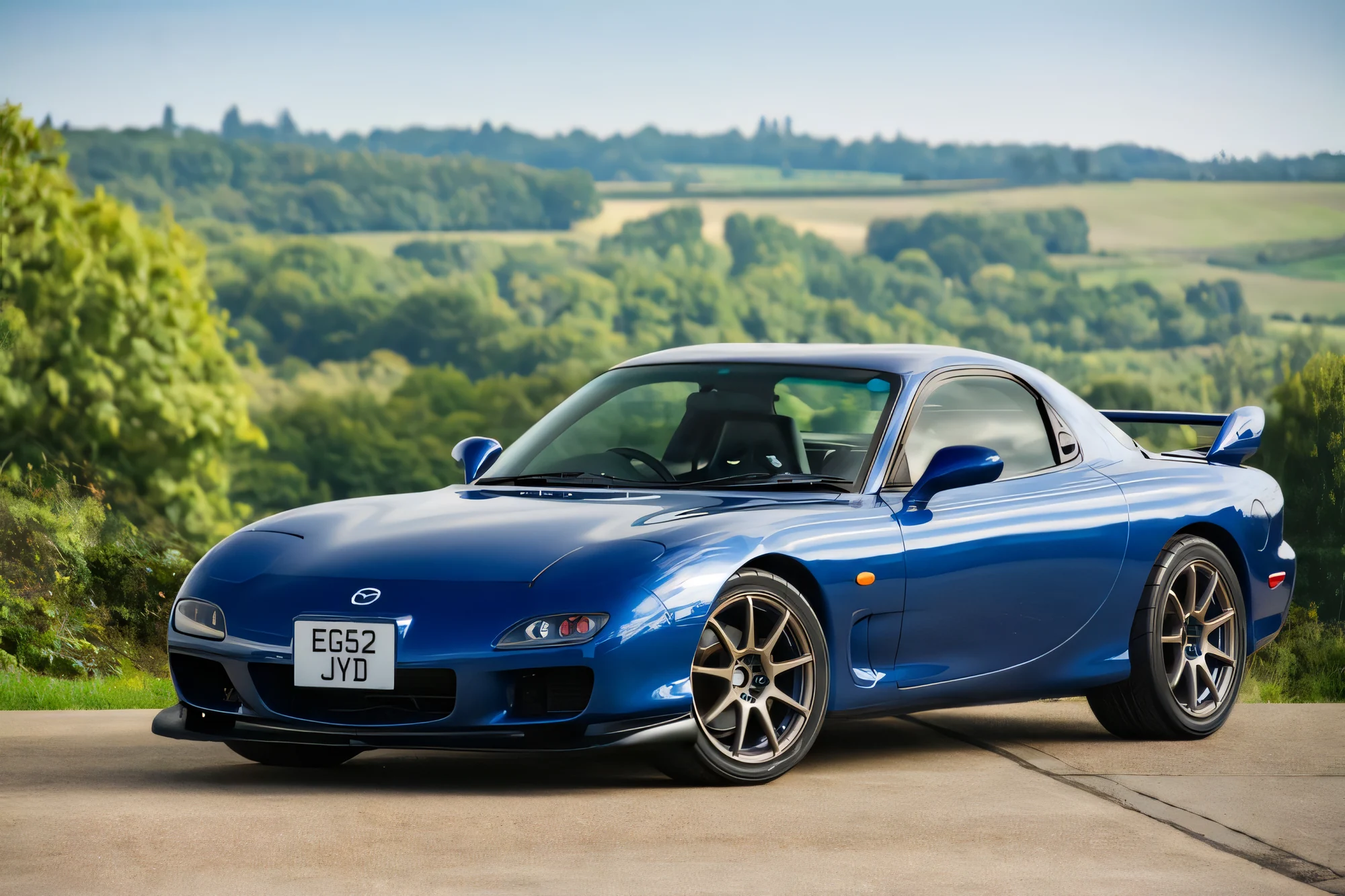
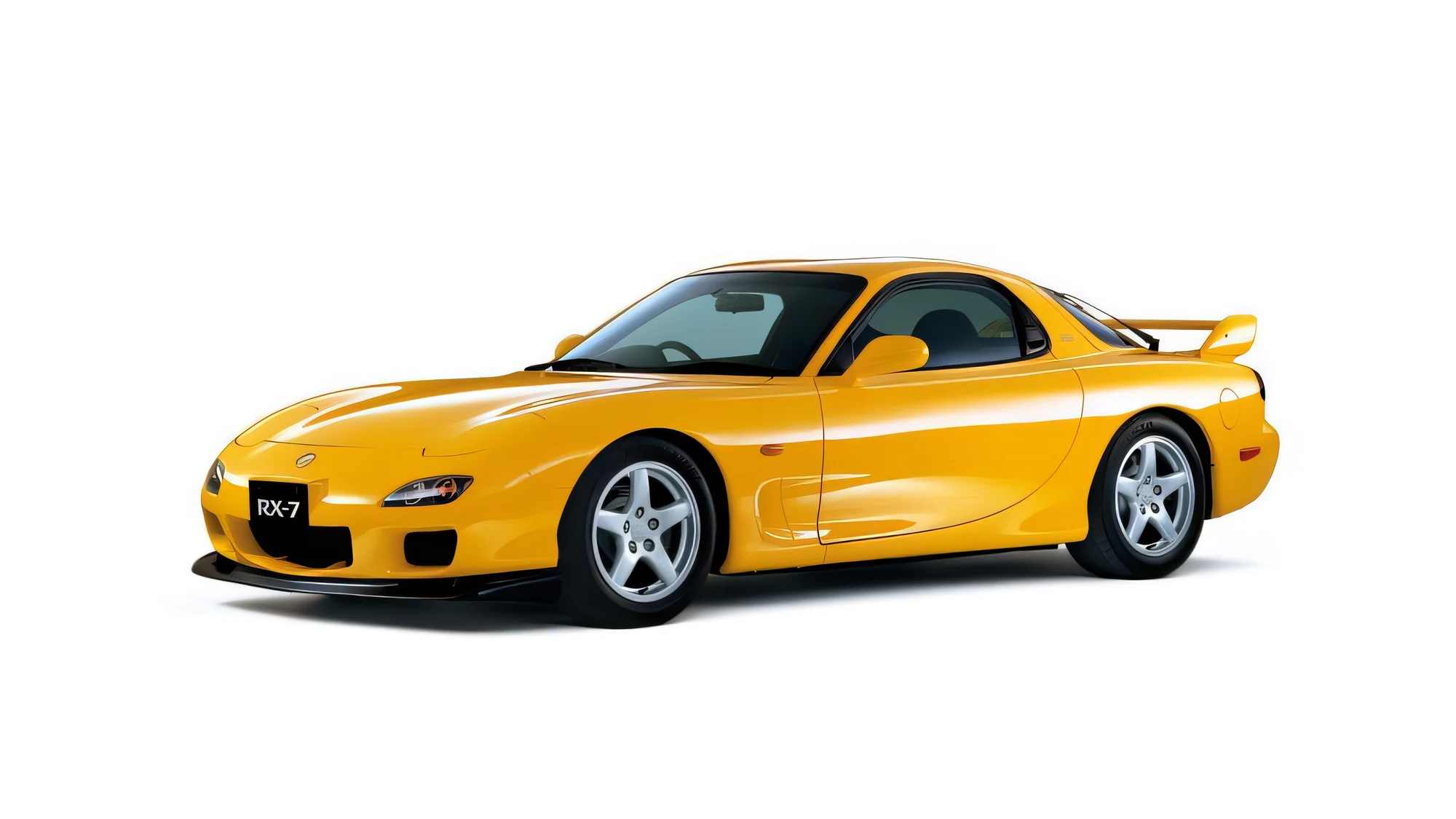
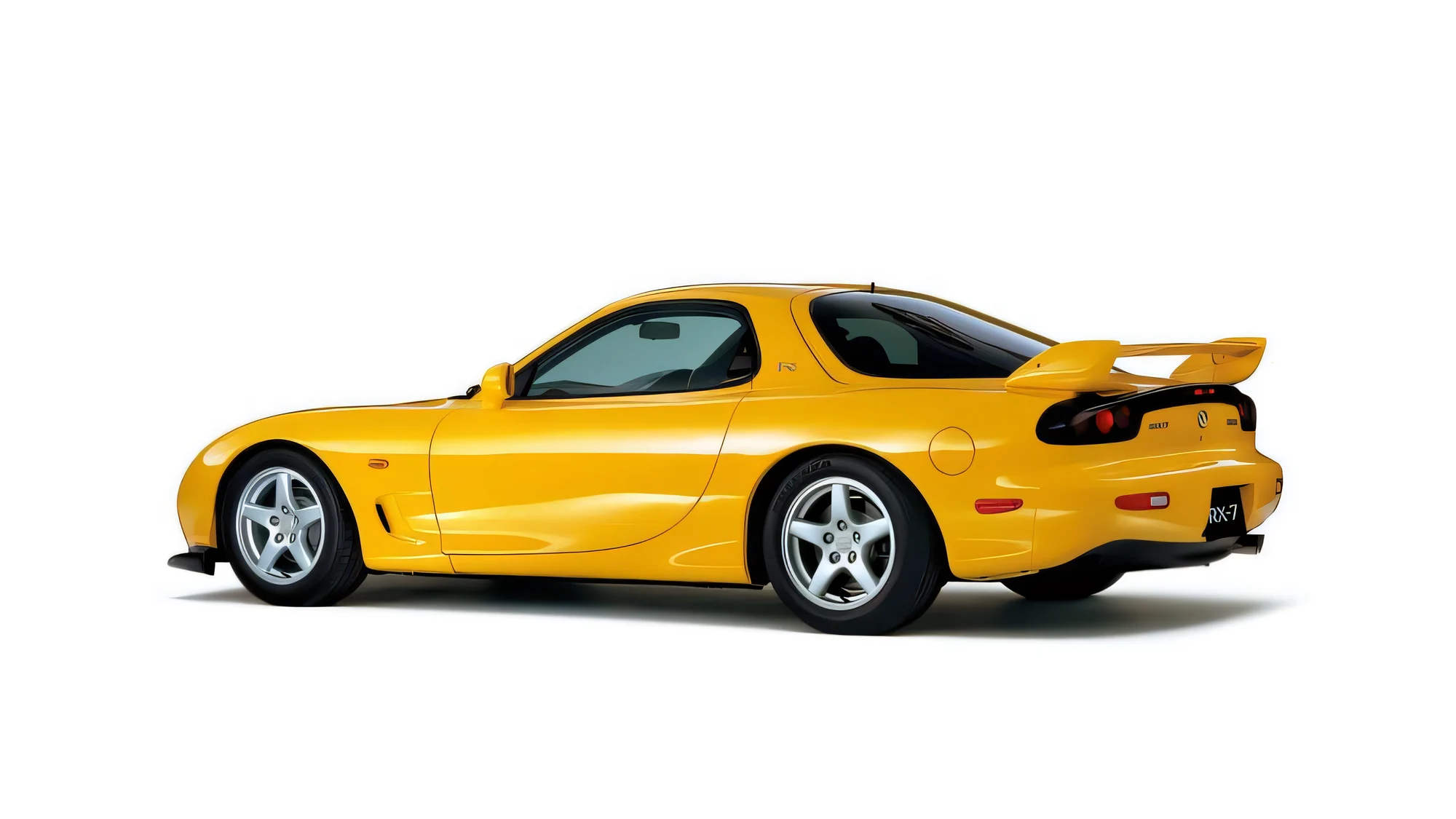
Three generations of rotary heresy — the featherweight sports car built around an engine with no pistons, and the only one of its kind to win Le Mans outright.
track1991The year a rotary won Le Mans outright — still the only one ever to do it24 Hours of Le Mans
spec0 pistonsThe Wankel rotary's whole point — it spins, it doesn't pumpMazda
spec280 PSThe FD's final quoted power — the gentlemen's-agreement ceilingMazda / JAMA
model68,589FD3S built — the rarest and most revered RX-7Mazda production figures
dyno~400 whpThe reliable street ceiling on a rotary's stock apex sealsTuner consensus
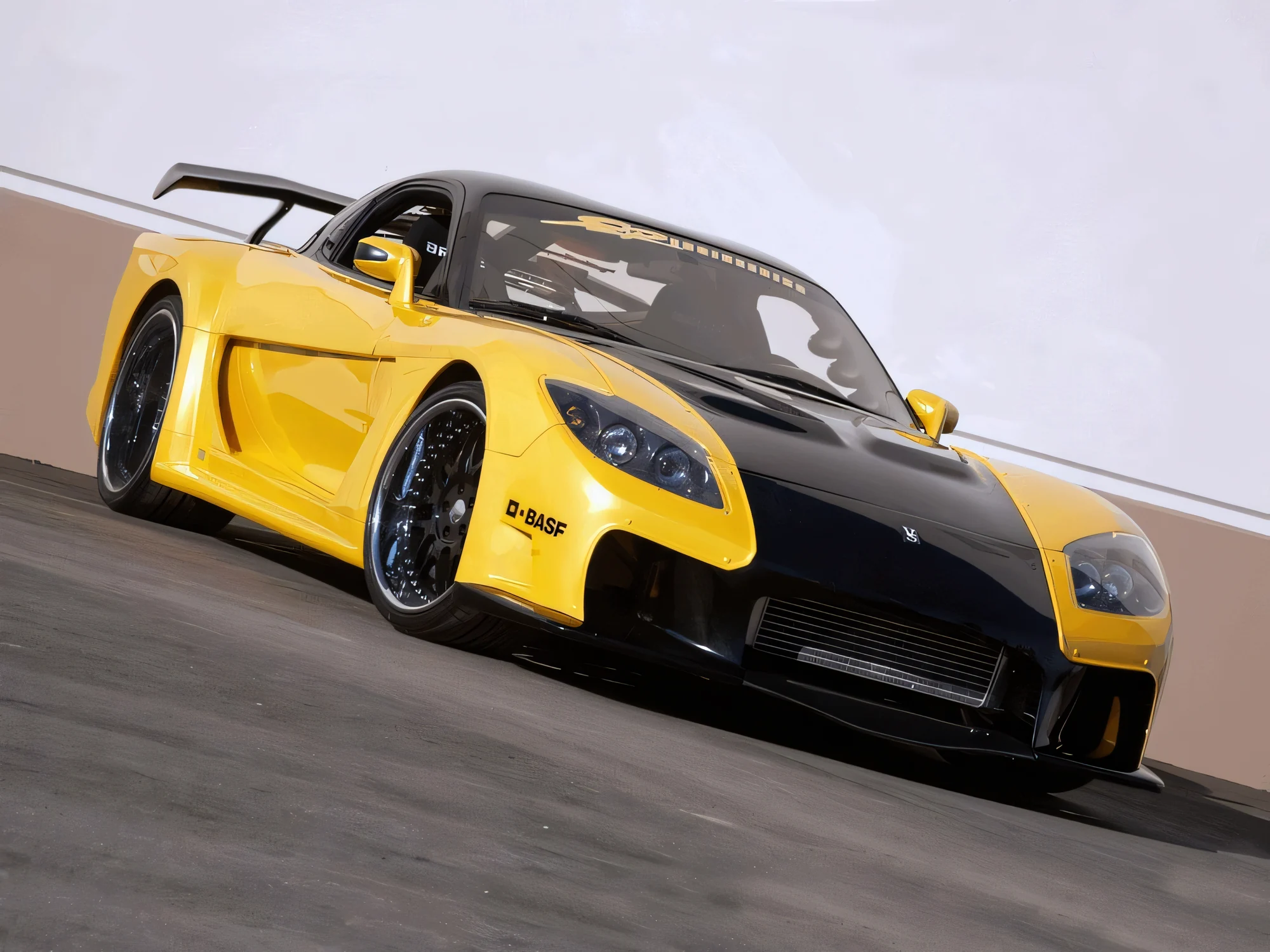
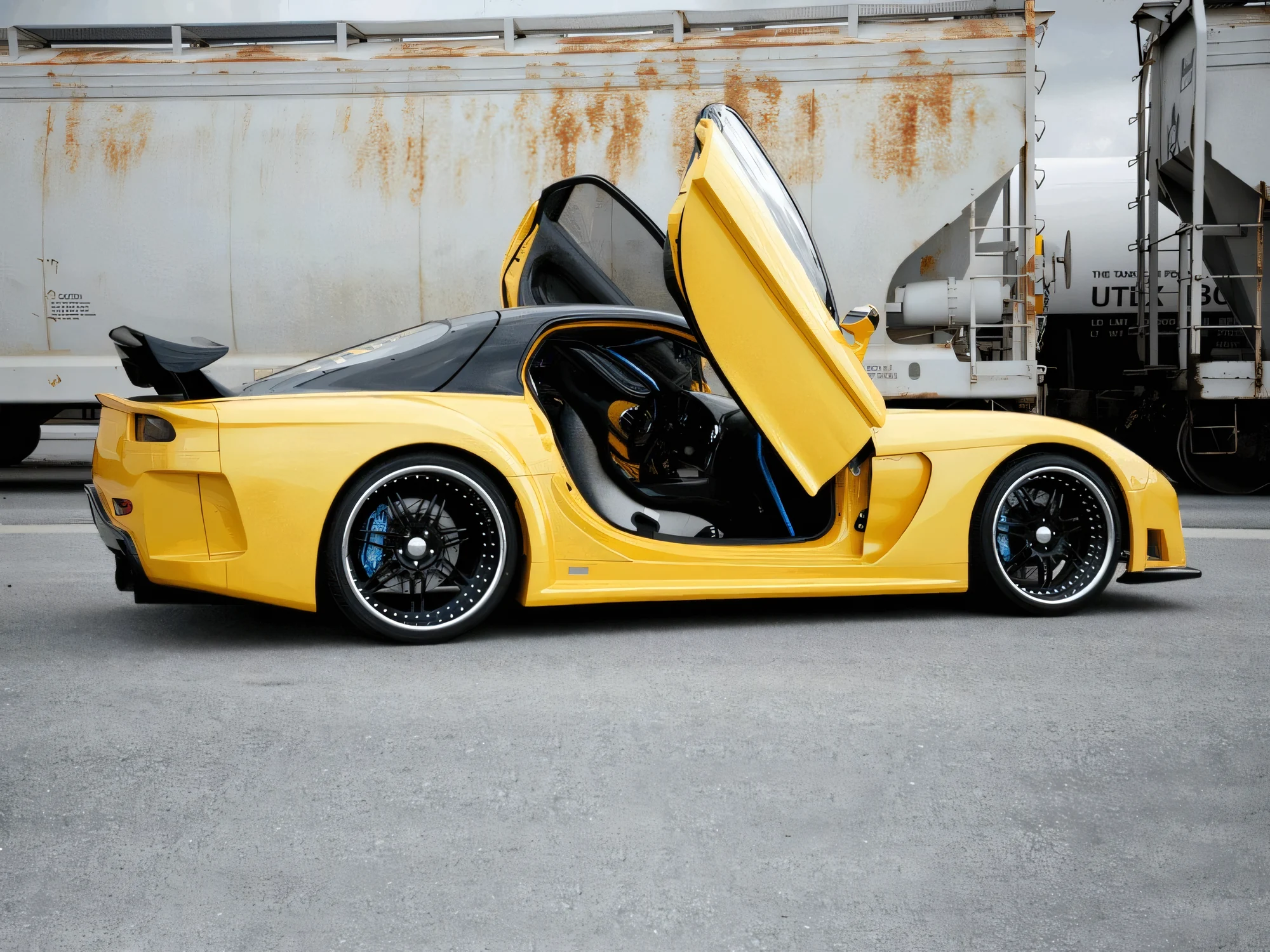
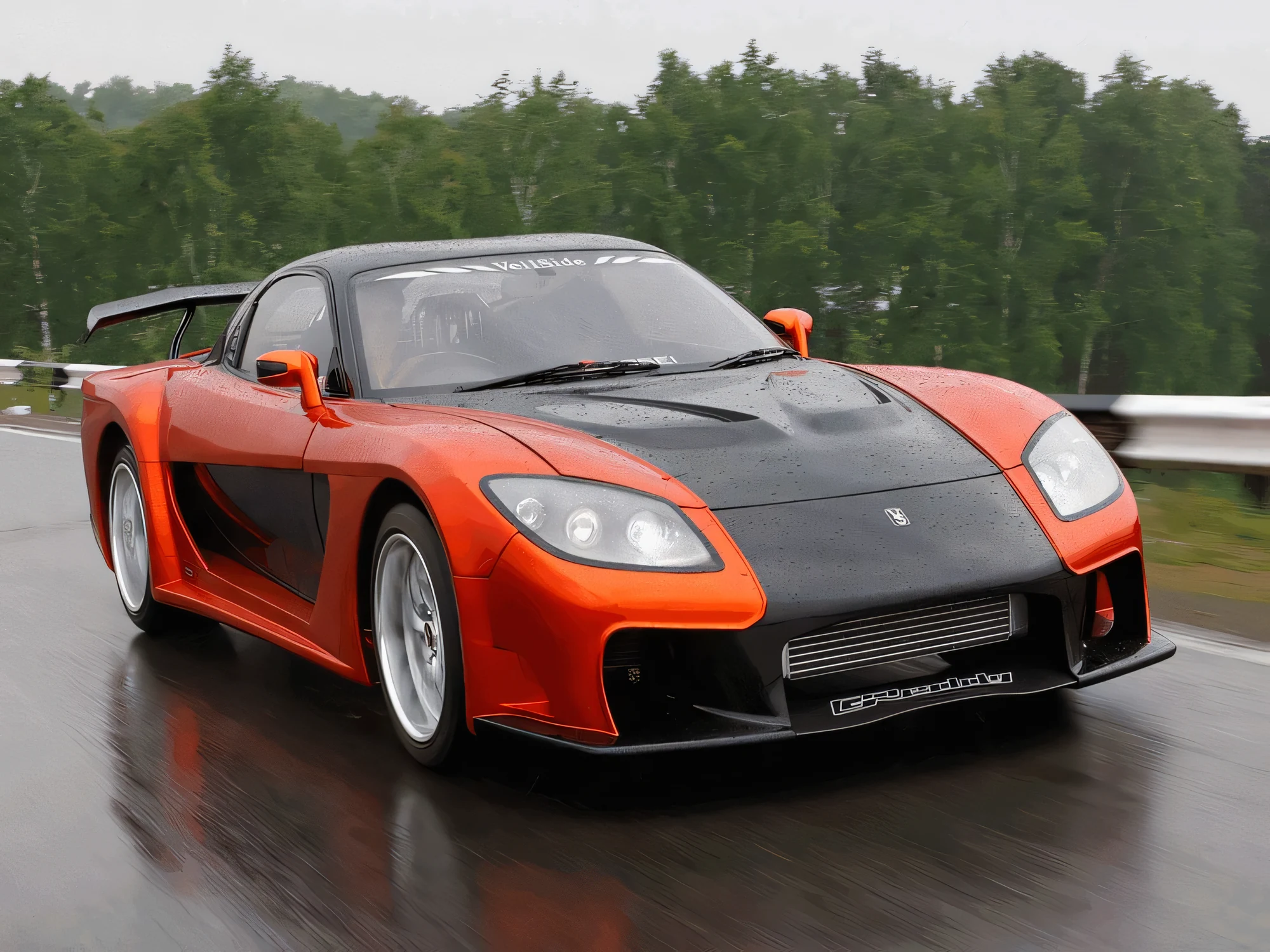
reimagined$1.22MWhat the Fast & Furious Veilside FD sold for in 2025 — a Mazda recordBonhams, 2025
The RX-7 is the rotary made flesh — three generations of a light, sharp sports car built around an engine with no pistons, spinning where everything else pumps. It screams like nothing with cylinders, it burns oil on purpose, and its engine family did something no rival's ever has. This is the whole car, and the heresy inside it.
No pistons — a spinning rotor, near-50:50 balance, and a sound nothing with cylinders can make.
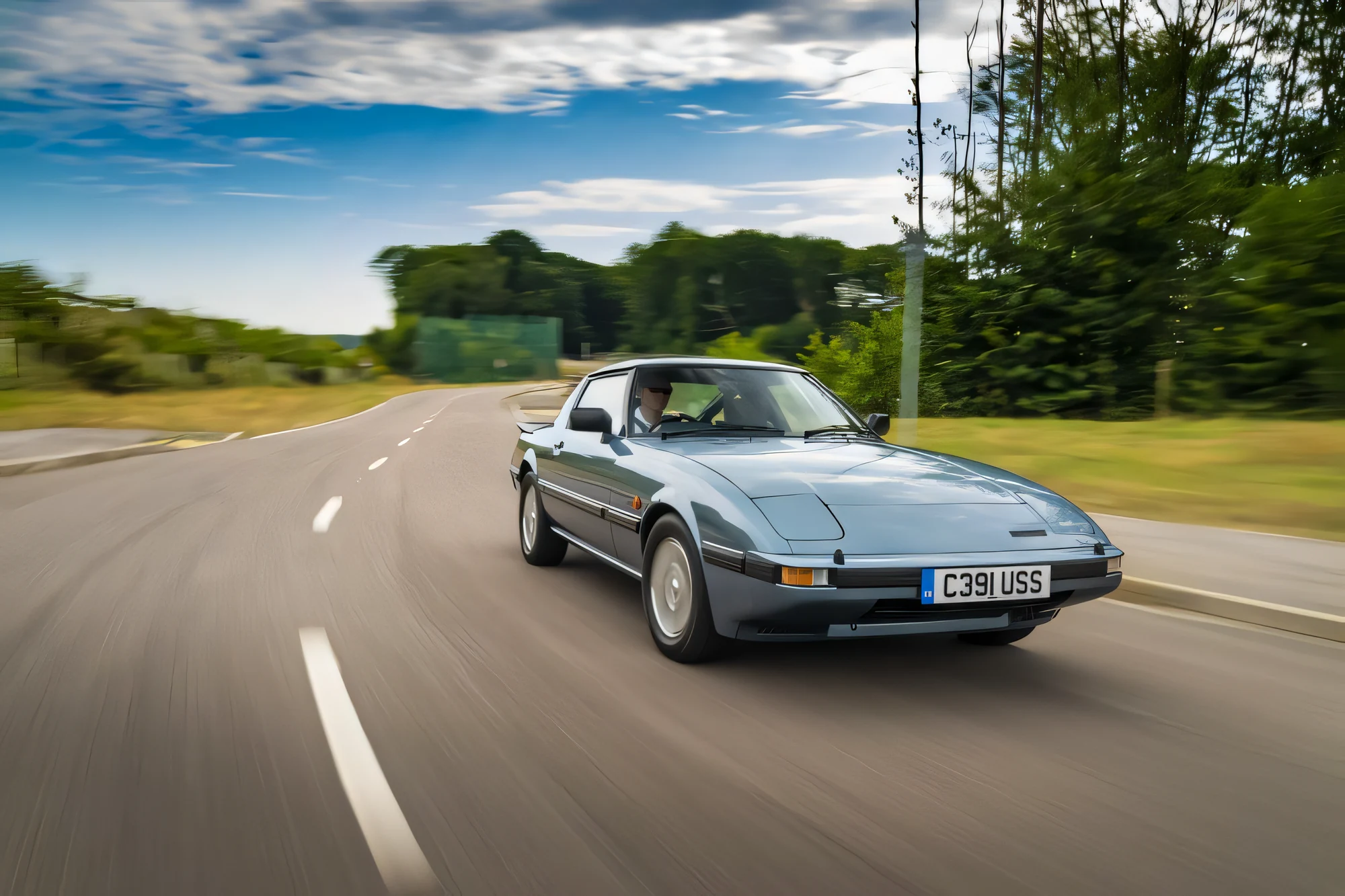
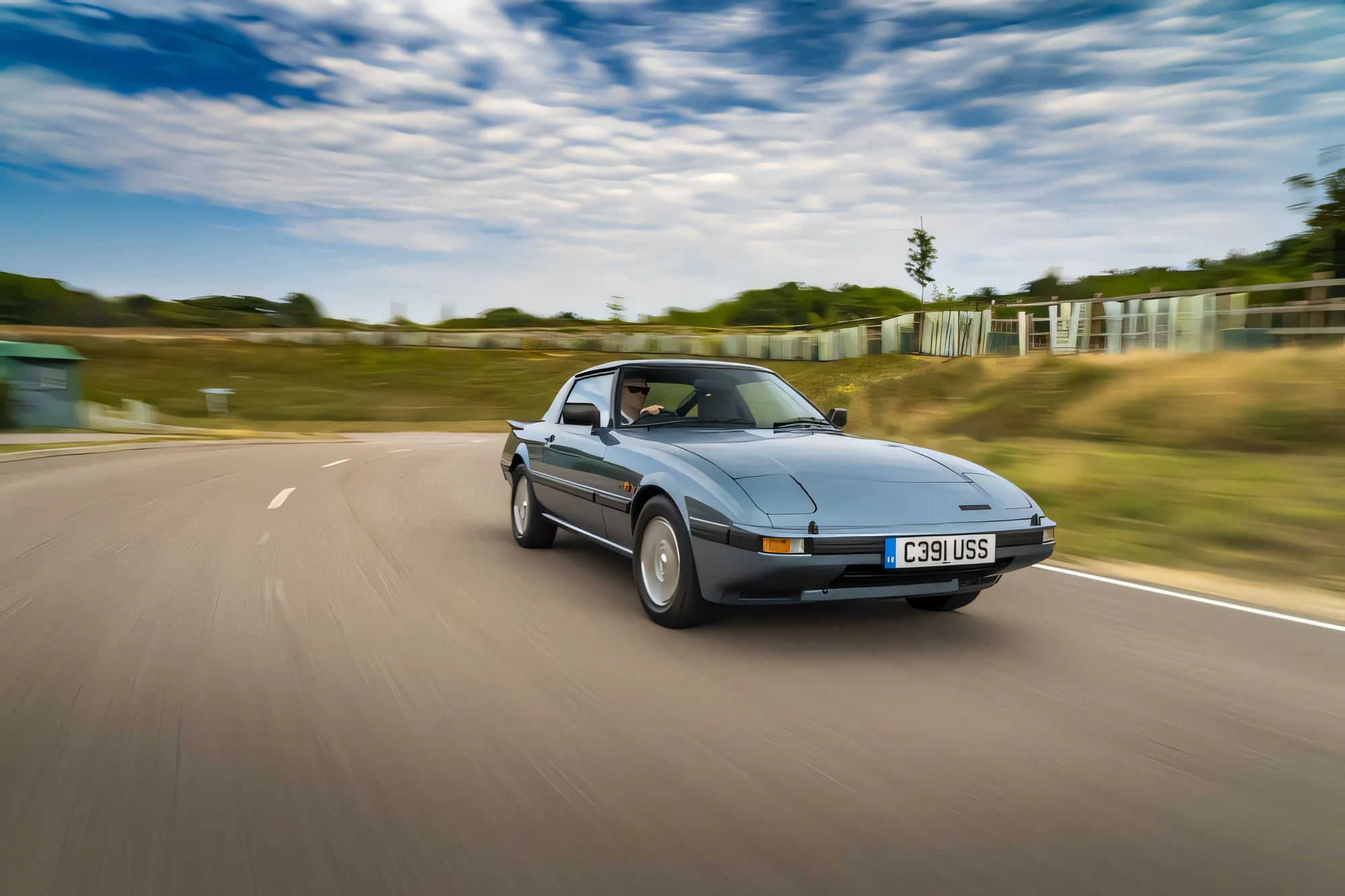
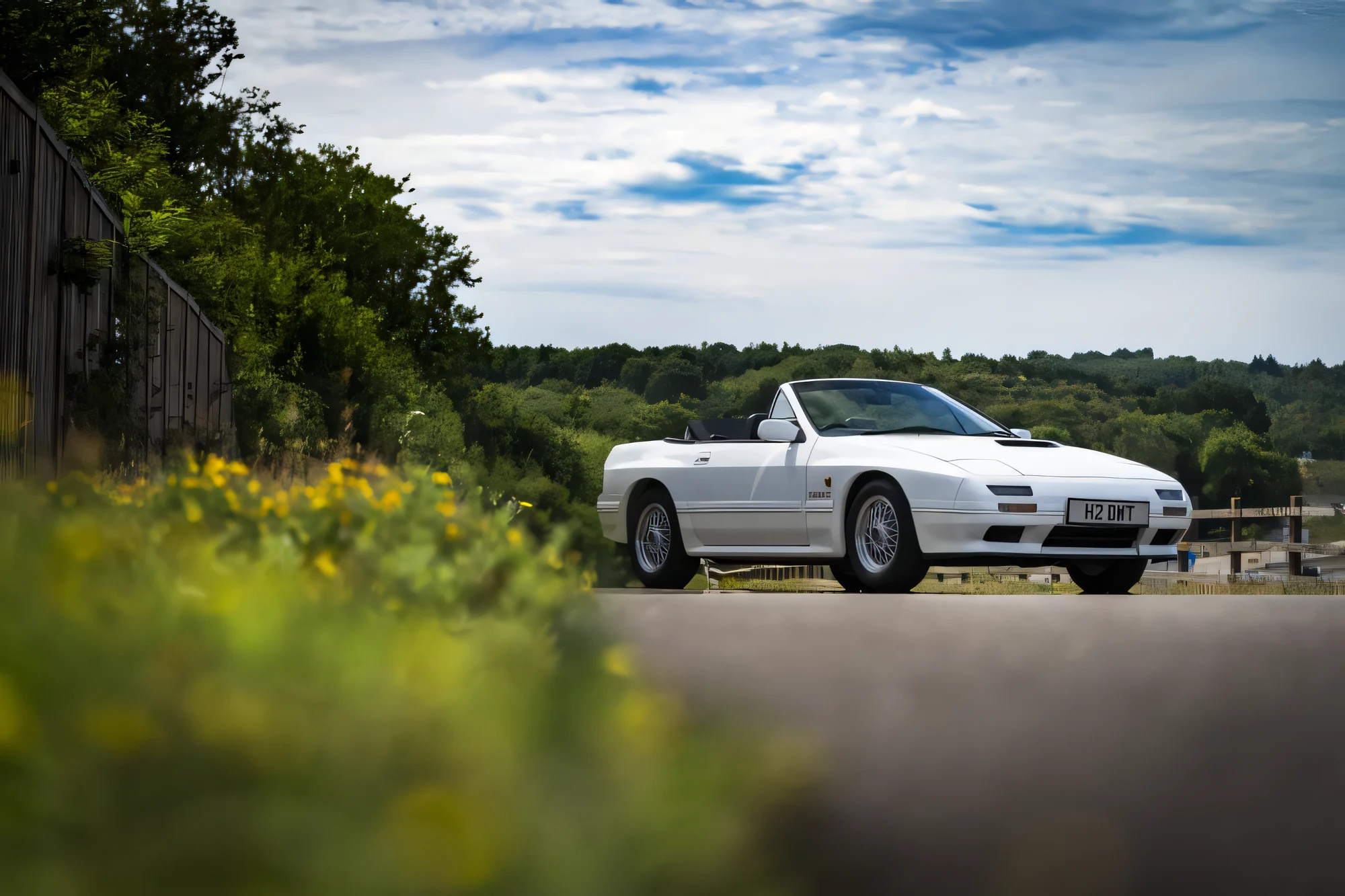
Three generations, each lighter and sharper: the FB Savanna, the FC Turbo II, the sequential-twin-turbo FD.
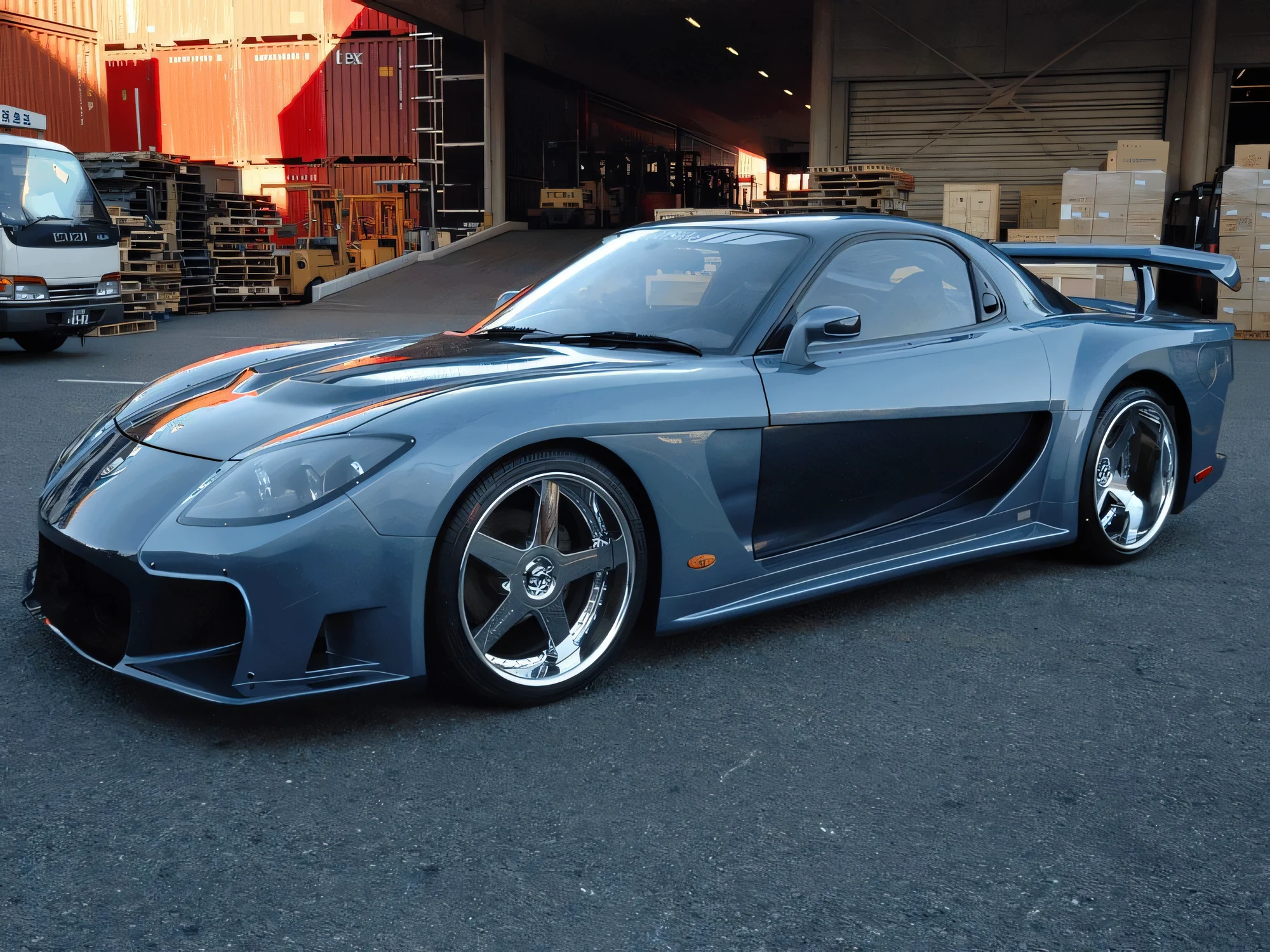
The FD is the rarest and most idolised — barely 68,000 built, and a poster on a whole generation's wall.
The RX-7 is the rotary made into a road car. For twenty-four years Mazda built a
light, sharp, front-mid-engined sports car around the Wankel — an engine that
spins a triangular rotor where everything else pumps pistons — and refused to give
it up long after the rest of the world decided rotaries were too thirsty to
bother with. The gallery above walks all three: the featherweight FB, the
grown-up FC, and the FD that became a poster.
Three cars, one heresy
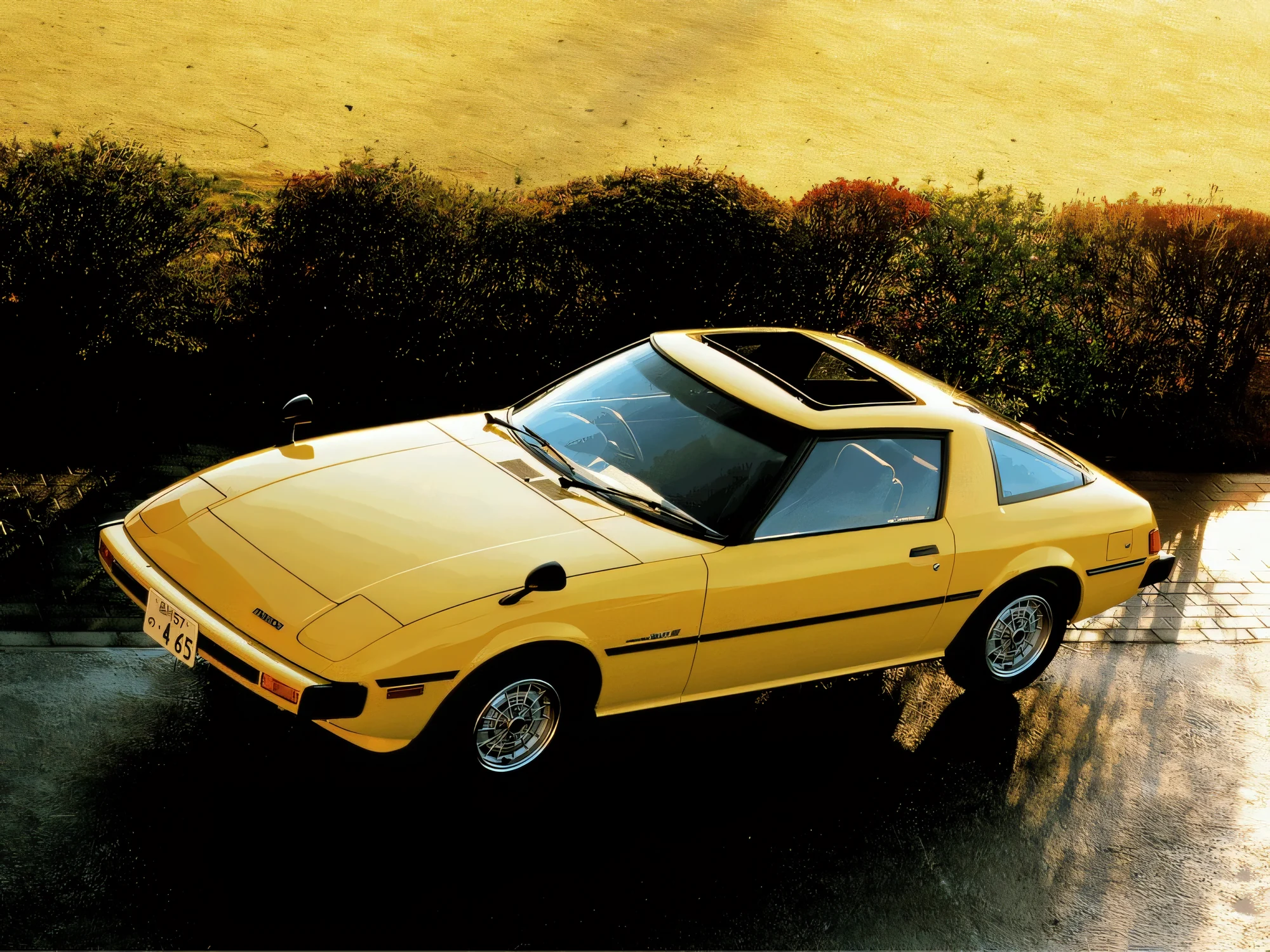
The FB (1978) made the rotary sports car mainstream — light, cheap, pop-up
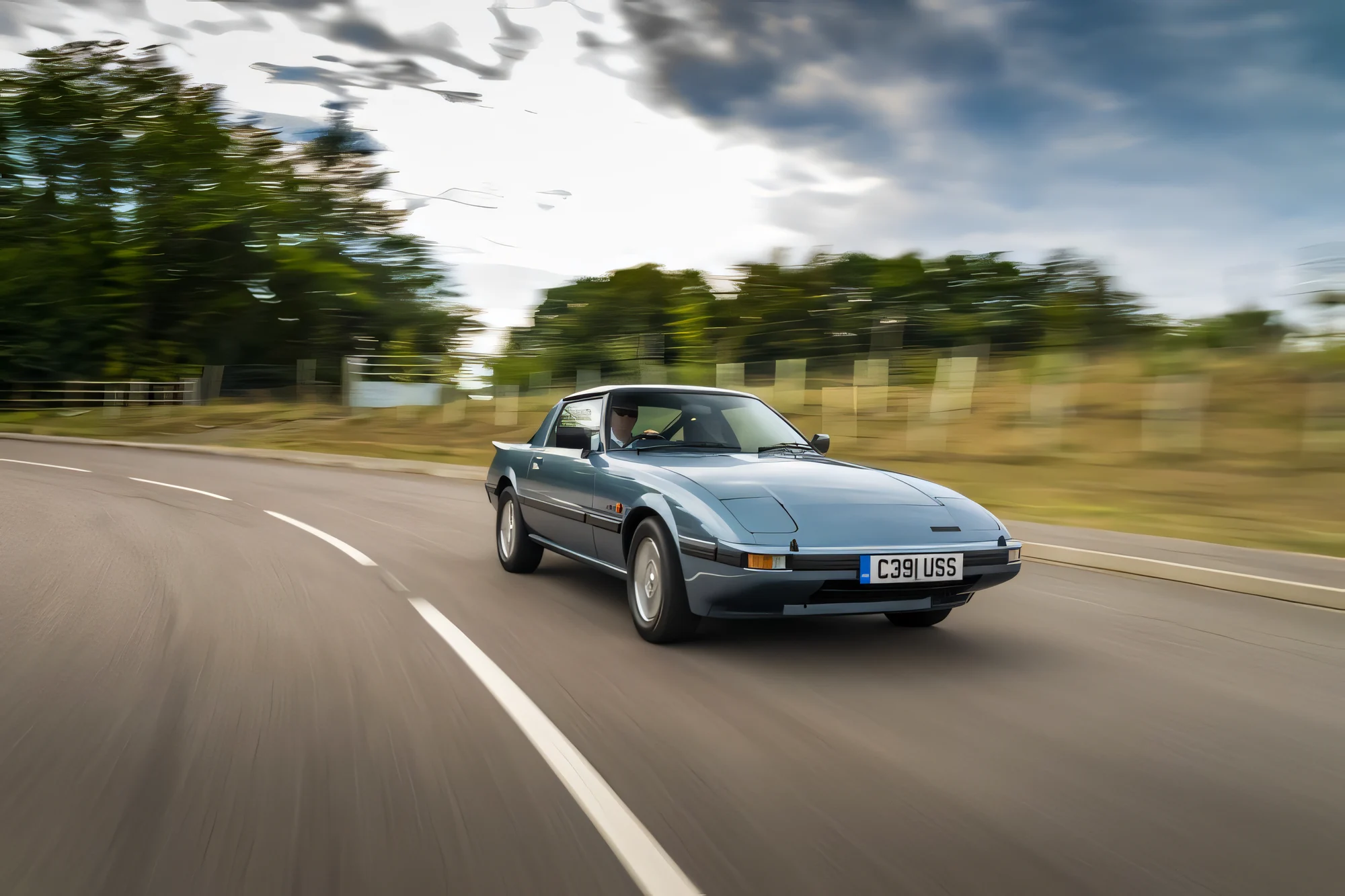
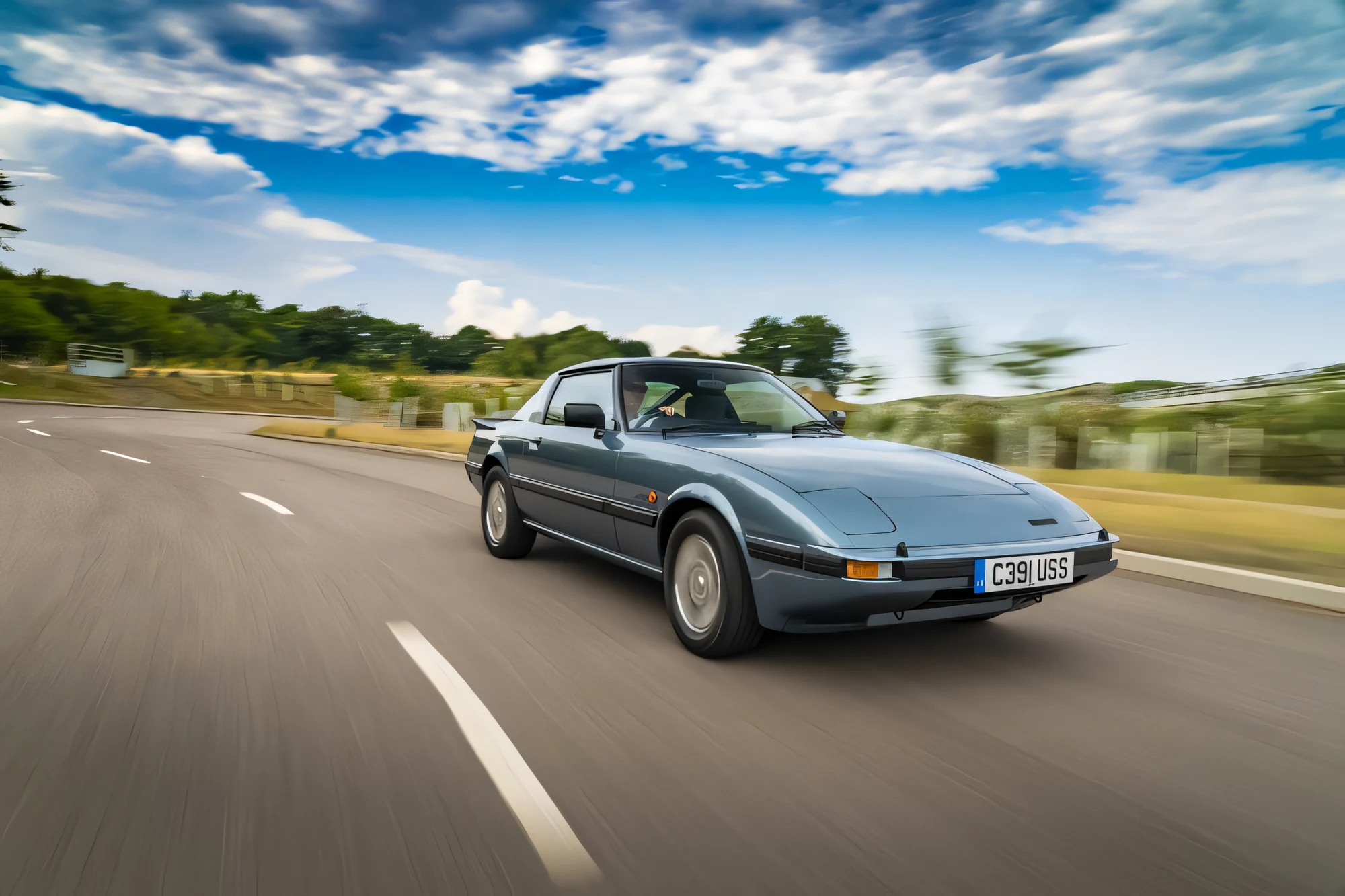
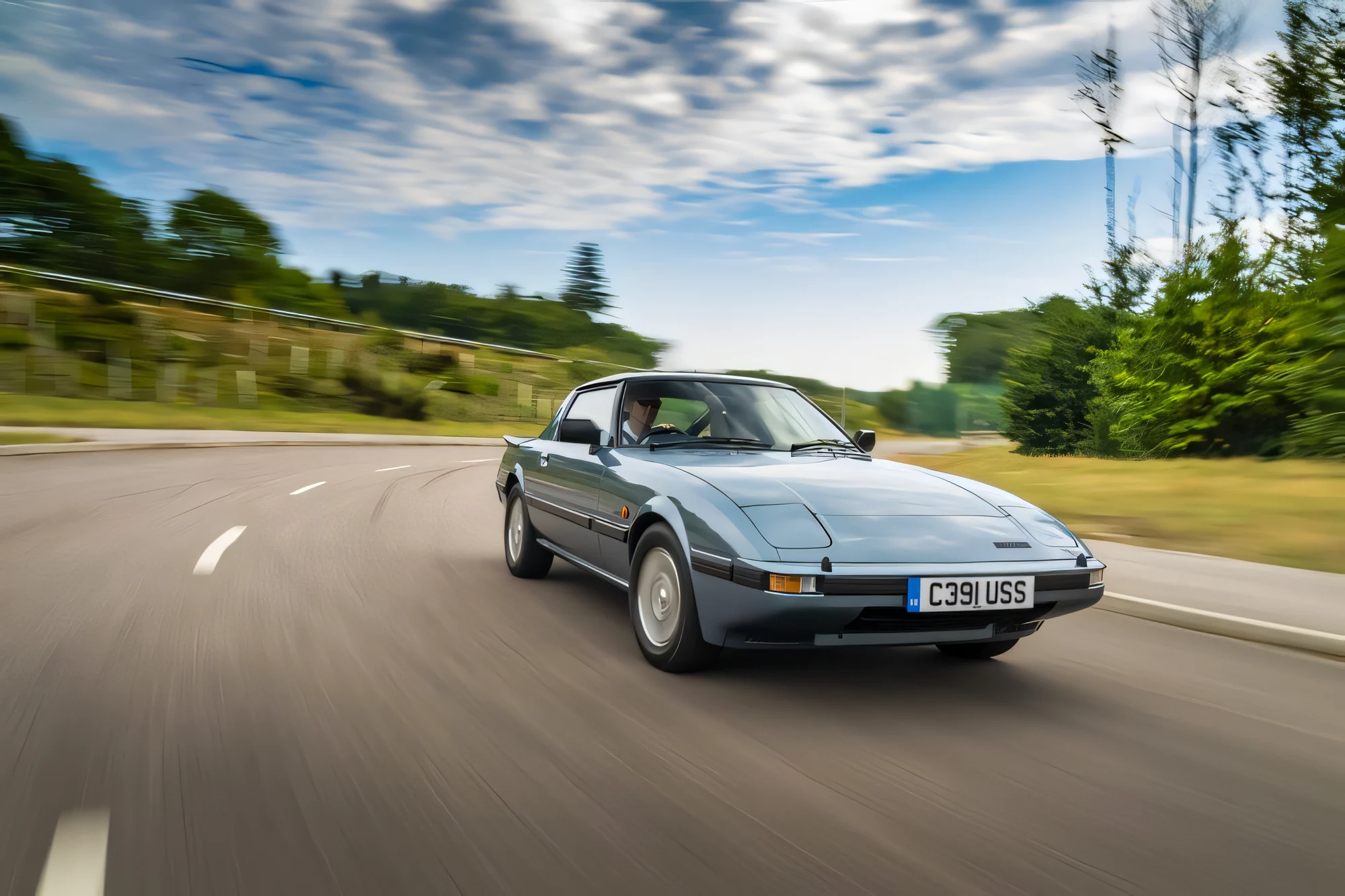
lights, near-perfect balance. The FC (1985) grew up, took Porsche 944 cues and
the first turbo 13B, and turned the RX-7 into a proper GT. Then the FD (1991)
distilled the whole idea into one of the best-looking cars Japan ever made: a
sequential-twin-turbo 13B, razor steering, and a shape that hasn’t dated in thirty
years. Each generation’s numbers are in the spec tabs; what unites them is the
engine, and a stubbornness about it that no rival shared.
The 13B — worshipped and feared
The rotary’s appeal is exactly its danger. It’s tiny, light and revs like nothing
else, so a modest engine makes a car feel alive — but its apex seals are
unforgiving, the FD’s clever sequential turbos age into a maintenance nightmare,
and it drinks oil as a design feature. That mix is why the tuning scene both
adores the 13B and treats it with fear: a well-sorted single-turbo, ported street
motor is a giant-killer; a neglected one is a very expensive paperweight. The
mods that matter here aren’t about chasing numbers — they’re about keeping a
temperamental masterpiece alive while you do.
Owning one in South Africa
Be honest with yourself before you start. The RX-7 was never a mainstream
new-model line for Mazda in South Africa the way the 323 or 626 were, so almost
every RX-7 here — especially the FD — is a Japan-sourced grey or used import.
A handful of cars carry proper ITAC import paperwork, but South Africa’s
used-vehicle import rules make bringing one in yourself difficult without a
specific permit. Then there’s the engine: a rotary demands an owner who
understands it — coolant and oil discipline, gentle warm-ups, and a rebuild fund —
because a neglected 13B in a country short on rotary specialists is a fast way to
turn a dream into a driveway ornament. Buy on compression and history, find your
rotary shop before you buy, and go in clear-eyed.
Mazda RX-7 FD3S Type R Bathurst (2001) · Manufacturer press
The win no one else has
The rotary that conquered Le Mans
In 1991 the rotary-powered Mazda 787B won the 24 Hours of Le Mans outright — the first Japanese manufacturer ever to win overall, and still the only rotary-engined car ever to do it. Its R26B four-rotor screamed to a wail that nothing with pistons can make.
It didn't win on speed — the piston cars were quicker. It won on frugality and stamina. Mazda held the redline to around 8,500 rpm to save fuel, and the compact four-rotor showed effectively no wear at teardown after 24 hours: a ~180 kg engine in an 830 kg car, sipping while the V-engines drank.
The myth is that the rotary was banned for winning. It wasn't — the switch to 3.5-litre piston engines was already planned, and 1991 was simply the rotary's last eligible year. Mazda knew, and sent it out to win anyway. It did, and no one has repeated it since.
How it gets modified
The modifications that actually get done — what each does, roughly what it gains, roughly what it costs.
The rotary
Single-turbo conversion
The FD's factory sequential twin-turbo is a maze of vacuum lines and actuators that ages badly — the 'secondary boost' stumble around 4,500 rpm is a classic fault. Most tuners bin it for one big single turbo: simpler and reliable at power, at the cost of more low-end lag.
Reliable power, less low-endManifold + standalone
Porting
Street / bridge / peripheral
Enlarging the rotor-housing ports is the rotary's version of cams. A street port stays streetable; a bridge port (a 1970s racing-ban workaround) adds up to ~165° of intake duration for top-end but ruins idle; a peripheral port flows most and is barely driveable below ~3,500 rpm.
More air, fewer mannersEngine out
The ceiling
Apex seals
The rotary's real limit isn't the block — it's the apex seals, which hate sustained boost, heat and detonation. A well-built street 13B lives happily around 350–400 whp; chasing more means upgraded ceramic or steel seals and a full rebuild.
The line between reliable and grenade≈$8k–12k rebuild
The halo
20B three-rotor swap
Lift the three-rotor 20B from the Eunos Cosmo for more displacement, real torque and a sound all its own. Costly, thirsty and heavier, but the ultimate rotary flex.
A whole extra rotorBig money, big thirst
By design
Feed it oil
A rotary burns oil on purpose — an oil-metering pump injects a measured dose into the chambers to lubricate the seals, so ~1 quart per 1,000 miles is normal. Many owners premix on top. Starve the oil and the seals die; this is maintenance, not a mod, but it's the difference between a legend and a boat anchor.
Longevity, not powerOngoing discipline
Every frame
The whole set — tap any to blow it up.
The progression
The numbers that actually changed, generation by generation.
Power — small engine, big idea
Modest numbers on paper — but from 1.3 litres of rotary, in a car around 1,250 kg. The rotary's trick was never peak power; it was how little it weighed making it.
FB 12A
130 PS
1978 · NA
FB Turbo
165 PS
1983 · turbo
FC Turbo II
205 PS
1989 · turbo
FD 13B-REW
280 PS
1999 · twin-turbo
The apex-seal ceiling
The limit is the seals, not the block. A well-built street rotary lives happily around 350–400 whp; every horsepower past that is a trade against reliability, and needs upgraded seals.
Stock FD
230 whp
at the wheels
Bolt-ons + single
350 whp
street
Reliable ceiling
400 whp
stock seals
Built + ported
500 whp
upgraded seals
Beyond
600 whp
fragile
How many were built — the icon is the rarest
Mazda built nearly half a million of the original FB. Of the FD — the one on everyone's wall — barely 68,000. The most idolised RX-7 is also the hardest to find.
FD3S
68,589 units
1991–2002
FC3S
272,027 units
1985–92
FB SA22C
471,018 units
1978–85
The spec sheet
Specs by generation — pick an era.
FB 'SA22C' · 1978–1985
Japan name
Savanna RX-7
Engine
12A twin-rotor Wankel (1,146 cc)
Power
130 PS (Turbo 12A: 165 PS)
Weight
~1,050 kg
Balance
Front-mid rotary — near 50:50
Built
~471,018 — made the rotary sports car mainstream
FC 'FC3S' · 1985–1992
Japan name
Savanna RX-7
Engine
13B twin-rotor, single-turbo (Turbo II)
Power
185 → 205 PS
Torque
~268 N·m
Weight
~1,250 kg
Direction
Porsche-944-influenced GT; first turbo 13B, IRS
Built
~272,027
FD 'FD3S' · 1991–2002
Japan name
ɛ̃fini RX-7 (1991–97), then Mazda RX-7
Engine
13B-REW, sequential twin-turbo (1,308 cc)
Power
255 PS (1992) → 280 PS (1999)
Torque
~294 N·m
Weight
~1,260–1,310 kg — near 50:50
First
World's first mass-produced sequential twin-turbo
Built
~68,589 — the rarest, most revered RX-7
Straight answers
Did they ban the rotary from Le Mans because it won?
No — it's the sport's most repeated myth. The switch to 3.5-litre piston engines had already been planned by the governing body from 1989–90, and rotaries were ineligible from 1992 regardless. 1991 was simply the rotary's last eligible year; Mazda knew that going in and won anyway. The rule change coincided with the win — it wasn't caused by it.
Why does a rotary burn oil on purpose?
Because it has to. An oil-metering pump injects a measured dose of engine oil straight into the combustion chambers to lubricate the apex seals, so roughly a quart every 1,000 miles and a faint smoky exhaust are engineered-in, not a fault. Starve that oil supply and the seals die fast — which is why rotary owners are obsessive about it.
What actually kills a rotary?
Apex seals. They lose their seal under sustained boost, heat and detonation — the classic hard-starting, rough-idling rotary death. It's why a street 13B is happiest around 350–400 whp, and why serious builds fit upgraded ceramic or steel seals before chasing big numbers.
Why do FD tuners rip out the factory twin turbos?
The FD's sequential twin-turbo was a world first, but it's a maze of vacuum lines and actuators that ages badly — the "secondary boost" hesitation around 4,500 rpm is a classic FD fault. Plenty of owners swap the whole thing for a single big turbo: simpler, more reliable at power, at the price of more low-down lag.
Is the Fast & Furious RX-7 really worth over a million?
Han's orange VeilSide "Fortune" FD from Tokyo Drift — engine built by RE-Amemiya, a body kit around 200 mm wider than stock — sold at Bonhams in 2025 for about US$1.22 million, a record for a Mazda road car. Screen fame turned a modified FD into a seven-figure car.
What is the "787B scream"?
The Le Mans car's R26B four-rotor, with its peripheral-port exhaust, makes a high-pitched tearing wail unlike any piston engine on earth — one of motorsport's most distinctive sounds. When Mazda ran the restored 787B again, Top Gear headlined it "cover your ears."