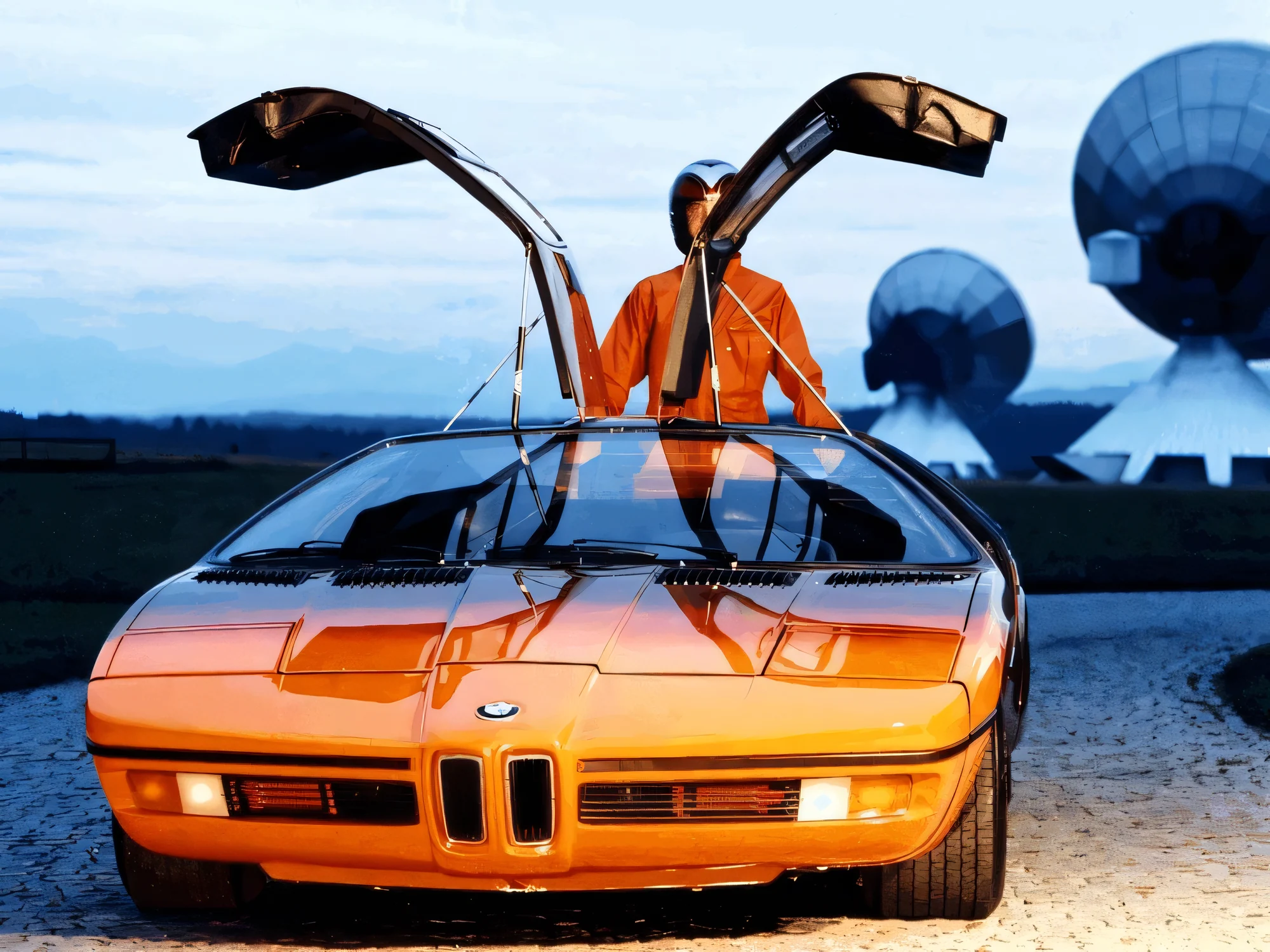
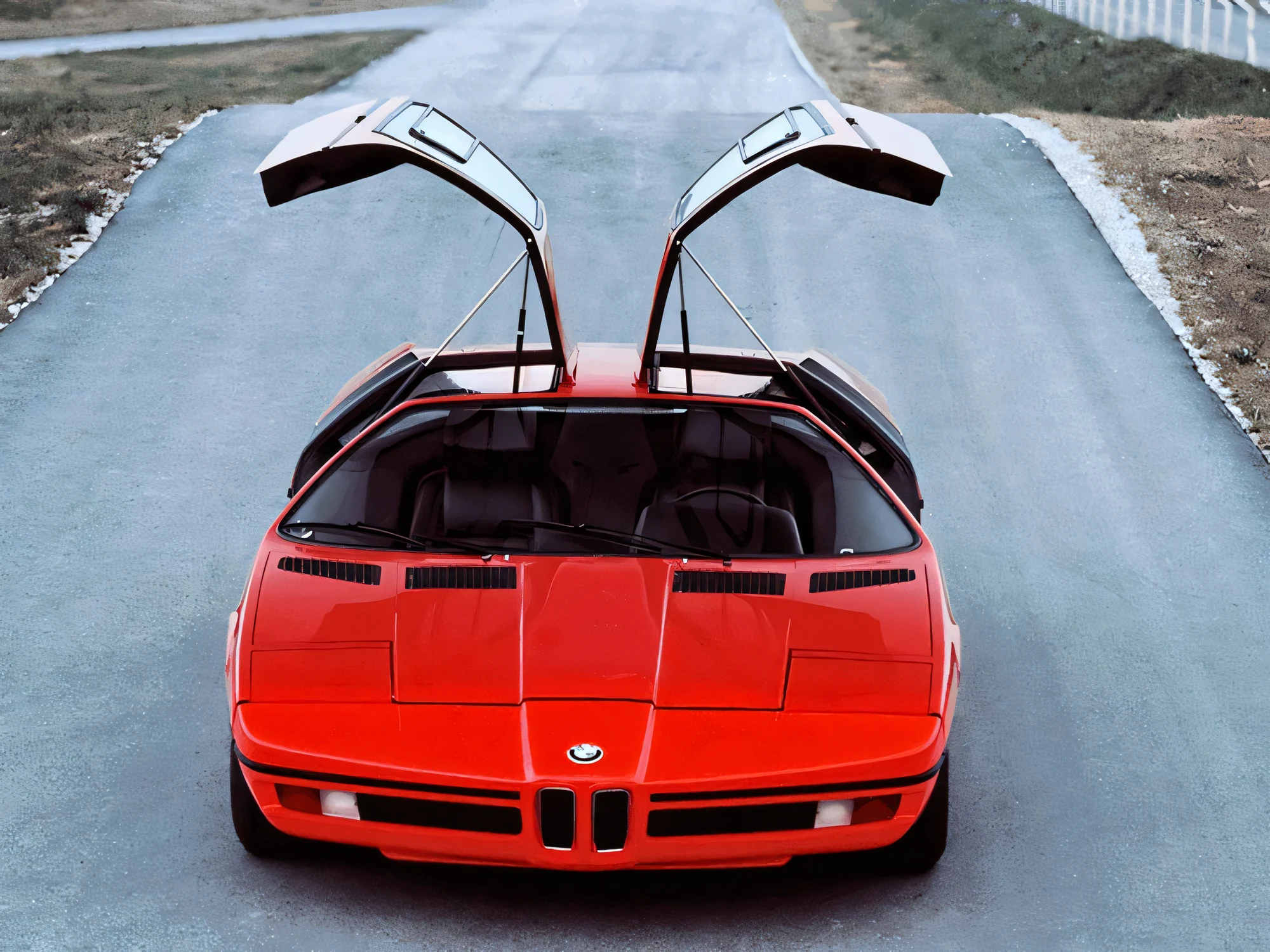
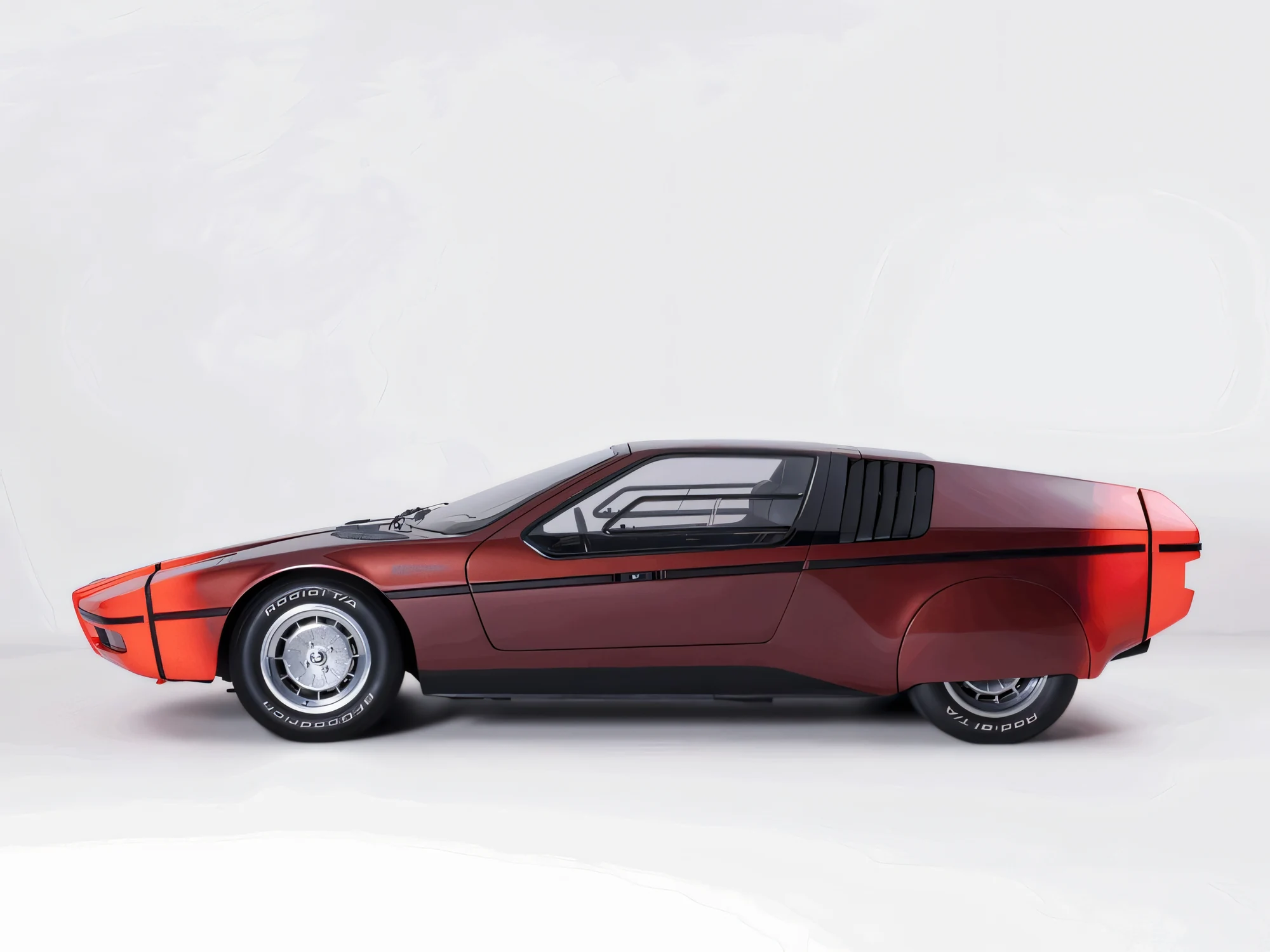
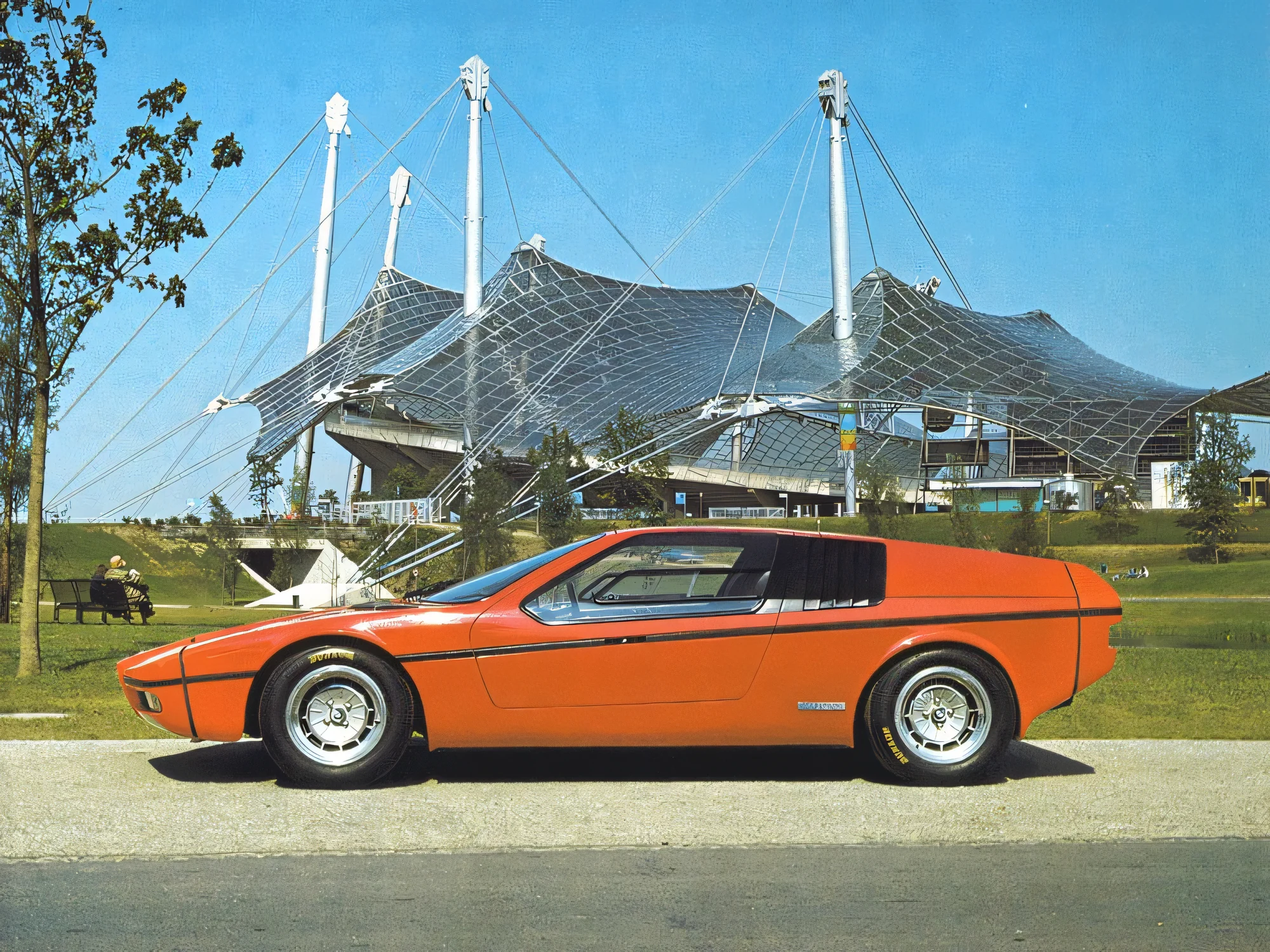
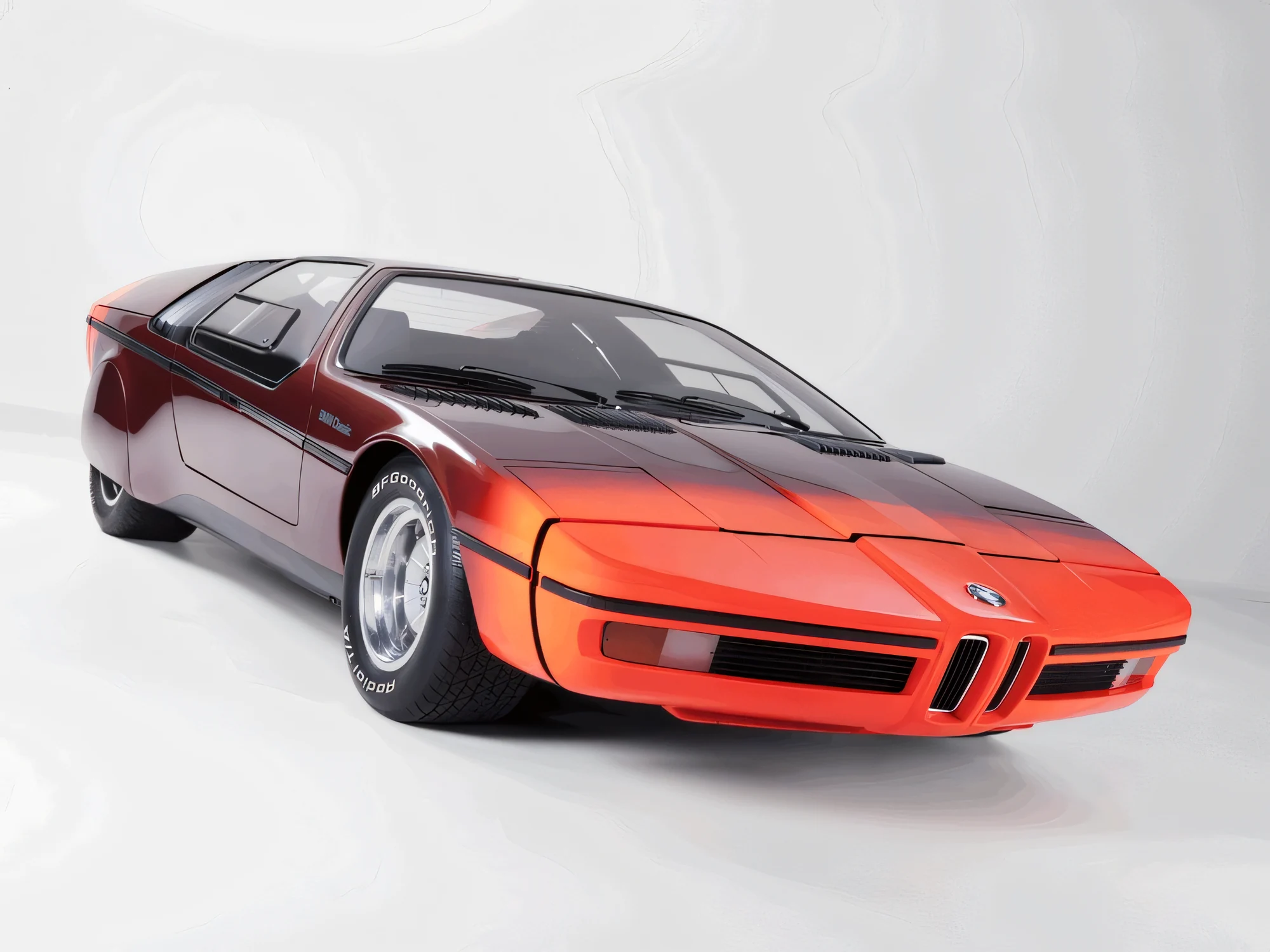
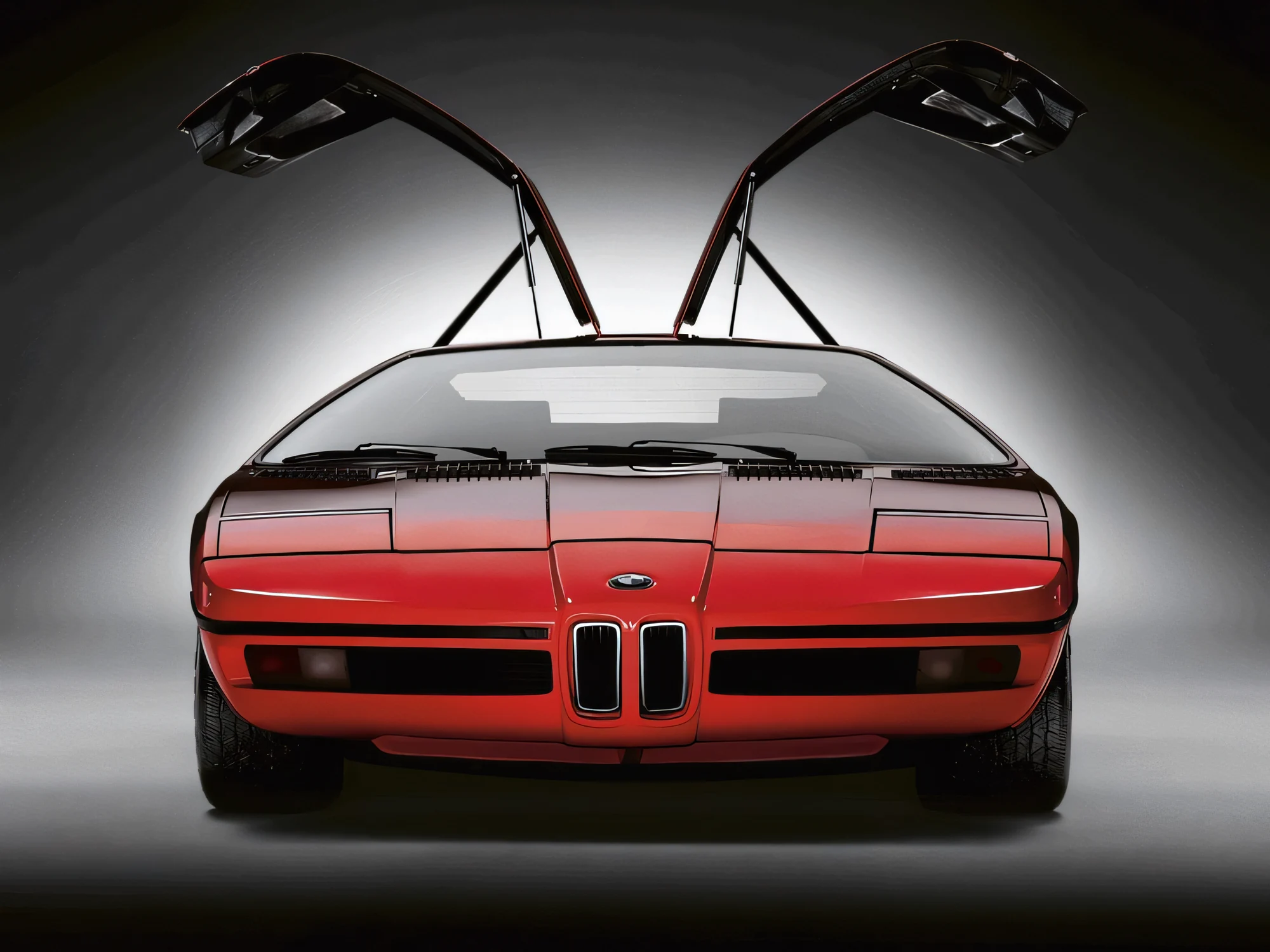
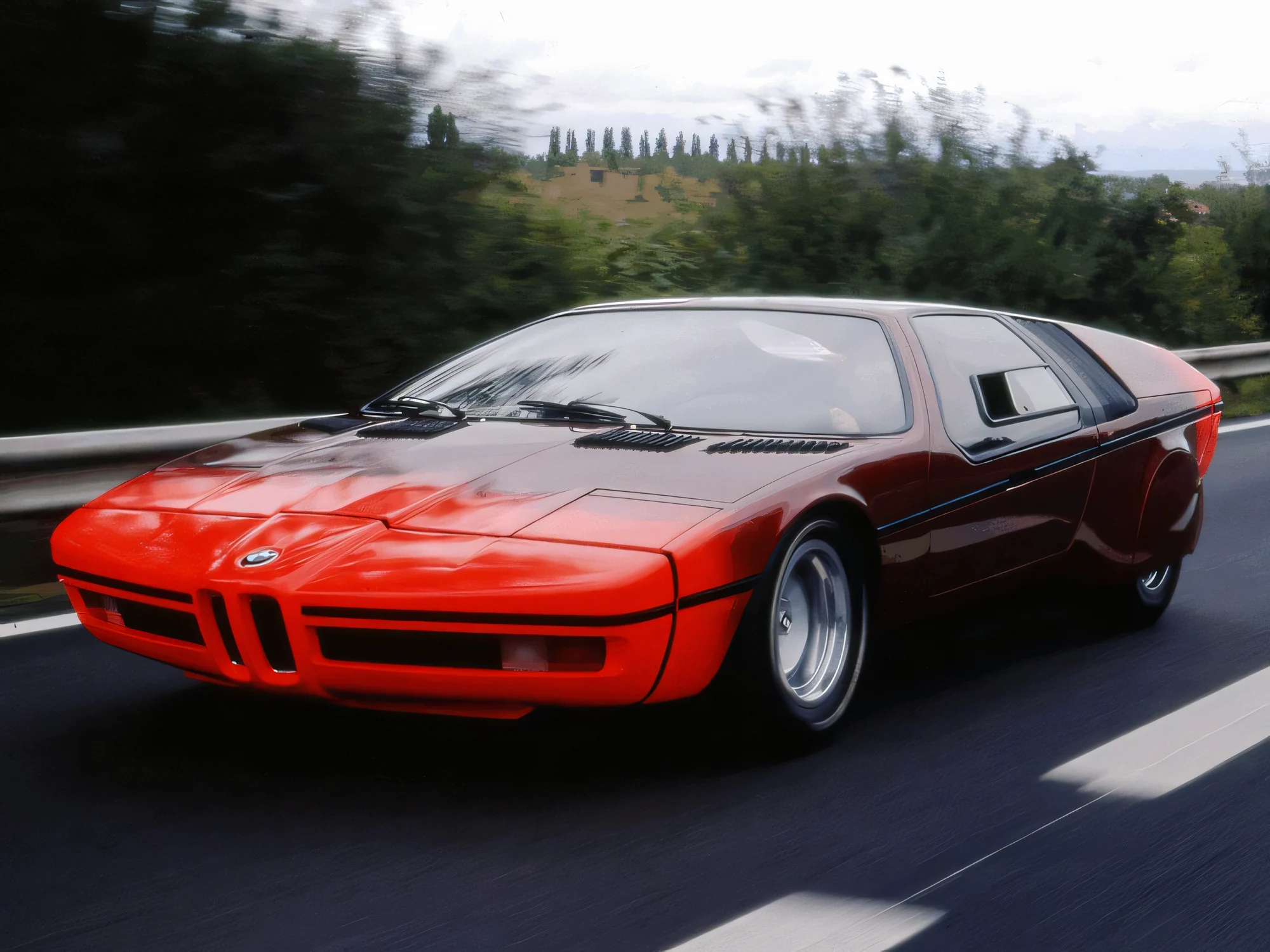
The BMW Turbo has the shape of a promise the company wouldn't keep for six more years — a mid-engined, gullwing-doored supercar in fading orange-to-red. But look past the drama and it's something stranger and more serious: a rolling safety laboratory, built in 1972 to test crash structures, radar and anti-lock brakes, wearing the body of a dream car. It is the car where BMW's supercar future and its safety engineering were sketched at the same time, by the same hand.
- It looks like a supercar, but it was really a safety lab on wheels — deformable foam bumpers, side-impact beams, a collapsible column, and even radar collision-warning and ABS, in 1972.
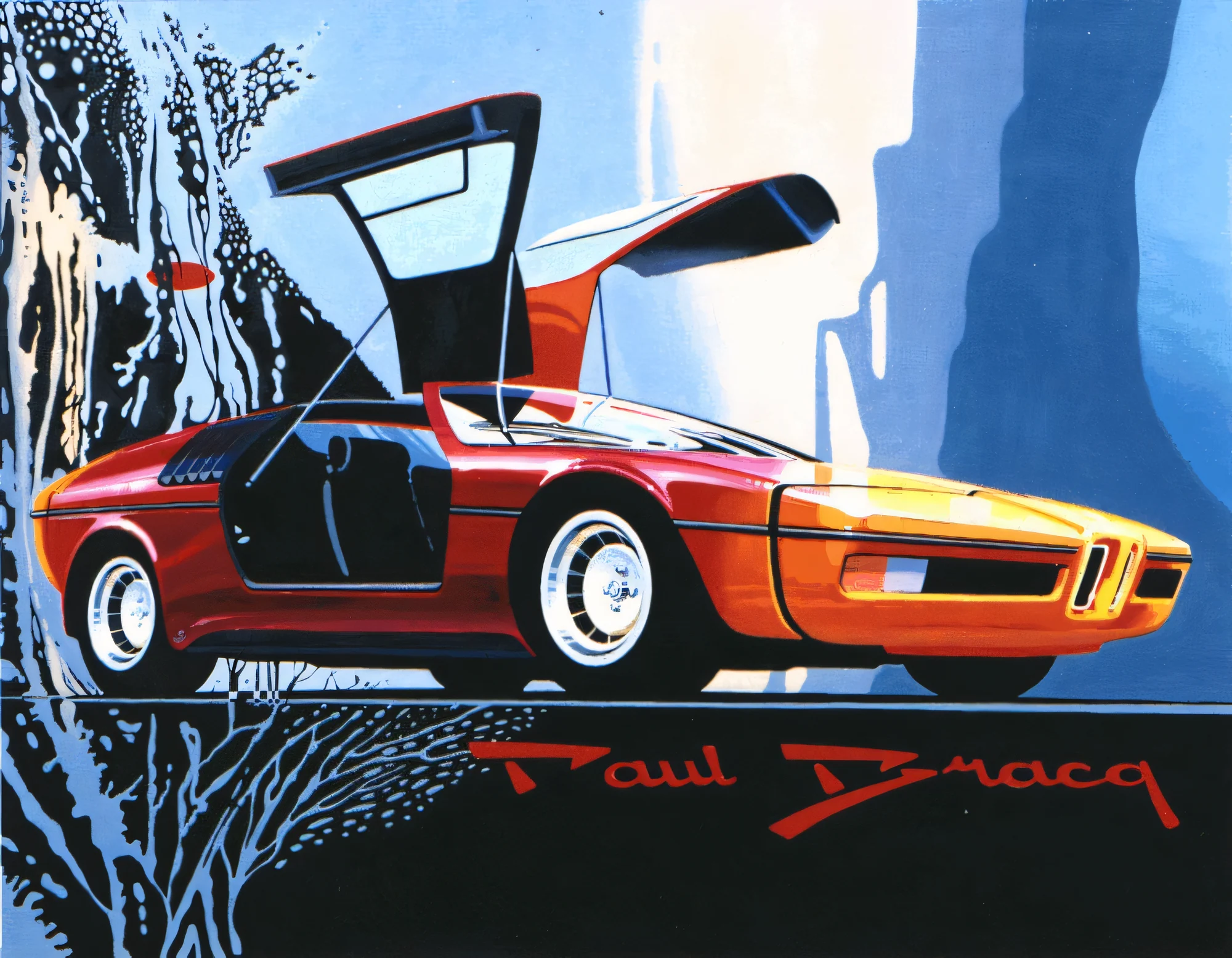
- Paul Bracq drew it — the man who'd already styled the Mercedes Pagoda SL and would go on to define BMW's 1970s road cars — one of very few designers to author icons for two rival German marques.
- It's the conceptual ancestor of the M1: BMW's mid-engined supercar idea, drawn here six years before the production car — which Giugiaro then bodied.
Most concept cars are one idea, dressed up. The BMW Turbo is two, wearing the same clothes. On the
surface it’s a mid-engined, gullwing-doored supercar in fading orange-to-red — the shape of a
BMW that wouldn’t actually exist until the M1 arrived six years later. Underneath, it’s a serious
piece of safety engineering, built in 1972 to prove that a car could be dramatic and survivable at
once. Paul Bracq drew both cars into one, and it’s the tension between them that makes the Turbo
more interesting than a prettier show car would have been.
A supercar with a clipboard
The safety brief is the thing that separates the Turbo from every other wedge of its era. The early
1970s were car design’s most safety-anxious years, and where rivals answered with ugly bumpers and
warning buzzers, BMW answered with a supercar that happened to be a crash lab — the deformable
structure, the radar, the anti-lock brakes all catalogued above. It’s a genuinely radical idea: not
that a safe car must be dull, but that the most desirable car in the room could also be the one
engineered hardest to keep you alive. Half a century on, that’s still an argument worth having.
The turbo that ran in the family
The name isn’t just styling. The Turbo takes its forced-induction four from the same family as the
road-going 2002 turbo — the little saloon that beat everyone to become Europe’s first turbocharged
production car. So the maddest BMW concept of its day and the most significant BMW road car of its
day were, under the skin, close relatives. The exact power figure is the one number here that
sources genuinely argue about, which is why it’s presented above as a range and a period claim,
never as fact.
What it was really for
Strip away the gullwings and the fade, and the Turbo’s lasting idea is an argument, not a car: that
the most desirable machine in the room and the most responsibly engineered one need not be two
different machines. BMW built exactly two examples and never sold one — but it spent the decades
afterward quietly proving the point, on road cars that owe this concept both their shape and their
safety. A concept’s real output is influence, and few have been proved right so completely by so
few cars.
The design language
The cues that make it what it is — and why each one was drawn that way.
The body Gullwings on a wedge
The show-stopper surface: a low, mid-engined wedge with pop-up headlights and gullwing doors, wrapped in a large glazed area deliberately sized to cut the driver's blind spots. It reads as pure 1970s supercar — which is exactly what disguised what it was really doing.
The structure A supercar built to crash well
Underneath the drama, the Turbo was engineered to survive an impact. Its front and rear sections were foam-filled and mounted on impact-absorbing hydraulic struts — among Europe's first deformable, energy-absorbing bumpers — backed by side-impact beams in the structure, a padded cockpit, inertia-reel belts and a collapsible steering column.
The electronics Radar and ABS, in 1972
The most startling part. The Turbo carried a rudimentary radar braking-distance and collision-warning monitor, with a warning gauge in the cockpit, plus anti-lock braking and a lateral-acceleration sensor — driver-assistance research demonstrated decades before any of it became normal. ABS wouldn't reach a BMW showroom for about six more years.
The finish The orange-to-red fade
The single most-remembered thing about it: a graduated paint scheme fading from red to orange along the body. On a car this full of serious engineering, the livery is pure theatre — and it's what everyone pictures when they hear 'BMW Turbo'.
The afterlife The concept that became the M1
The Turbo never came close to production, but it planted two flags BMW would return to. The first was the mid-engined supercar: the idea reached showrooms in 1978 as the M1, BMW's first mid-engined road car — though, in a twist that connects this file to another, the M1's production body wasn't Bracq's but Giorgetto Giugiaro's, drawn at Italdesign. What the Turbo handed the M1 was the concept and the design themes, not the finished shape.
BMW has kept quoting it ever since — its cues resurface in the 8 Series, the Z1 and the 2008 M1 Homage concept. And the safety research grew up too: anti-lock braking reached the first 7 Series before the decade was out, and radar-based driver assistance, previewed here in 1972, eventually arrived on cars built in the millions.
Both Turbos survive. One sits in the BMW Museum in Munich; the other lives an ocean away, at the BMW Zentrum in Spartanburg, South Carolina — the running car still occasionally stretching its legs at events like Villa d'Este.
Design deep cuts
Was the BMW Turbo a running car?
Two were built, and one of them ran. The first was a static display car for the Paris Motor Show; the second was a fully operational running car that BMW used as a rolling test bed for the concept's engineering. Both survive today.
What engine did it use?
A mid-mounted, turbocharged 2.0-litre four — from the same engine family that, detuned, powered the road-going BMW 2002 turbo, Europe's first turbocharged production car. So the wild concept and BMW's first turbo road car are mechanical siblings. Quoted power ranges from about 200 to 280 hp depending on the source — a disputed period claim for a one-off, never independently tested.
What made it a "safety car"?
It was conceived as a safety and technology showcase in the safety-anxious early 1970s. The documented features include foam-filled deformable bumper sections on hydraulic struts, side-impact beams, a padded cockpit with inertia-reel belts and a collapsible steering column, a radar-based braking-distance and collision-warning monitor, and anti-lock braking. It wore a supercar's body over a crash-lab's contents.
Did the BMW Turbo lead to the M1?
Conceptually, yes — the Turbo established BMW's mid-engined supercar idea that reached production as the M1 in 1978, BMW's first mid-engined road car. But be precise about what carried over: the M1's production body was styled by Giorgetto Giugiaro at Italdesign, not by Bracq. The Turbo gave the M1 its concept and design themes, not its finished shape.
Who was Paul Bracq?
A French designer, born 1933, and one of the very few to author landmark cars for two rival marques. At Mercedes-Benz he shaped the Pagoda SL and the 600 Grosser; then, as BMW's head of design from 1970 to 1974, he defined the first 5, 3 and 6 Series — which is why he's called the father of modern BMW design. The Turbo was his BMW-era showpiece.
Where are the BMW Turbos now?
Both cars survive. One is displayed at the BMW Museum in Munich; the other lives at the BMW Zentrum museum in Spartanburg, South Carolina, in the United States. The running car still turns up occasionally on the concours circuit.
More from the drawing board